A List of my Albums:
(All Reviews Ripped Without Permission from
AMG
.)
In June, my hard drive had a major failure, and all my music was lost. Herein remains memoriam.
Update: Huzzah! Recovery! Even if it is temporary!
Further Update: It was temporary! I dropped my music hard drive while it was transferring. A lot of it is fortunately on my iPod.
Expand All
311
1995 - 311
Down
Random
Jackolantern's Weather
All Mixed Up
Hive
Guns Are For Pussies
Misdirected Hostility
Purpose
Loco
Brodels
Don't Stay Home
DLMD
Sweet
T&P Combo
It is the seamless way the songs on the eponymously titled 311 combine the band's influences into a potent blend of rap, funk and rock that renders this album a cut above their competitors. These riff-heavy and radio-ready songs are underscored by a tight drum sound (often with a piccolo snare), the scratching of turntables and the crunch of heavy guitars: a formidable backdrop for this surprisingly melodic effort. The rhythms of reggae and ska percolate through this mix, and the harmonies of Nick Hexum and Count SA lend the band an edge not found in the majority of bands that feature rapping over rock beats. -- Peter Stepek
Barbara Streisand
2002 - Duets
I Won't Be the One to Let Go (with Barry Manilow)
Guilty (with Barry Gibb)
You Don't Bring Me Flowers (with Neil Diamond)
I Finally Found Someone (with Bryan Adams)
Crying Time (with Ray Charles)
I've Got A Crush On You (with Frank Sinatra)
Tell Him (with Celine Dion)
No More Tears (Enough is Enough) (with Donna Summer)
What Kind of Fool (with Barry Gibb)
I Have Love / One Hand, One Heart(with Johnny Mathis)
One Less Bell to Answer / A House is not a Home
Lost Inside of You (with Kris Kristofferson
Till I Loved You (with Don Johnson)
Make No Mistake, He's Mine (with Kim Carnes)
If You Ever Leave Me... (with Vince Gill)
The Music Of the Night (with Micheal Crawford)
Ding Dong! The Witch is Dead (with Harold Arlen)
Get Happy / Happy Days Are Here Again (with Judy Garland)
All I Know of Love (with Josh Groban)
In her lengthy career, Barbra Streisand has never shown much inclination to share the spotlight. In the movies, she must endure a leading man, but in her recordings, she has gone it alone for the most part. In 1978, however, a disc jockey edited together her and Neil Diamond's recordings of "You Don't Bring Me Flowers," and she and Diamond quickly cut a real duet, resulting in a number one hit. Thereafter, she cannily coaxed others into sharing the microphone, resulting in chart singles with Donna Summer, Barry Gibb, Kim Carnes, former boyfriend Don Johnson, Bryan Adams, and Celine Dion, and album tracks with Johnny Mathis, Michael Crawford, and Vince Gill. The material mostly consisted of mediocre adult contemporary ballads that were outshone by the star power of the singers. This album collects all those duets, plus a couple of newly recorded mediocre adult contemporary ballads sung with Barry Manilow and Josh Groban, and a few stray tracks from the 1960s and early '70s when Streisand joined another singer. Her unsuitability to the duet format is repeatedly evidenced, as she seems virtually incapable of shutting up when her partner is trying to take a solo, invariably humming in the background to draw attention back to herself. The only real exception to this rule is the version of "I've Got a Crush on You" recorded for Frank Sinatra's own Duets album, a track Streisand did not control. Naturally, the best performances occur when she is paired with a singer who is more than just a cipher -- Sinatra, Ray Charles, or Judy Garland, the latter two in TV performances. Then, of course, there's the medley of "One Less Bell to Answer" and "A House Is Not a Home" on which she finally finds the perfect duet partner, her overdubbed self! -- William Ruhlmann
Beck
1996 - Odelay
Devil's Haircut
Hotwax
Lord Only Knows
The New Pollution
Derelict
Novacane
Jack-Ass
Where It's At
Minus
Sissyneck
Readymade
High 5 (Rock the Catskills)
Ramshackle
Diskobox
Bonus Track
Beck's debut, Mellow Gold, was a glorious sampler of different musical styles, careening from lo-fi hip-hop to folk, moving back through garage rock and arty noise. It was an impressive album, but the parts didn't necessarily stick together. The two albums that followed within months of Mellow Gold -- Stereopathetic Soul Manure and One Foot in the Grave -- were specialist releases that disproved the idea that Beck was simply a one-hit wonder. But Odelay, the much-delayed proper follow-up to Mellow Gold, proves the depth and scope of his talents. Odelay fuses the disparate strands of Beck's music -- folk, country, hip-hop, rock & roll, blues, jazz, easy listening, rap, pop -- into one dense sonic collage. Songs frequently morph from one genre to another, seemingly unrelated genre -- bursts of noise give way to country songs with hip-hop beats, easy listening melodies transform into a weird fusion of pop, jazz, and cinematic strings; it's genre-defying music that refuses to see boundaries. All of the songs on Odelay are rooted in simple forms -- whether it's blues ("Devil's Haircut"), country ("Lord Only Knows," "Sissyneck"), soul ("Hotwax"), folk ("Ramshackle"), or rap ("High 5 (Rock the Catskills)," "Where It's At") -- but they twist the conventions of the genre. "Where It's At" is peppered with soul, jazz, funk, and rap references, while "Novacane" slams from indie rock to funk and back to white noise. With the aid of the Dust Brothers, Beck has created a dense, endlessly intriguing album overflowing with ideas. Furthermore, it's an album that completely ignores the static, nihilistic trends of the American alternative/independent underground, creating a fluid, creative, and startlingly original work. -- Stephen Thomas Erlewine
Björk
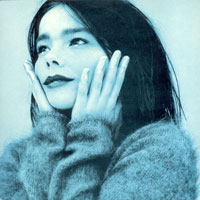
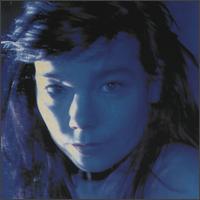
1993 - Debut
Human Behavior
Crying
Venus as a Boy
There's More to Life Than This
Like Somone In Love
Big Time Sensuality
One Day
Aeroplane
Come to Me
Violently Happy
The Anchor Song
Freed from the Sugarcubes' confines, Björk takes her voice and creativity to new heights on Debut, her first work after the group's breakup. With producer Nellee Hooper's help, she moves in an elegantly playful, dance-inspired direction, crafting highly individual, emotional electronic pop songs like the shivery, idealistic "One Day" and the bittersweet "Violently Happy." Despite the album's swift stylistic shifts, each of Debut's tracks are distinctively Björk. "Human Behaviour"'s dramatic percussion provides a perfect showcase for her wide-ranging voice; "Aeroplane" casts her as a yearning lover against a lush, exotica-inspired backdrop; and the spare, poignant "Anchor Song" uses just her voice and a brass section to capture the loneliness of the sea. Though Debut is just as arty as anything she recorded with the Sugarcubes, the album's club-oriented tracks provide an exciting contrast to the rest of the album's delicate atmosphere. Björk's playful energy ignites dance-pop-like "Big Time Sensuality," and turns the genre on its head with "There's More to Life Than This." Recorded live at the Milk Bar Toilets, it captures the dancefloor's sweaty, claustrophobic groove, but her impish voice gives it an almost alien feel. But the album's romantic moments may be its most striking; "Venus As a Boy" fairly swoons with twinkly vibes and lush strings, and Björk's vocals and lyrics -- "His wicked sense of humor/suggests exciting sex" -- are sweet and just the slightest bit naughty. With harpist Corki Hale, she completely reinvents "Like Someone in Love," making it one of her own ballads. Possibly her prettiest work, Björk's horizons expanded on her other releases, but the album still sounds fresh, which is even more impressive considering electronic music's whiplash-speed innovations. Debut not only announced Björk's remarkable talent, it suggested she had even more to offer. -- Heather Phares
1993 - Venus as a Boy [US Single]
Venus as a Boy [Edited LP Version]
Stigdu Mig
Human Behavior
There's More to Life Than This [Non Toilet Mix]
Venus as a Boy [Anglo American Extension]
I Remember You
No Review
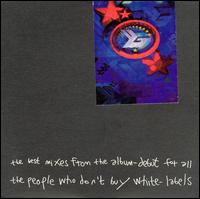
1994 - The Best Mixes from the Album "Debut" for People Who Don't Buy White Labels
Human Behavior [The Underworld Mix]
One Day [Endorphin Mix]
Come to Me [Black Dog Mix]
Come to Me [Sabres of Paradise]
The Anchor Song [Black Dog Mix]
One Day [Springs Eternal Mix]
The title may be lengthy, but it's also perfectly accurate; this release serves as a fine catch -- all of the earliest remixes done for Björk. Compared to the explosion of mixes and alternate takes that would surface on later singles, the mere six mixes totaling 41 minutes here seem paltry. The quality level, thankfully, remains quite high (quite happily, Mick Hucknall's mix of "Venus as a Boy" has been ignored). It starts with the definite highlight, Underworld's radical revamp of "Human Behavior." A 12-minute long masterpiece, it replaces the shuffling stutter of the original's percussion with a combination of crisp disco pulse and fast-paced funk loop, with other quirky keyboard bits and spoken samples floating in and out of the mix as needed. Björk's vocals remain intact, but otherwise this is pretty much Underworld's showcase, and a fine one; the addition of piano at the end adds to the unexpected charm and power of the mix. The remaining mixes are split between avant- techno trio Black Dog and remixer extraordinaire Andy Weatherall, more specifically his Sabres of Paradise project. The Sabres' "Endorphin" mix of "One Day" is a chilled, stoned slice of loveliness, light piano and dub-touched echoes matching the slow beat and Björk's slightly reverb-treated vocals. A faster-paced mix of the same track, the "Springs Eternal" take, has some good crisp electronic percussion but isn't as strong, while a version of "Come to Me" feeds Björk's vocals through heavy reverb and echo over a quiet series of beats. Black Dog's mix of "Come to Me" has echoes of Muslimgauze's Arabic/techno fusion to it, a nice touch, while their take on "The Anchor Song" has a nicely strange, second-long loop and a totally a capella mid-song vocal break that works wonders. -- Ned Raggett
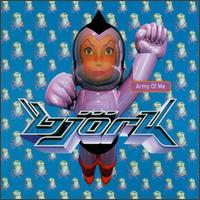
1995 - Army Of Me [UK Single]
Army of Me
Army of Me [ABA All-Stars Mix]
Army of Me [Masseymix]
Army of Me (feat. Skunk Anasie)
Army of Me [Instrumental ABA ALL-Stars Mix]
No Review
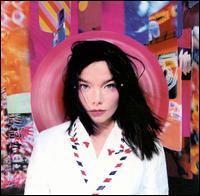
1995 - Post
Army of Me
Hyper-Ballad
The Modern Things
It's Oh So Quiet
Enjoy
You've Been Flirting Again
Isobel
Possibly Maybe
I Miss You
Cover Me
Headphones
After Debut's success, the pressure was on Björk to surpass that album's creative, tantalizing electronic pop. She more than delivered with 1995's Post; from the menacing, industrial-tinged opener "Army of Me," it's clear that this album is not simply Debut redux. The songs -- especially the epic, modern fairy tale "Isobel" -- production, and arrangements all aim for, and accomplish, more. Post also features Debut producer Nellee Hooper, 808 State's Graham Massey, Howie B., and Tricky, who help Björk incorporate a spectrum of electronic and orchestral styles into songs like "Hyperballad," which sounds like a love song penned by Aphex Twin. Meanwhile, the bristling beats on the volatile, sensual "Enjoy" and the fragile, weightless ballad "Possibly Maybe" nod to trip-hop without being overwhelmed by it. As on Debut, Björk finds new ways of expressing timeworn emotions like love, lust, and yearning in abstractly precise lyrics like "Since you went away/I'm wearing lipstick again/I suck my tongue in remembrance of you," from "Possibly Maybe." But Post's emotional peaks and valleys are more extreme than Debut's. "I Miss You"'s exuberance is so animated, it makes perfect sense that Ren & Stimpy's John Kricfalusi directed the song's video. Likewise, "It's Oh So Quiet" -- which eventually led to Björk's award-winning turn as Selma in Dancer in the Dark -- is so cartoonishly vibrant, it could have been arranged by Warner Bros. musical director Carl Stalling. Yet Björk sounds equally comfortable with an understated string section on "You've Been Flirting Again." "Headphones" ends the album on an experimental, hypnotic note, layering Björk's vocals over and over till they circle each other atop a bubbling, minimal beat. The work of a constantly changing artist, Post proves that as Björk moves toward more ambitious, complex music, she always surpasses herself. -- Heather Phares
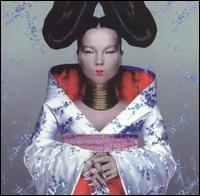
1997 - Homogenic
Hunter
Jòga
Unravel
Bachelorette
All Neon Like
5 Years
Immature
Alarm Call
Pluto
All Is Full of Love
By the late '90s, Björk's playful, unique worldview and singular voice became as confining as they were defining. With its surprising starkness and darkness, 1997's Homogenic shatters her "Icelandic pixie" image. Possibly inspired by her failed relationship with drum'n'bass kingpin Goldie, Björk sheds her more precious aspects, displaying more emotional depth than even her best previous work indicated. Her collaborators -- LFO's Mark Bell, Mark "Spike" Stent, and Post contributor Howie B. -- help make this album not only her most emotionally brave work, but her most sonically adventurous as well. A seamless fusion of chilly strings (courtesy of the Icelandic String Octet), stuttering, abstract beats, and unique touches like accordion and glass harmonica, Homogenic alternates between dark, uncompromising songs such as the icy opener "Hunter" and more soothing fare like the gently percolating "All Neon Like." The noisy, four-on-the-floor catharsis of "Pluto" and the raw vocals and abstract beats of "5 Years" and "Immature" reveal surprising amounts of anger, pain and strength in the face of heartache. "I dare you to take me on," Björk challenges her lover in "5 Years," and wonders on "Immature," "How could I be so immature/To think he would replace/The missing elements in me?" "Bachelorette," a sweeping, brooding cousin to Post's "Isobel," is possibly Homogenic's saddest, most beautiful moment, giving filmic grandeur to a stormy relationship. Björk lets a little hope shine through on "Joga," a moving song dedicated to her homeland and her best friend, and the reassuring finale "All Is Full of Love." "Alarm Call"'s uplifting dance-pop seems out of place with the rest of the album but, as its title implies, Homogenic is her most holistic work. While it might not represent every side of Björk's music, Homogenic displays some of her most impressive heights. -- Heather Phares
1997 - Telegram
Possibly Maybe (Remix)
Hyper-Ballad (Remix)
Enjoy (Remix)
My Spine
I Miss You (Remix)
Isobel (Remix)
You've Been Flirting Again (Remix)
Cover Me (Remix)
Army of Me [Björk & Masseymix]
Headphones (Remix)
I Miss You [Alt Remix]
In theory, Telegram is a remixed album of all the songs from Post, but the arrangements are so different, it might as well be another record entirely. Björk has re-recorded several of her vocals, handing the original backing tracks to a variety of producers and musicians -- everyone from Dillinja to the Brodsky Quartet. While Telegram provides some of the most challenging listening yet heard on a Björk album, it is essentially because the new arrangements are radical -- in terms of electronic dance music, the actual music and remixes are far from radical. Still, Telegram works as an excellent introduction to techno for alternative-pop fans unsure of where to begin exploring. -- Stephen Thomas Erlewine
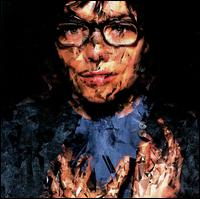
2000 - Selmasongs: Music From The Motion Picture
Dancer In the Dark
Overture
Cvalda (with Catherine Deneuve)
I've Seen It All (with Thom Yorke)
Scatterheart
In the Musicals
107 Steps (with Siobhan Fallon)
New World
Selmasongs: Music From the Motion Picture Soundtrack Dancer in the Dark is, and is not, a Björk album. While it's filled with rampant creativity, startling emotional leaps, and breathtaking vocals and arrangements, it isn't as playful as her other albums, even 1997's relatively dark Homogenic. Instead, it presents Björk as Selma, her character from Lars VonTrier's Dancer in the Dark: a Czech factory worker who is going blind but finds hope and refuge in the musicals she watches at the cinema. (VonTrier wanted to work with Björk after seeing Spike Jonze's musical-inspired video for "It's Oh So Quiet.") She acts through the music she composed, performed, and produced with conductor/arranger Vincent Mendoza and her longtime collaborators Mark "Spike" Stent and Mark Bell. Selma's unsinkable optimism and tragic end are telegraphed through songs like the irrepressible, cartoonish "Cvalda" to the sad, starry lullaby "Scatterheart." Selmasongs' best tracks are poignant, inventive expressions of Björk's talent and Selma's daydreams and suffering. "In the Musicals" shows how easy it is for Selma to slip into one of her Technicolor reveries: "There is always someone to catch me," Björk sighs as clouds of strings, harps, and xylophones rise up to meet her. "New World" reprises the simultaneously hopeful and ominous melody of "Overture," adding striking vocals and shuffling, industrial beats that reflect Selma's life in the factory as well as Björk's distinctive style. Selmasongs also succeeds as a soundtrack, sketching in details of Selma's story. "I've Seen It All," a duet with Thom Yorke, captures her stunted romance with a co-worker, while the tense "107 Steps" takes the listener to her journey's end. Intimate and theatrical, innovative and tied to tradition, Selmasongs paints a portrait of a woman losing her sight, but it maintains Björk's unique vision. -- Heather Phares
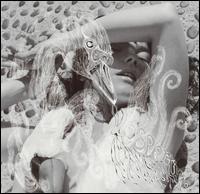
2001 - Vespertine [Japan]
Hidden Place
Coccoon
It's Not Up to You
Undo
Pagan Poetry
Frosti
Aurora
An Echo, a Stain
Sun in My Mouth
Heirloom
Harm of Will
Unison
Generous Palmstroke (Bonus Track)
After cathartic statements like Homogenic, the role of Selma in Dancer in the Dark, and the film's somber companion piece, Selmasongs, it's not surprising that Björk's first album in four years is less emotionally wrenching. But Vespertine isn't so much a departure from her previous work as a culmination of the musical distance she's traveled; within songs like the subtly sensual "Hidden Place" and "Undo" are traces of Debut and Post's gentle loveliness, as well as Homogenic and Selmasongs' reflective, searching moments. Described by Björk as "about being on your own in your house with your laptop and whispering for a year and just writing a very peaceful song that tiptoes," Vespertine's vocals seldom rise above a whisper, the rhythms mimic heartbeats and breathing, and a pristine, music-box delicacy unites the album into a deceptively fragile, hypnotic whole. Even relatively immediate, accessible songs, such as "It's Not up to You," "Pagan Poetry," and "Unison" share a spacious serenity with the album's quietest moments. Indeed, the most intimate songs are among the most varied, from the seductively alien "Cocoon" to the dark, obsessive "An Echo, A Stain" to the fairy tale-like instrumental "Frosti." The beauty of Vespertine's subtlety may be lost on Björk fans demanding another leap like the one she made between Post and Homogenic, but like the rest of the album, its innovations are intimate and intricate. Collaborators like Matmos -- who, along with their own A Chance to Cut Is a Chance to Cure, appear on two of 2001's best works -- contribute appropriately restrained beats crafted from shuffled cards, cracking ice, and the snap-crackle-pop of Rice Krispies; harpist Zeena Parkins' melodic and rhythmic playing adds to the postmodernly angelic air. An album singing the praises of peace and quiet, Vespertine isn't merely lovely; it proves that in Björk's hands, intimacy can be just as compelling as louder emotions. [The Japanese release includes one bonus track, "Generous Palmstroke."] -- Heather Phares
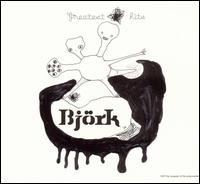
2002 - Björk's Greatest Hits
All Is Full of Love
Hyper-Ballad
Human Behavior
Jòga
Bachelorette
Army of Me
Pagan Poetry
Big Time Sensuality [The Fluke Minimix]
Venus as a Boy
Hunter
Hidden Place
Isobel
Possibly Maybe
Play Dead {From The Young Americans}
It's in Our Hands
Björk closed out her first decade as a solo artist with the retrospective Björk's Greatest Hits. Despite its somewhat pedestrian title and approach (especially considering some of her intricate import collections and box sets) she still managed to find a way to put a twist on the collection: she let her fans vote for which songs they wanted included on the track listing. Overall, they did a pretty good job; with the notable exception of "It's Oh So Quiet" -- which is probably her biggest single -- the collection touches on most of the biggest songs from each of her albums. The album puts most of its focus on the middle portion of her career to date, culling four tracks each from Post and Homogenic, but still makes room for old favorites such as Debut's "Venus as a Boy" and "Human Behaviour," as well as newer singles such as Vespertine's "Pagan Poetry" and "Hidden Place." One minor disappointment is the lack of any songs from her excellent Dancer in the Dark soundtrack, though the greatest-hits disc that appears in the Family Tree box set, which Björk herself compiled, includes that album's "Scatterheart" and "I've Seen It All" (as well as other great album tracks from her career, such as "Unravel" and "You've Been Flirting Again"). However, the inclusion of the somewhat hard-to-find "Play Dead" -- which appeared on the Young Americans soundtrack and was previously available most easily on a Japanese single -- and a new track, the lovely "It's in Our Hands," help compensate for the omissions about which fans could potentially complain. Arguably, since Björk isn't really an artist who lives and dies by the charts, virtually any of her songs could be considered fair game for inclusion on a collection like this; her body of work is so consistently strong that her album tracks are almost always as interesting (if not more so) as the songs that are deemed to be singles. And indeed, Björk's Greatest Hits does fulfill one of the main goals of a greatest-hits collection: it presents the many different sides of her sound, from playful to bittersweet to experimental, making it a good introduction to those unfamiliar with her music and a convenient collection for her fans. Die-hard Björk fans might want a domestically available B-sides or rarities collection instead, but Björk's Greatest Hits is quite possibly the first step in that direction -- and a nice way to celebrate the beginning of another decade's worth of her innovative music. -- Heather Phares
2004 - Medúlla
Pleasure Is All Mine
Show Me Forgiveness
Where Is the Line?
Vökuró
Öll Birtan
Who Is It? (Carry My Joy on the Left, Carry My Pain on the Right)
Submarine
Desired Constellation
Oceania
Sonnets / Unrealities XI
Ancestors
Mouth's Cradle
Midvikudags
Triumph of a Heart
It's hard to accuse Björk of making music influenced by commercial or critical expectations at any point in her career, but her post-Homogenic work is even more focused on following her bliss, whether that means acting and singing in Lars Von Trier's grim musical Dancer in the Dark; crafting tiptoeing laptop lullabies on Vespertine; or, in the case of Medúlla, sculpting an album out of almost nothing but singing and vocal samples. The album's title and concept refer to the purest essence of something, and Medúlla explores both the ritual power of the human voice and some of the most essential themes of Björk's music in a way that's both primal and elaborate. It took a large cast of characters to make the album's seemingly organic sound, including vocalists ranging from Icelandic and British choirs to Inuit singers to Mike Patton and Robert Wyatt; programmers like Matmos, Mark Bell, and Mark "Spike" Stent; and beatboxers such as Rahzel and the onomatopoeically named Japanese artist Dokaka. Several songs are sung in Icelandic, which works especially well, not only because it ties in with Medúlla's concept, but also because of the language's sonic qualities: the rolling Rs, guttural stops, and elongated vowels reflect the alternately chopped and soaring arrangements behind them. Neopaganism and unfettered sensuality also wind through the album, particularly on "Mouth's Cradle," along with meditative, Vespertine-like pieces such as "Desired Constellation." Medúlla is unusually intimate: Björk's voice is miked very closely, and with the dense layers of vocals surrounding her, it often sounds as if you're listening to the album from inside her larynx. Some of the heavy breathing, grunts, and ululating woven into the album come close to provoking physical reactions: the eerie sighs and throat singing on the feral "Ancestors" make the chest ache and suggest a particularly melodic pack of wolves. Meanwhile, there's something simian about Dokaka's gleeful babbling and beats on "Triumph of a Heart." Despite its gentler moments, Medúlla's raw rhythms and rarefied choral washes make it the most challenging work of Björk's career. "Where Is the Line" is one of her tough, no-nonsense songs, and Rahzel's hard-hitting beats make it starker than anything on Homogenic. Even relatively accessible songs, like the gone-native loveliness of "Who Is It (Carry My Joy on the Left, Carry My Pain on the Right)" and "Oceania," which Björk wrote for the 2004 Athens Olympics, have an alien quality that is all the stranger considering that nearly all of their source material is human (except for the odd keyboard or two). Actually, fans of world, contemporary classical, or avant-garde music might find more to appreciate in Medúlla than anyone looking for a "Human Behaviour" or "It's Oh So Quiet." It's not an immediate album, but it is a fascinating one, especially for anyone interested in the world's oldest instrument being used in unexpected ways. [Medúlla was also released in a limited-edition digipack with a bonus poster.] -- Heather Phares
Black Sabbath
2007 - The Dio Years
Neon Knights
Lady Evil
Heaven and Hell
Die Young
Lonely Is the Word
The Mob Rules
Turn Up the Night
Voodoo
Falling Off the Edge of the World
After All (The Dead)
TV Crimes
I
Children of the Sea [Live]
The Devil Cried [Previously Unreleased]
Shadow of the Wind [Previously Unreleased]
Ear in the Wall [Previously Unreleased]
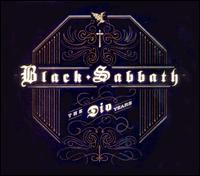
The original lineup of Black Sabbath possesses such a mythic quality that it's easy to overlook how far they slid by the time Ozzy Osbourne up and left the band...or how far they rebounded after they hired Rainbow singer Ronnie James Dio as his replacement. Countless compilations over the years have preserved the initial part of the story line -- celebrating the innovations of the first four albums with a near fetishistic quality -- but there has never been a good retrospective concerning the Dio years until Rhino released the aptly titled The Dio Years in early 2007. True, the Dio years didn't last all that long -- the singer joined in 1980 for Heaven & Hell, then lasted through one more studio album, the following year's Mob Rules, before departing under a shroud of controversy after 1982's botched live album Live Evil -- but Dio had a powerful impact upon the band and its legacy; these were the last years that Sabbath exerted pull as an active band, and after his departure they stumbled through various singers over the next decade before intermittently reuniting with Ozzy in the '90s. The Dio Years proves that during his brief time with the band, Dio did help Sabbath make music that could hold its own with some of the classic lineup's finest moments. With Dio as a frontman, the band was harder, nastier, and a little faster than the slow sludge of the early Sabbath records, but it fit in nicely with the New Wave of British Heavy Metal at the beginning of the '80s and it's aged very well. Some of it can sound silly -- Dio's lyrical obsessions always do -- but this is harder, heavier, better music than either Technical Ecstasy or Never Say Die! Anybody who's refused to give this latter-day incarnation of the band the time of day might find this compilation revelatory. -- Stephen Thomas Erlewine
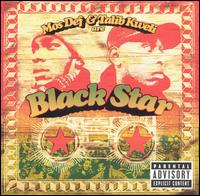
Black Star
1998 - Mos Def & Talib Kweli are Black Star
Intro
Astronomy (8th Light)
Definition
RE: DEFinition
Children's Story
Brown Skin Lady
B Boys Will B Boys
K.O.S. (Determination)
Hater Players
Yo Yeah
Respiration
Thieves in the Night
Twice Inna Lifetime
While Puff Daddy and his followers continued to dictate the direction hip-hop would take into the millennium, Mos Def and Talib Kweli surfaced from the underground to pull the sounds in the opposite direction. Their 13 rhyme fests on this superior, self-titled debut as Black Star show that old-school rap still sounds surprisingly fresh in the sea of overblown vanity productions. There's no slack evident in the tight wordplays of Def and Kweli as they twist and turn through sparse, jazz-rooted rhythms calling out for awareness and freedom of the mind. Their viewpoints stem directly from the teachings of Marcus Garvey, the legendary activist who fought for the rights of blacks all around the world in the first half of the 20th century. Def and Kweli's ideals are sure lofty; not only are they out to preach Garvey's words, but they also hope to purge rap music of its negativity and violence. For the most part, it works. Their wisdom-first philosophy hits hard when played off their lyrical intensity, a bass-first production, and stellar scratching. While these MCs don't have all of the vocal pizzazz of A Tribe Called Quest's Phife and Q-Tip at their best, flawless tracks like the cool bop of "K.O.S. (Determination)" and "Definition" hint that Black Star is only the first of many brilliantly executed positive statements for these two street poets. -- Jason Kaufman
Blink 182
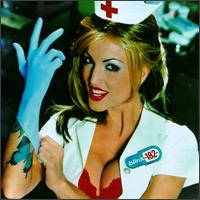
1999 - Enema of the State
Dumpweed
Don't Leave Me
Aliens Exist
Going Away to College
What's My Age Again?
Dysentery Gary
Adam's Song
All the Small Things
The Party Song
Mutt
Wendy Clear [*]
Anthem
If the title Enema of the State didn't give it away, it should be clear from songs like "Dumpweed," "What's My Age Again?," and "Dysentery Gary" that moving to a major label isn't a sign of maturity for blink-182. "Dammit (Growing Up)," the first single from their third album, Dude Ranch, brought them a wider audience and the attention of major labels, which was just too tempting to resist. They signed with MCA, but the only sign that Enema of the State is a major-label effort is the somewhat cleaner production and the fact that they could afford porn superstar Janine -- all decked out as (surprise!) an enema nurse -- for the album cover. Of course, the lovely Janine is as much an indication as "Going Away to College," a catchy little number that pretty much repeats the narrative of "Dammit": blink-182 is not growing up, no way, no how, nowhere. And that's fine, because few of their peers are quite as blissfully stupid and effortlessly catchy as them. Sure, they might not show the emotional depth of Green Day, but they have good tunes and deliver them in a speedy, punchy fashion. Enema of the State isn't going to change anyone's life -- unless it's the first time a 13-year-old boy has seen Janine -- and it will likely irritate old codgers, but it's a fun record that's better than the average neo-punk release. -- Stephen Thomas Erlewine
Bob Dylan
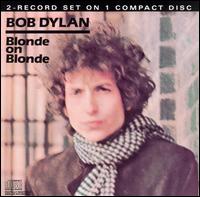
1966 - Blonde on Blonde
Rainy Day Women #12 & #35
Pledging My Time
Visions of Joanna
One of Us Must Know (Sooner or Later)
I Want You
Stuck Inside of Mobile with the Memphis Blues Again
Leopard-Skin Pill-Box Hat
Just Like a Woman
Most Likely You Go Your Way (And I'll Go Mine)
Temporary Like Achilles
Absolutely Sweet Marie
4th Time Around
Obviously 5 Believers
Sad Eyed Lady of the Lowlands
If Highway 61 Revisited played as a garage rock record, the double-album Blonde on Blonde inverted that sound, blending blues, country, rock, and folk into a wild, careening, and dense sound. Replacing the fiery Michael Bloomfield with the intense, weaving guitar of Robbie Robertson, Bob Dylan led a group comprised of his touring band the Hawks and session musicians through his richest set of songs. Blonde on Blonde is an album of enormous depth, providing endless lyrical and musical revelations on each play. Leavening the edginess of Highway 61 with a sense of the absurd, Blonde on Blonde is comprised entirely of songs driven by inventive, surreal, and witty wordplay, not only on the rockers but also on winding, moving ballads like "Visions of Johanna," "Just Like a Woman," and "Sad Eyed Lady of the Lowlands." Throughout the record, the music matches the inventiveness of the songs, filled with cutting guitar riffs, liquid organ riffs, crisp pianos, and even woozy brass bands ("Rainy Day Women #12 & 35"). It's the culmination of Dylan's electric rock & roll period -- he would never release a studio record that rocked this hard, or had such bizarre imagery, ever again. -- Stephen Thomas Erlewine
Carl Orff
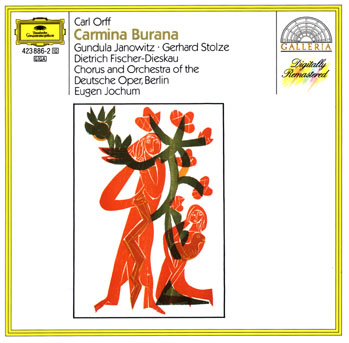
1936 - Carmina Burana: Secular Songs
Fortuna Imperatrix Mundi
: - O Fortuna
Fortuna Imperatrix Mundi
: - Fortune plango vulnera
I.
Primo Vere
: Veris leta facies
I.
Primo Vere
: Omnia Sol temperat
I.
Primo Vere
: Ecce gratum
Uf Dem Anger
: Tanz
Uf Dem Anger
: Floret silva nobilis
Uf Dem Anger
: Chramer, gip die varwe mir
Uf Dem Anger
: Reie
Uf Dem Anger
: Swaz hie gat umbe / Chume, chum, geselle min! / Swaz hie gat umbe
Uf Dem Anger
: Were diu werlt alle min
II.
In Taberna
: Estuans interius
II.
In Taberna
: Olim lacus colueram
II.
In Taberna
: Ego sum abbas
II.
In Taberna
: In taberna quando sumus
III.
Cour D'Amours
: Amor volat undique
III.
Cour D'Amours
: Dies, nox et omnia
III.
Cour D'Amours
: Stetit puella
III.
Cour D'Amours
: Circa mea pectora
III.
Cour D'Amours
: Si uer cum puellula
III.
Cour D'Amours
: Veni, veni, venias
III.
Cour D'Amours
: In trutina
III.
Cour D'Amours
: Tempus est iocundum
III.
Cour D'Amours
: Dulcissime
Blanziflor Et Helena
: Ave formosissima
Fortuna Imperatrix Mundi
: O fortuna
This recording is highly distinguished, and some might well acquire it for Fischer-Dieskau's contribution. His singing is refined but not too much so, and his first solo, "Omnia sol temperat," and later "Dies, nox et omnia" are both very beautiful, with the kind of tonal shading that a great Lieder singer can bring. Perhaps "Estuans interius" needs a heavier voice, but Fischer-Dieskau is suitably gruff in the Abbot's song - so much so that for the moment is unrecognisable. Gerhard Stolze too is very stylish in his falsetto Song of the roast swan. The soprano, Gundula Janowitz, finds a quiet dignity for her contribution and this is finely done. The chorus are best when the music blazes, and the closing scene is moulded by Jochum with a wonderful control, almost Klemperian in its restrained power. The snag is that in the quieter music the choral contribution is less immediate. -- (Unknown Reviewer) [Text comes from the 1988 edition of Penguin Guide to Recorded Music]
Cat Stevens
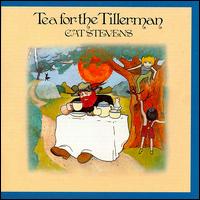
1970 - Tea for the Tillerman
Where Do the Children Play?
Hard Headed Woman
Wild World
Sad Lisa
Miles from Nowhere
But I Might Die Tonight
Longer Boats
Into White
On the Road to Find Out
Father and Son
Tea for the Tillerman
Mona Bone Jakon only began Cat Stevens' comeback. Seven months later, he returned with Tea for the Tillerman, an album in the same chamber-group style, employing the same musicians and producer, but with a far more confident tone. Mona Bone Jakon had been full of references to death, but Tea for the Tillerman was not about dying; it was about living in the modern world while rejecting it in favor of spiritual fulfillment. It began with a statement of purpose, "Where Do the Children Play?," in which Stevens questioned the value of technology and progress. "Wild World" found the singer being dumped by a girl, but making the novel suggestion that she should stay with him because she was incapable of handling things without him. "Sad Lisa" might have been about the same girl after she tried and failed to make her way; now, she seemed depressed to the point of psychosis. The rest of the album veered between two themes: the conflict between the young and the old, and religion as an answer to life's questions. Tea for the Tillerman was the story of a young man's search for spiritual meaning in a soulless class society he found abhorrent. He hadn't yet reached his destination, but he was confident he was going in the right direction, traveling at his own, unhurried pace. The album's rejection of contemporary life and its yearning for something more struck a chord with listeners in an era in which traditional verities had been shaken. It didn't hurt, of course, that Stevens had lost none of his ability to craft a catchy pop melody; the album may have been full of angst, but it wasn't hard to sing along to. As a result, Tea for the Tillerman became a big seller and, for the second time in four years, its creator became a pop star. -- William Ruhlmann
Counting Crows
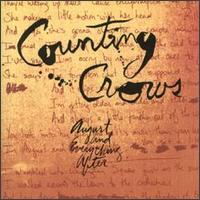
1993 - August and Everything After
Round Here
Omaha
Mr. Jones
Perfect Blue Buildings
Anna Begins
Time and Time Again
Rain King
Sullivan Street
Ghost Train
Raining in Baltimore
A Murder of One
When the prevailing guitar jingle of "Mr. Jones" cascaded over radio in the early '90s, it was a sure sign that the Counting Crows were a musical force to be reckoned with. Their debut album, August and Everything After, burst at the seams with both dominant pop harmonies and rich, hearty ballads, all thanks to lead singer Adam Duritz. The lone guitar work of "Mr. Jones" coupled with the sweet, in-front pull of Duritz's voice kicked off the album in full force. The starkly beautiful and lonely sounding "Round Here" captured the band's honest yet subtle talent for singing ballads, while "Omaha" is lyrically reminiscent of a Springsteen tune. The fusion of hauntingly smooth vocals with such instruments as the Hammond B-3 organ and the accordion pumped new life into the music scene, and their brisk sound catapulted them into stardom. On "Rain Kings," the piano takes over as its aloof flair dances behind Duritz with elegant crispness. The slower-paced "Raining in Baltimore" paints a perfectly grey picture and illustrates the band's ease at conveying mood by eliminating the tempo. Most of the songs here engage in overly contagious hooks that won't go away, making for a solid bunch of tunes. Containing the perfect portions of instrumental and vocal conglomeration, the Counting Crows showed off their appealing sound to its full extent with their very first album. -- Mike DeGagne
Dan Fogelberg
1997 - Portrait: Ballads (Disc 2)
To The Morning
Stars
Wysteria
Song from Half Mountain
Old Tennessee
Nether Lands
Scarecrow's Dream
Since You've Asked
Hearts and Crafts
Only the Heart May Know
Sweet Magnolia (And the Travelling Salesman)
Windows and Walls
Seeing You Again
Bones in the Sky
The Minstrel
Mountains to the Sea
A Love Like This
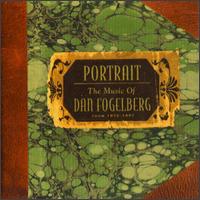
Portrait: The Music of Dan Fogelberg 1972-1997 is an extensive, four-disc box set that covers the singer-songwriter's entire career in detail. In addition to all of the hits and favorite album tracks, the box also features the B-side "Hearts and Crafts" and four previously unreleased tracks, including the newly recorded "Don't Lose Heart." Those five songs aren't quite enough to entice hardcore Fogelberg collectors, who are the only listeners that will be interested in such a substantial box set, since casual fans will find the sheer length of this set intimidating and maybe even tedious. But for any devoted Fogelberg fan who doesn't already own his entire catalog, Portrait is a worthwhile purchase. -- Stephen Thomas Erlewine
1997 - Portrait: Hits (Disc 1)
Part of the Plan
The Power of Gold
Heart Hotels
Longer
Hard To Say
Leader of the Band
Same Old Lang Syne
Run for the Roses
Make Love Stay
Missing You
The Language of Love
Believe in Me
Lonely In Love
Rhythm of the Rain
Magic Every Moment
Don't Lose Heart
Portrait: The Music of Dan Fogelberg 1972-1997 is an extensive, four-disc box set that covers the singer-songwriter's entire career in detail. In addition to all of the hits and favorite album tracks, the box also features the B-side "Hearts and Crafts" and four previously unreleased tracks, including the newly recorded "Don't Lose Heart." Those five songs aren't quite enough to entice hardcore Fogelberg collectors, who are the only listeners that will be interested in such a substantial box set, since casual fans will find the sheer length of this set intimidating and maybe even tedious. But for any devoted Fogelberg fan who doesn't already own his entire catalog, Portrait is a worthwhile purchase. -- Stephen Thomas Erlewine
Dave Brubeck
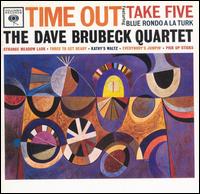
1959 - Time Out
Blue Rondo À La Turk
Strange Meadowlark
Take Five
Three To Get Ready
Kathy's Waltz
Everybody's Jumpin'
Pickup Sticks
Dave Brubeck's defining masterpiece, Time Out is one of the most rhythmically innovative albums in jazz history, the first to consciously explore time signatures outside of the standard 4/4 beat or 3/4 waltz time. It was a risky move -- Brubeck's record company wasn't keen on releasing such an arty project, and many critics initially roasted him for tampering with jazz's rhythmic foundation. But for once, public taste was more advanced than that of the critics. Buoyed by a hit single in altoist Paul Desmond's ubiquitous "Take Five," Time Out became an unexpectedly huge success, and still ranks as one of the most popular jazz albums ever. That's a testament to Brubeck and Desmond's abilities as composers, because Time Out is full of challenges both subtle and overt -- it's just that they're not jarring. Brubeck's classic "Blue Rondo à la Turk" blends jazz with classical form and Turkish folk rhythms, while "Take Five," despite its overexposure, really is a masterpiece; listen to how well Desmond's solo phrasing fits the 5/4 meter, and how much Joe Morello's drum solo bends time without getting lost. The other selections are richly melodic as well, and even when the meters are even, the group sets up shifting polyrhythmic counterpoints that nod to African and Eastern musics. Some have come to disdain Time Out as it's become increasingly synonymous with upscale coffeehouse ambience, but as someone once said of Shakespeare, it's really very good in spite of the people who like it. It doesn't just sound sophisticated -- it really is sophisticated music, which lends itself to cerebral appreciation, yet never stops swinging. Countless other musicians built on its pioneering experiments, yet it's amazingly accessible for all its advanced thinking, a rare feat in any art form. This belongs in even the most rudimentary jazz collection. -- Steve Huey
1962 - The Dave Brubeck Quartet Plays Music from West Side Story
Maria
I Feel Pretty
Somewhere
A Quiet Girl
Tonight
What Is This Thing Called Love?
The Most Beautiful Girl in the World
Night and Day
My Romance
No Review
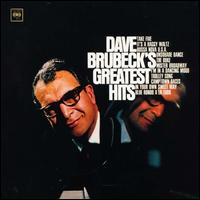
1966 - Dave Brubeck's Greatest Hits
Take Five
I'm in a Dancing Mood
In Your Own Sweet Way
Camptown Races
The Duke
It's a Raggy Waltz
Bossanova U.S.A.
The Trolley Song
Unsquare Dance
Blue Rondo À La Turk
The Theme from "Mr. Broadway"
While Greatest Hits albums from jazz artists are sometimes dubious propositions, Dave Brubeck is the rare exception to the rule. Brubeck concentrated on the song as much as the performance, which is one of the reasons why he appealed to such a wide audience and it's also the reason why Greatest Hits is such an entertaining and effective sampler. Featuring such familiar items as "Take Five," "In Your Own Sweet Way," "The Duke," "Trolley Song," "Unsquare Dance" and "Blue Rondo à la Turk," the collection provides a fine introduction to Brubeck's collegiate jazz for the uninitiated. Time Out remains the best place to start a Brubeck appreciation, but this is an excellent single-disc sampler. -- Stephen Thomas Erlewine
David Gray
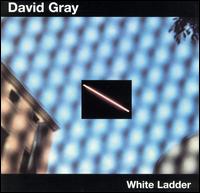
1999 - White Ladder
Please Forgive Me
Babylon
My Oh My
We're Not Right
Nightblindness
Silver Lining
White Ladder
This Years Love
Sail Away
Say Hello Wave Goodbye
Babylon II
David Gray's fan base is strong and active. They have seen him through his years with Virgin Records, during which time he was applauded for his talent, emotive voice, and songwriting skills yet never quite broke through to a mainstream audience. White Ladder showcases Gray like never before; it's an album of such depth and quality that one would be hard-pressed to ignore his talent. Each song is strong and superbly crafted, both in terms of arrangement and delivery. The standouts, "Please Forgive Me" and "This Year's Love," are touching and likely to bring a tear to the eye of the listener. This album is definitely a much-needed addition to any quality music collection. With any justice, it will finally bring David Gray the success that he so rightly deserves. -- Jaime Ikeda
David Parsons
1999 - Ngaio Gamelan
Urartu to Ubud
Tjampuhan
Laplapan
Ararat Legong
Jalan Jalan
Sarangi Saron
David Parsons is one of the primary practitioners of electro-tribal atmospheres. He mixes deep world music sensitivity with strong electronic textures and timbres. Ngaio Gamelan is a hybrid sound world in which Parsons melds his electronic wizardry with Tibetan gamelan bells and other ethnic acoustics. The electronics create gentle atmospheres; the acoustic percussion instruments set the pace. The soundscapes are huge. Parsons performs at this level to convey his spiritual messages to his listeners. His sound design is psychoactive and shamanic. He is one of the top performers in this style. While the musical parallels are few, the emotional and spiritual responses are similar to those evoked by Steve Roach, Constance Demby, and Robert Rich. -- Jim Brenholts
Dub DeBrie
1999 - The Cheese Stands Alone
Mambo Kings Play Songs of Love
Strong In My Heart
Bolero Fernando
Samba Debrie
One More Magic Nite
The Ballad of Cowboy Rod
If I Needed Someone
Light a Candle
One More One More Magic Nite
No Review
Elton John
1973 - Don't Shoot Me I'm Only the Piano Player
Daniel
Teacher I Need You
Elderberry Wine
Blues for my Baby and Me
Midnight Creeper
Have Mercy on the Criminal
I'm Gonna Be a Teenage Idol
Texan Love Song
Crocodile Rock
High Flying Bird
Screw You (Young Man's Blues)
Jack Rabbit
Whenever You're Ready (We'll Go Steady Again)
Skyline Pigeon
Elton John became a true superstar with 1972's Honky Chateau. He followed that album with Don't Shoot Me I'm Only the Piano Player, his most direct, pop-oriented album to date. Designed as a pastiche of classic and contemporary pop styles, the album almost sounds like an attempt to demonstrate the diversity of the John/Taupin team. Though the hits are remarkable -- "Daniel" is a moving ballad and "Crocodile Rock" is a sly take on '50s rock & roll -- the album is slightly uneven. Several of the album tracks, particularly the knowing "I'm Gonna Be a Teenage Idol" and the rocking "Elderberry Wine," are as strong as anything John had recorded, but there are too many melodies that simply don't catch hold. Nevertheless, the singles were strong enough to keep the album at the top of the charts, and at its best, it is a very enjoyable piece of well-crafted pop/rock. [The CD reissue includes the bonus tracks "Screw You (Young Man's Blues)," "Jack Rabbit," "Whenever You're Ready (We'll Go Steady Again)," and the piano version of "Skyline Pigeon."] -- Stephen Thomas Erlewine
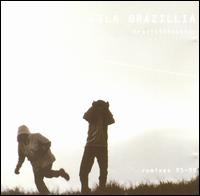
Fila Brazillia
2000 - Brazilification
Radiohead - Climbing the Walls
Phosphorous - Asthma
Moloko - Lotus Eaters
Ponga - Awesome Wells
Unkle - Barry Meditation
Mellow - Mellow
Euphoria - Delirium
DJ Food - Freedom
The Orb - Toxygene
Freakpower - New Direction
Chaser - Blue Planet
Simple Minds - Themes From Great Cities
Robin Jones - Royal Rumba
The Irresistible Force - Nepalese Fish Dances
The Egg - Bend
Lamb - Cottonwool
ACR - Samba 123
Black Uhuru - Boof, N' Baff, N' Biff
Just like Kruder & Dorfmeister's excellent K&D Sessions, Fila Brazillia's Brazilification is a continuous-mix set of down-tempo remixes spanning two discs, and it's just as stellar a compilation of material, too. Though Fila Brazillia doesn't quite have the reputation on the decks, like K&D they'd been not only one of the busiest remixing teams during the late '90s but also one of the best. Freed from the "serious" art of long-form recordings and given a focus by the originals (many of which are pop songs by alternative bands), Cobby and McSherry sound even better here than on their albums (where frequent genre excursions and long jams occasionally make for rather bland trip-hop). As you'd expect from the cover photo, which shows the anoraked pair larking about on a hillside, the duo knows how to have fun as well; they toy with their vocoders to give a hilarious canary-in-a-ring-modulator effect to the vocals of Moloko's Roisin Murphy on their remix of "Lotus Eaters." Though many of the best remixes come on the first disc (Radiohead's "Climbing up the Walls," U.N.K.L.E.'s "Berry Meditation," the Orb's "Toxygene"), one of Brazillia's best moments on wax -- the alternately blissful and drum-heavy rework of Lamb's "Cottonwool" -- finally appears late on the second disc. For those too busy to track down remixes, Brazilification is not only a perfect complement to the Pork Recordings pair but a worthy introduction. -- John Bush
Fiona Apple
1996 - Tidal
Sleep to Dream
Sullen Girl
Shadowboxer
Criminal
Slow Like Honey
The First Taste
Never Is a Promise
The Child Is Gone
Pale September
Carrion
Fiona Apple demonstrates considerable talent on her debut album, Tidal, but it is unformed, unfocused talent. Her voice is surprisingly rich and supple for a teenager, and her jazzy, sophisticated piano playing also belies her age. Given the right material, such talents could have flourished, but she has concentrated on her own compositions, which are nowhere near as impressive as her musicianship. Most of Tidal is comprised of confessional singer/songwriter material, and while they strive to say something deep and important, much of the lyrics settle for clichés. Apple does have a handful of impressive songs on Tidal, like the haunting "Shadowboxer" and "Sullen Girl," but the gap between her performing talents and songwriting skills is too large to make the album anything more than a promising, and very intriguing, debut. -- Stephen Thomas Erlewine
1999 - When the Pawn Hits the Conflicts He Thinks Like a King
On the Bound
To Your Love
Limp
Love Ridden
Paper Bag
A Mistake
Fast as You Can
The Way Things Are
Get Gone
I Know
Fiona Apple may have been grouped in with the other female singer/songwriters who dominated the pop charts in 1996 and 1997, but she stood out by virtue of her grand ambitions and considerable musical sophistication. Even though her 1996 debut Tidal occasionally was hampered by naiveté, it showcased a gifted young artist in the process of finding her voice. Even so, the artistic leap between Tidal and its long-awaited 1999 sequel When the Pawn Hits... is startling. It's evident that not only have Apple's ambitions grown, so has her confidence -- few artists would open themselves up to the ridicule that comes with having a 90-word poem function as the full title, but that captures the fearless feeling of the record. Apple doesn't break from the jazzy pop of Tidal on Pawn, choosing instead to refine her sound and then expand its horizons. Although there are echoes of everything from Nina Simone to Aimee Mann on the record, it's not easy to spot specific influences, because this is truly an individual work. As a songwriter, she balances her words and melodies skillfully, no longer sounding self-conscious as she crafts highly personal, slightly cryptic songs that never sound precocious or insular. With producer Jon Brion, she created the ideal arrangements for these idiosyncratic songs, finding a multi-layered sound that's simultaneously elegant and carnival-esque. As a result, Pawn is immediately grabbing, and instead of fading upon further plays, it reveals more with each listen, whether it's a lyrical turn of phrase or an unexpected twist in the arrangement; what's more, Apple has made it as rich emotionally as it is musically. That's quite a feat for any album, but it's doubly impressive since it is only the second effort by a musician who is only 22 years old. -- Stephen Thomas Erlewine
Fugees
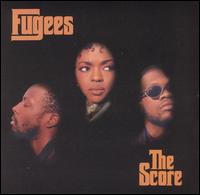
1996 - The Score
Red Intro
How Many Mics
Ready or Not
Zealots
The Beast
Fu-Gee-La
Family Business
Killing Me Softly with his Song
The Score
The Mask
Cowboys
No Woman, No Cry
Manifest/Outro
Fu-Gee-La [Refugee Camp Remix]
Fu-Gee-La [Sly & Robbie Mix]
Mista Mista
Fu-Gee-La [Refugee Camp Global Mix]
A breath of fresh air in the gangsta-dominated mid-'90s, the Fugees' breakthrough album, The Score, marked the beginning of a resurgence in alternative hip-hop. Its left-field, multi-platinum success proved there was a substantial untapped audience with an appreciation for rap music but little interest in thug life. The Score's eclecticism, social consciousness, and pop smarts drew millions of latent hip-hop listeners back into the fold, showing just how much the music had grown up. It not only catapulted the Fugees into stardom, but also launched the productive solo careers of Wyclef Jean and Lauryn Hill, the latter of whom already ranks as one of the top female MCs of all time based on her work here. Not just a collection of individual talents, the Fugees' three MCs all share a crackling chemistry and a wide-ranging taste in music. Their strong fondness for smooth soul and reggae is underscored by the two hit covers given slight hip-hop makeovers (Roberta Flack's "Killing Me Softly With His Song" and Bob Marley's "No Woman, No Cry"). Even when they're not relying on easily recognizable tunes, their original material is powered by a raft of indelible hooks, especially the great "Fu-Gee-La"; there are also touches of blues and gospel, and the recognizable samples range from doo wop to Enya. Their protest tracks are often biting, yet tempered with pathos and humanity, whether they're attacking racial profiling among police ("The Beast"), the insecurity behind violent posturing ("Cowboys"), or the inability of many black people in the Western Hemisphere to trace their familial roots ("Family Business"). Yeah, the Chinese restaurant skit is a little dicey, but on the whole, The Score balances intelligence and accessibility with an easy assurance, and ranks as one of the most distinctive hip-hop albums of its era. -- Steve Huey
Gorillaz
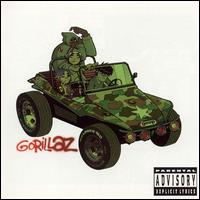
2001 - Gorillaz
Re-Hash
5/4
Tomorrow Comes Today
New Genius (Brother)
Clint Eastwood
Man Research (Clapper)
Punk
Sound Check (Gravity)
Double Bass
Rock the House
19-2000
Latin Simone (¿Que Pasa Contigo?)
Starshine
Slow Country
M1 A1
Dracula
Left Hand Suzuki Method
It's tempting to judge Gorillaz -- Damon Albarn, Tank Girl creator Jamie Hewlett, and Dan "The Automator" Nakamura's virtual band -- just by their brilliantly animated videos and write the project off as another triumph of style over substance. Admittedly, Hewlett's edgy-cute characterizations of 2-D, Gorillaz' pretty boy singer (who looks a cross between the Charlatans' Tim Burgess and Sonic the Hedgehog), sinister bassist Murdoc, whiz-kid guitarist Noodle, and b-boy drummer Russel are so arresting that they almost detract from Gorillaz' music. The amazing "Thriller"-meets-Planet of the Apes clip for "Clint Eastwood" is so visually clever that it's easy to take the song's equally clever, hip-hop-tinged update of the Specials' "Ghost Town" for granted. And initially, Gorillaz' self-titled debut feels incomplete when Hewlett's imagery is removed; the concept of Gorillaz as a virtual band doesn't hold up as well when you can't see the virtual bandmembers. It's too bad that there isn't a DVD version of Gorillaz, with videos for every song, à la the DVD version of Super Furry Animals' Rings Around the World. Musically, however, Gorillaz is a cutely caricatured blend of Albarn's eclectic Brit-pop and Nakamura's equally wide-ranging hip-hop, and it sounds almost as good as the band looks. Albarn has fun sending up Blur's cheeky pop on songs like "5/4" and "Re-Hash," their trip-hop experiments on "New Genious" and "Sound Check," and "Song 2"-like thrash-pop on "Punk" and "M1 A1." Despite the similarities between Albarn's main gig and his contributions here, Gorillaz isn't an Albarn solo album in disguise; Nakamura's bass- and beat-oriented production gives the album an authentically dub and hip-hop-inspired feel, particularly on "Rock the House" and "Tomorrow Comes Today." Likewise, Del tha Funkee Homosapien, Miho Hatori, and Ibrahim Ferrer's vocals ensure that it sounds like a diverse collaboration rather than an insular side project. Instead, it feels like a musical vacation for all parties involved -- a little self-indulgent, but filled with enough fun ideas and good songs to make this virtual band's debut a genuinely enjoyable album. -- Heather Phares
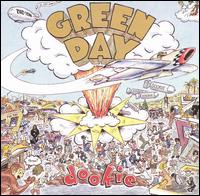
Green Day
1994 - Dookie
Burnout
Having a Blast
Chump
Longview
Welcome to Paradise
Pulling Teeth
Basket Case
She
Sassafras Roots
When I Come Around
Coming Clean
Emenius Sleepus
In the End
F.O.D./All By Myself
Green Day couldn't have had a blockbuster without Nirvana, but Dookie wound up being nearly as revolutionary as Nevermind, sending a wave of imitators up the charts and setting the tone for the mainstream rock of the mid-'90s. Like Nevermind, this was accidental success, the sound of a promising underground group suddenly hitting its stride just as they got their first professional, big-budget, big-label production. Really, that's where the similarities end, since if Nirvana were indebted to the weirdness of indie rock, Green Day were straight-ahead punk revivalists through and through. They were products of the underground pop scene kept alive by such protagonists as All, yet what they really loved was the original punk, particularly such British punkers as the Jam and Buzzcocks. On their first couple records, they showed promise, but with Dookie, they delivered a record that found Billie Joe Armstrong bursting into full flower as a songwriter, spitting out melodic ravers that could have comfortable sat alongside Singles Going Steady, but infused with an ironic self-loathing popularized by Nirvana, whose clean sound on Nevermind is also emulated here. Where Nirvana had weight, Green Day are deliberately adolescent here, treating nearly everything as joke and having as much fun as snotty punkers should. They demonstrate a bit of depth with "When I Come Around," but that just varies the pace slightly, since the key to this is their flippant, infectious attitude -- something they maintain throughout the record, making Dookie a stellar piece of modern punk that many tried to emulate but nobody bettered. -- Stephen Thomas Erlewine
Jane's Addiction
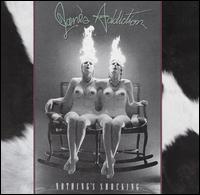
1988 - Nothing's Shocking
Ocean Size
Had a Dad
Ted, Just Admit It...
Standing in the Shower...Thinking
Summertime Rolls
Mountain Song
Idiots Rule
Jane Says
Thank You, Boys
Pigs in Zen
Although Jane's Addiction's 1987 self-titled debut was an intriguing release (few alternative bands at the time had the courage to mix modern rock, prog rock, and heavy metal together), it paled in comparison to their now classic major-label release one year later, Nothing's Shocking. Produced by Dave Jerden and J.A.'s vocalist Perry Farrell, the album was more focused and packed more of a sonic wallop than it's predecessor; the fiery performances often create an amazing sense that it could all fall apart at any second, creating a fantastic musical tension. Such tracks as "Up the Beach," "Ocean Size," and one of alt-rock's greatest anthems, "Mountain Song," contain the spaciousness created by the band's two biggest influences, Led Zeppelin and the Cure. Elsewhere, "Ted, Just Admit It" (about serial killer Ted Bundy) and the haunting yet gorgeous "Summertime Rolls" stretched to epic proportions, making great use of changing moods and dynamics (something most alt-rock bands of the time were oblivious to). An incredibly consistent and challenging album, other highlights included the rockers "Had a Dad" and "Pigs in Zen," the horn-driven "Idiots Rule," the jazz instrumental "Thank You Boys," and the up-tempo "Standing in the Shower...Thinking." Like most great bands, it was not a single member whose contribution was greater: Perry Farrell's unique voice and lyrics, Dave Navarro's guitar riffs and wailing leads, Eric Avery's sturdy bass lines, and one of rock's greatest and most powerful drummers, Stephen Perkins. Nothing's Shocking is a must-have for lovers of cutting-edge, influential, and timeless hard rock. -- Greg Prato
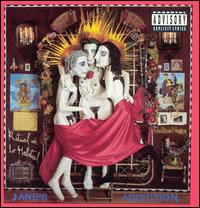
1990 - Ritual de lo Habitual
Stop!
No One's Leaving
Ain't No Right
Obvious
Been Caught Stealing
Three Days
Then She Did...
Of Course
Classic Girl
1990's Ritual de lo Habitual served as Jane's Addiction's breakthrough to the mainstream (going gold and reaching the Top 20), and remains one of rock's all-time sprawling masterpieces. While its predecessor, 1988's Nothing's Shocking, served as a fine introduction to the group, Ritual de lo Habitual proved to be even more daring; few (if any) alt-rock bands have composed a pair of epics that totaled nearly 20 minutes, let alone put them back to back for full dramatic effect. While the cheerful ditty "Been Caught Stealing" is the album's best known track, the opening "Stop!" is one of the band's best hard rock numbers, propelled by guitarist Dave Navarro's repetitive trashy funk riff, while "Ain't No Right" remains explosive in its defiant and vicious nature. Jane's Addiction always had a knack for penning beautiful ballads with a ghostly edge, again proven by the album closer, "Classic Girl." But it's the aforementioned epics that are the album's cornerstone: "Three Days" and "Then She Did...." Although Perry Farrell has never truly admitted what the two songs are about lyrically, they appear to be about an autobiographical romantic tryst between three lovers, as each composition twists and turns musically through every imaginable mood. And while the tracks "No One's Leaving," "Obvious," and "Of Course" may not be as renowned as other selections, they prove integral in the makeup of the album. Surprisingly, the band decided to call it a day just as Ritual de lo Habitual hit big, headlining the inaugural Lollapalooza tour (the brainchild of Farrell) in the summer of 1991 as their final road jaunt. Years later, it remains one of alt-rock's finest moments. -- Greg Prato
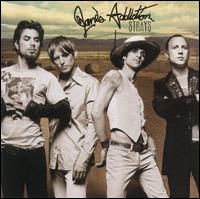
2003 - Strays
True Nature
Strays
Just Because
Price I Pay
The Riches
Superhero
Wrong Girl
Everybody's Friend
Suffer Some
Hypersonic
To Match the Sun
The last time that Jane's Addiction headlined Lollapalooza behind a high-profile album was, of course, 1991. Much changed in 12 years, though, and the declining fortunes of Perry Farrell's breakthrough festival during the summer of 2003 were matched by a desultory return from three-fourths of the original Jane's Addiction lineup on its third full album, Strays. Farrell, guitarist Dave Navarro, drummer Stephen Perkins, and bassist Eric Avery (who declined his reunion invitation) had been a vision of '80s musical heaven since their studio debut, 1988's Nothing's Shocking. Farrell's art-school intelligence and originality made the band interesting, while Navarro's and Perkins' background in heavy metal (they're both significantly younger than Farrell) gave the band punch, adding the melodicism of power pop and the constant riffing of thrash. Though Strays possesses all these characteristics -- it's undeniably a Jane's Addiction record, and a powerful one at that -- it also illustrates that the group's formidable musical talents have been subsumed by an apparent quest to save its legacy. For Strays is, most of all, a safe record. Farrell's regal, echo-laden vocals are intact (and out in front like never before), as are Navarro's ragged, lyrical guitar solos, but the songs lag far behind. In fact, they never even approach the level of any Jane's material from their two proper albums. This isn't a record that would allow a throwaway stunner like "Been Caught Stealing" (the tossed-off jam that became the band's biggest hit) or the majestic ten-minute epic "Three Days." In their place is a set of majestic jams influenced by Farrell's second Porno for Pyros LP, Good God's Urge, a mystical mishmash of musical feelings and textures, not songs. The allure of Jane's Addiction is undiminished by Strays (this is still a band creating music unlike any other group on earth), but the imagination, bravado, and songwriting smarts apparent from their previous classics is missing. -- John Bush
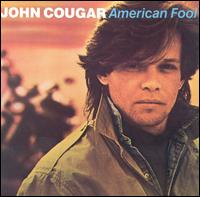
John Cougar
1982 - American Fool
Hurts So Good
Jack & Diane
Hand to Hold on To
Danger List
Can You Take It
Thundering Hearts
China Girl
Close Enough
Weakest Moments
John Cougar's first albums were so bereaved of strong material that the lean swagger of American Fool came as a shock. The difference is evident from the opening song, "Hurts So Good," a hard, Stonesy rocker with an irresistibly sleazy hook. Cougar never wrote anything as catchy as this before, nor had his romantic vision of small-town America resonated like it did on "Jack & Diane," a minor and remarkably affecting sketch of dead-end romance. These two songs are the only true keepers on American Fool, but the rest of the record works better than his previous material because his band is tighter than ever before, making his weaker moments convincing. Besides, songs like "Hand to Hold On To" and "China Girl," for all their faults, do indicate that his sense of craft is improving considerably. -- Stephen Thomas Erlewine
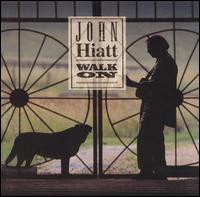
John Hiatt
1995 - Walk On
Cry Love
You Must Go
Walk On
Good as She Could Be
River Knows Your Name
Native Son
Dust Down a Country Road
Ethylene
I Can't Wait
Shredding the Document
Wrote It Down and Burned It
Your Love Is My Rest
Friend of Mine
Mile High
Walk On is a classic "road" album in the sense that its songs largely seem written to or about people who are not present, either because the singer is away from them, he is singing about the past, or they are dead. John Hiatt exploits the resulting feelings of longing, anger, and mourning inherent in that premise, sometimes, as in "I Can't Wait," singing about wanting to be back home, sometimes, as in the odd love song "Ethylene," wishing for a departed lover, sometimes, as in "Dust Down A Country Road," reflecting as in a dream on the past. He employs rustic nature imagery, but frequently for ominous effects rather than gentle ones, and he is supported by spare, guitar-dominated backup that is alternately soothing and disturbing. Hiatt's label debut for Capitol (though they didn't do much to promote it), Walk On is not among Hiatt's more consistent or more accessible works, but he remains a highly imaginative and craftsmanlike writer who can startle you. The raucous "Shredding The Document" is among the half dozen best songs of the year, if not the decade. -- William Ruhlmann
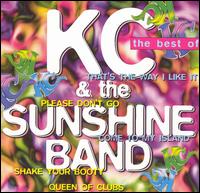
K.C. & The Sunshine Band
1999 - Best of K.C. & The Sunshine Band
That's the Way (I Like It)
Please Don't Go
Shake Your Booty
Keep It Comin' Love
Come to My Island
Sound Your Funky Horn
Queen of Clubs
Get Down Tonight
I Will Love You Tomorrow
Let's Go Rock 'n Roll
I'm Your Boogie Man
Do You Feel Alright
It's the Same Old Song
Boogie Shoes
I Like to Do It
I'm So Crazy
No Review
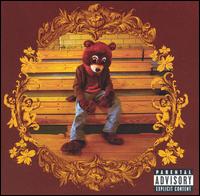
Kanye West
2004 - The College Dropout
Intro
We Don't Care
Graduation Day
All Falls Down (feat. Syleena Johnson)
I'll Fly Away
Spaceship (with GLC and Consequence)
Jesus Walks
Never Let Me Down (with Jay-Z and J.Ivy)
Get Em High (with Talib Kweli and Common)
Workout Plan
The New Workout Plan
Slow Jamz (with Twista) (feat. Jamie Foxx)
Breathe In, Breathe Out (with Ludacris)
School Spirit [Skit 1]
School Spirit
School Spirit [Skit 2]
Lil' Jimmy Skit
Two Words (with Mos Def and Freeway) (feat. The Harlem Boys Choir)
Through the Wire
Family Business
Last Call
Producer Kanye West's highlight reels were stacking up exponentially when his solo debut for Roc-a-Fella was released, after numerous delays and a handful of suspense-building underground mixes. The week The College Dropout came out, three singles featuring his handiwork were in the Top 20, including his own "Through the Wire." A daring way to introduce himself to the masses as an MC, the enterprising West recorded the song during his recovery from a car wreck that nearly took his life -- while his jaw was wired shut. Heartbreaking and hysterical ("There's been an accident like Geico/They thought I was burnt up like Pepsi did Michael"), and wrapped around the helium chirp of the pitched-up chorus from Chaka Khan's "Through the Fire," the song and accompanying video couldn't have forged his dual status as underdog and champion any better. All of this momentum keeps rolling through The College Dropout, an album that's nearly as phenomenal as the boastful West has led everyone to believe. The bad points? A few too many skits, "The New Workout Plan," and the fact that the triumph that is "Through the Wire" is de-emphasized and placed so deep into the album that it's almost anticlimactic. Apart from this? Abundant hotness in every aspect. From a production standpoint, nothing here tops recent conquests like Alicia Keys' "You Don't Know My Name" or Talib Kweli's "Get By," but he's consistently potent and tempers his familiar characteristics -- high-pitched soul samples, gospel elements -- by tweaking them and not using them as a crutch. Even though those with their ears to the street knew West could excel as an MC, he has used this album as an opportunity to prove his less-known skills to a wider audience. One of the most poignant moments is on "All Falls Down," where the self-effacing West examines self-consciousness in the context of his community: "Rollies and Pashas done drive me crazy/I can't even pronounce nothing, yo pass the Versacey/Then I spent 400 bucks on this just to be like 'Nigga you ain't up on this'." If the notion that the album runs much deeper than the singles isn't enough, there's something of a surprising bonus: rather puzzlingly, a slightly adjusted mix of "Slow Jamz" -- a side-splitting ode to legends of baby-making soul that originally appeared on Twista's Kamikaze, just before that MC received his own Roc-a-Fella chain -- also appears. Prior to this album, we were more than aware that West's stature as a producer was undeniable; now we know that he's also a remarkably versatile lyricist and a valuable MC. -- Andy Kellman
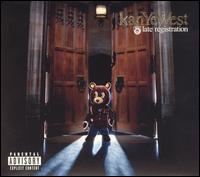
2005 - Late Registration
Wake Up Mr. West (with Bernie Mac)
Heard 'Em Say (feat. Adam Levine)
Touch the Sky (with Lupe Fiasco)
Gold Digger (feat. Jamie Foxx)
Skit #1
Drive Slow (with Paul Wall and GLC)
My Way Home (with Common)
Crack Music (with The Game)
Roses
Bring Me Down (feat. Brandy)
Addiction
Skit #2
Diamonds from the Sierra Leone [Remix] (with Jay-Z)
We Major (with Nas and Really Doe)
Skit #3
Hey Mama
Celebration
Skit #4
Gone (with Consequence and Cam'Ron)
Diamonds from the Sierra Leone [Bonus Track]
Late [Hidden Track]
And then, in a flash, Kanye was everywhere, transformed from respected producer to big-name producer/MC, throwing a fit at the American Music Awards, performing "Jesus Walks" at the Grammys, wearing his diamond-studded Jesus piece, appearing on the cover of Time, running his mouth 24/7. One thing that remains unchanged is Kanye's hunger, even though his head has swollen to the point where it could be separated from his body, shot into space, and considered a planet. Raised middle class, Kanye didn't have to hustle his way out of poverty, the number one key to credibility for many hip-hop fans, whether it comes to rapper turned rapping label presidents or suburban teens. And now that he has proved himself in another way, through his stratospheric success -- which also won him a gaggle of haters as passionate as his followers -- he doesn't want to be seen as a novelty whose ambitions have been fulfilled. On Late Registration, he finds himself backed into a corner, albeit as king of the mountain. It's a paradox, which is exactly what he thrives on. His follow-up to The College Dropout isn't likely to change the minds of the resistant. As an MC, Kanye remains limited, with all-too-familiar flows that weren't exceptional to begin with (you could place a number of these rhymes over College Dropout beats). He uses the same lyrical strategies as well. Take lead single "Diamonds from Sierra Leone," in which he switches from boastful to rueful; more importantly, the conflict felt in owning blood diamonds will be lost on those who couldn't afford one with years of combined income. Even so, he can be tremendous as a pure writer, whether digging up uncovered topics (as on "Diamonds") or spinning a clever line ("Before anybody wanted K. West's beats, me and my girl split the buffet at KFC"). The production approach, however, is rather different from the debut. Crude beats and drastically tempo-shifted samples are replaced with a more traditionally musical touch from Jon Brion (Fiona Apple, Aimee Mann), who co-produces with West on most of the tracks. (Ironically, the Just Blaze-helmed "Touch the Sky" tops everything laid down by the pair, despite its heavy reliance on Curtis Mayfield's "Move on Up.") West and Brion are a good, if unlikely, match. Brion's string arrangements and brass flecks add a new dimension to West's beats without overshadowing them, and the results are neither too adventurous nor too conservative. While KRS-One was the first to proclaim, "I am hip-hop," Kanye West might as well be the first MC to boldly state, "I am pop." -- Andy Kellman
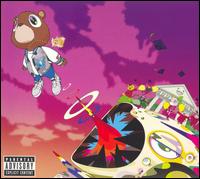
2007 - Graduation
Good Morning
Champion
Stronger
I Wonder
Good Life
Can't Tell Me Nothing
Barry Bonds
Drunk and Hot Girls
Flashing Lights
Everything I Am
The Glory
Homecoming
Big Brother
[Untitled Track]
Graduation's pre-leak talk wasn't as substantive as it was with Kanye West's first two albums. As with just about any other artist's third album, it had to be expected. The College Dropout was one of the most anticipated debuts of the early 2000s, while Late Registration had people wondering why Kanye would feel the need to work so extensively with multi-instrumentalist rock producer Jon Brion (the J Dilla of the chamberlin) and whether or not Kanye's hubristic tendencies would get the better of it. With Graduation, there was Takashi Murakami's artwork, a silly first-week sales competition with the decreasingly relevant 50 Cent, and chatter about synthesizers running wild. That was about it, but it all seemed loud and prevalent, due in part to a lack of high-profile rap albums released in 2007. Graduation is neither as bold nor as scattered as The College Dropout, and it's neither as extroverted nor as sonically rich as Late Registration. Kanye still makes up for his shortcomings as an MC and lyricist by remaining charmingly clumsy, frequently dealing nonsense through suspect rhyme schemes: "I never be picture-perfect Beyoncé/Be light as Al B. or black as Chauncey/Remember him from Blackstreet, he was black as the street was/I never be laid-back as this beat was." The songs that are thematically distanced, introspective, and/or wary -- there are many of them -- are, in turn, made more palatable than insufferable. That his humor remains a constant is a crucial aspect of the album, especially considering that most other MCs would sound embittered and hostile if they were handling similar subjects, like haters new and old, being a braggart with a persistent underdog complex, getting wrapped up in spending and flaunting, and the many hassles of being a hedonist. Those who have admired Kanye as a sharp producer while detesting him as an inept MC might find the gleaming synth sprites, as heard most prominently throughout "Flashing Lights" and "Stronger," to be one of the most glaring deal-breakers in hip-hop history. Though the synthesizer use marks a clear, conscious diversion from Kanye's past productions, highlights like "I Wonder," "The Glory," and "Everything I Am" are deeply rooted in the Kanye of old, using nostalgia-inducing samples, elegant pianos and strings, and gospel choirs. So, no, he's not dreaming of fronting A Flock of Seagulls or joining Daft Punk. He's being his shrewd, occasionally foolish, and adventurous self. -- Andy Kellman
Keith Jarrett
1973 - Solo Concerts: Bremen
Bremen, Pt. 1
Bremen, Pt. 2
These are the recordings that made Keith Jarrett famous. Originally released as a three-LP set, the two solo piano recitals feature Jarrett freely improvising and never seeming to run out of ideas. A simple figure often develops through repetition and subtle variations into a rather complex sequence and eventually evolves into a new figure. One of the improvisations lasts for three LP sides (64 minutes), while the second concert has two long solos for 30 and 35 minutes, respectively. Despite the length, the music never loses one's interest, making this an essential recording for all jazz collections. -- Scott Yanow
1973 - Solo Concerts: Lausanne
Lausanne
These are the recordings that made Keith Jarrett famous. Originally released as a three-LP set, the two solo piano recitals feature Jarrett freely improvising and never seeming to run out of ideas. A simple figure often develops through repetition and subtle variations into a rather complex sequence and eventually evolves into a new figure. One of the improvisations lasts for three LP sides (64 minutes), while the second concert has two long solos for 30 and 35 minutes, respectively. Despite the length, the music never loses one's interest, making this an essential recording for all jazz collections. -- Scott Yanow
1975 - The Köln Concert
Part I
Part II A
Part II B
Part II C
Recorded in 1975 at the Köln Opera House and released the same year, this disc has, along with its revelatory music, some attendant cultural baggage that is unfair in one sense: Every pot-smoking and dazed and confused college kid -- and a few of the more sophisticated ones in high school -- owned this as one of the truly classic jazz records, along with Bitches Brew, Kind of Blue, Take Five, A Love Supreme, and something by Grover Washington, Jr. Such is cultural miscegenation. It also gets unfairly blamed for creating George Winston, but that's another story. What Keith Jarrett had begun a year before on the Solo Concerts album and brought to such gorgeous flowering here was nothing short of a miracle. With all the tedium surrounding jazz-rock fusion, the complete absence on these shores of neo-trad anything, and the hopelessly angry gyrations of the avant-garde, Jarrett brought quiet and lyricism to revolutionary improvisation. Nothing on this program -- so ideally suited to CD -- was considered before he sat down to play. All of the gestures, intricate droning harmonies, skittering and shimmering melodic lines, and whoops and sighs from the man are spontaneous. Although it was one continuous concert, the piece is divided into four sections, largely because it had to be divided for double LP. But from the moment Jarrett blushes his opening chords and begins meditating on harmonic invention, melodic figure construction, glissando combinations, and occasional ostinato phrasing, music changed. For some listeners it changed forever in that moment. For others it was a momentary flush of excitement, but it was change, something so sorely needed and begged for by the record-buying public. Jarrett's intimate meditation on the inner workings of not only his pianism, but also the instrument itself and the nature of sound and how it stacks up against silence, involved listeners in its search for beauty, truth, and meaning. The concert swings with liberation from cynicism or the need to prove anything to anyone ever again. With this album, Jarrett put himself in his own league, and you can feel the inspiration coming off him in waves. This may have been the album every stoner wanted in his collection "because the chicks dug it." Yet it speaks volumes about a musician and a music that opened up the world of jazz to so many who had been excluded, and offered the possibility -- if only briefly -- of a cultural, aesthetic optimism, no matter how brief that interval actually was. This is a true and lasting masterpiece of melodic, spontaneous composition and improvisation that set the standard. -- Thom Jurek
KoRn
1998 - Follow the Leader
It's On!
Freak on a Leash
Got the Life
Dead Bodies Everywhere
Children of the KoRn
B.B.K.
Pretty
All in the Family
Reclaim my Place
Justin
Seed
Cameltosis
My Gift to You
Earache my Eye [Hidden Track]
More than anything, Korn are about sound. They write songs, but those wind up not being nearly as memorable as their lurching metallic hip-hop grind. They have yet to exhaust that sound, and that's why their third album, Follow the Leader, is an effective follow-up to their first two alt-metal landmarks. Not that it offers anything new -- it's the same sound, offered in a more focused forum than Life Is Peachy, but not sounding as fresh as Korn. In fact, it begins to wear a little thin toward the end of the album, but guitarists Head Welch and Munky Shaffer find enough tonal variations over the course of the album to keep it interesting, and vocalist Jonathan Davis nearly matches them with his cavalcade of voices. If the songs themselves don't leave much of an impression, it's because they're not supposed to -- they're simply vehicles for the metallic grind, which provides all the visceral rush any Korn fan needs. -- Stephen Thomas Erlewine
Kruder & Dorfmeister
1996 - Conversions
DJ Unknown Face - Dat's Cool
Dead Calm - Searchin'
Ballistic Brothers - Come On [Simon Templar Mix]
Omni Trio - Nu Birth of Cool
PFM - One and Only
Skanna - Find Me
Count Basic - Speechless [Kruder & Dorfmeister Session]
Hunch - Visible From Space [Aquasky Mix]
Spacelink - Time Zone
Earl Grey - The Lick
Kruder & Dorfmeister's Conversions: A K&D Selection is the pair's first full-length DJ album, establishing their mastery of downtempo trip-hop mixes while sprinkling some organic, grooving drum'n'bass and techno for good measure. -- Steve Huey
1996 - DJ Kicks
Herbalizer - A Mother
Small World - Livin' Free
Tango! - Spellbound
Lab Rats - Give My Soul
Lab Rats - Revolutionary Pilot
JMJ and Flytronix - In Too Deep
Aquasky - Kauna
James Bong - Never Say
Hardfloor - Dadamnphreaknoizphunk
Thievery Corporation - Shaolin Satellite
Kruder & Dorfmeister - High Noon
Beanfield - Keep On Believing
Sapien - Que Dolor
Shantel - Bass and Several Cars
Kama - Look Up Dere
Showroom Recordings - Radio Burning Chrome
Kruder & Dorfmeister - DJ Kicks
Though it's a close race, the duo make for better DJs than producers, as witnessed by their volume in the DJ Kicks series. Beginning with downbeat trip-hop including Herbaliser, Statik Sound System and Thievery Corporation, Kruder & Dorfmeister flow through jazzy drum'n'bass (with Aquasky and JMJ & Flytronix) and techno (with Hardfloor and Showroom Recordings). K&D sound much more relaxed and involved than on their own G-Stoned EP. -- John Bush
1996 - G-Stoned
Definition
Deep Shit, Pts. 1 & 2
High Noon
Original Bedroom Rockers
G-Stoned is a four-track EP packed with some of the rawest, most intense trip-hop ever recorded. The melange of syrupy beats and languid samples display Kruder & Dorfmeister with an impeccable grasp of constructing sounds, though the tracks seem to wander a bit before reaching their conclusion. -- John Bush
1998 - The K&D Sessions
Roni Size - Heroes [Kruder's Long Loose Bossa]
Alez Reece - Jazz Master
Count Basic - Speechless [Drum 'N Bass]
Rocker's - Hifi Going Under [Main Version]
Bomb the Bass - Bug Powder Dust
Aphrodelics - Rollin' on Chrome [Wild Motherfucker Dub]
Depeche Mode - Useless
Count Basic - Gotta Jazz
Truby Trio - Donaueschingen
Lamb - Trans Fatty Acid
David Holmes - Gone
Sofa Surfers - Sofa Rockers [Richard Dorfmeister Mix]
Mama Oliver - Eastwest [Stoned Together]
Bomb the Bass - Bug Powder Dust (Dub)
Kruder & Dorfmeister - Boogie Woogie
Sin - Where Shall I Turn?
Bone Thugs 'n Harmony - 1st of tha Month
Kruder & Dorfmeister - Lexicon
Knowtoryous - Bomberclad Joint
Rockers Hi Fi - Going Under [Evil Love and Insanity Dub]
Strange Cargo - Million Town
While Kruder & Dorfmeister remained unwilling to release a "proper" album even several years after their breakout, The K&D Sessions is proof positive they're still doing what they do best -- making the most blissfully blunted music the world has ever heard. The two-disc set is first and foremost a K&D mix album, to add to the two they'd already released. It's also a remix collection, though; each of the 21 tracks are reworkings (by Kruder, Dorfmeister, or both) for artists including Roni Size, Lamb, David Holmes, Bomb the Bass, Depeche Mode, Bone Thugs-N-Harmony, Sofa Surfers, and Count Basic. As could be expected, The K&D Sessions is earthy, downtempo and acid-based, even moreso than previous mix albums by the pair. The pinging vocal samples that echo through the duo's remix of "Bug Powder Dust" by Bomb the Bass prove amply that Kruder & Dorfmeister have a better handle on 21st-century dub techniques than any other producers out there, and the impossibly deep beats on almost every track simply couldn't have been recorded by any other act. Yes, it's a bit of a shame that the pair still hadn't released an album of own-productions, but with (re)mix albums this stunning and accomplished, Kruder & Dorfmeister hardly needed one to gain respect. -- John Bush
<- 1
2
3
->