A List of my Albums:
(All Reviews Ripped Without Permission from
AMG
.)
In June, my hard drive had a major failure, and all my music was lost. Herein remains memoriam.
Update: Huzzah! Recovery! Even if it is temporary!
Further Update: It was temporary! I dropped my music hard drive while it was transferring. A lot of it is fortunately on my iPod.
Expand All
Supreme Beings of Leisure
2000 - Supreme Beings of Leisure
Never the Same
Golddigger
Last Girl on Earth
Strangelove Addiction
Ain't Got Nothin'
Truth from Fiction
You're Always the Sun
Sublime
Nothing Like Tomorrow
What's the Deal?
Under the Gun
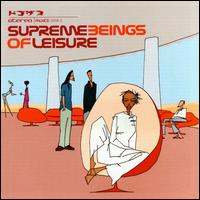
The self-titled debut album from Supreme Beings of Leisure fuses sounds from the group's diverse heritage -- which includes Japan, Puerto Rico, Ireland, India, Iran, and the Dominican Republic -- with deft programming and accessible songwriting. The result is a very smooth collection of trip-hop-based pop songs with global touches, not unlike a multi-culti Morcheeba album. Swooning strings and sitars weave their way through most of the album's 11 songs, including "Golddigger," which recalls '60s spy-movie themes, and "Never the Same" and "Last Girl on Earth," which showcase Geri Soriano-Lightwood's versatile, seductive vocals. The breakbeat-driven "Ain't Got Nothin'" and "Sublime" pick up the pace with a nod to drum'n'bass, while "Strangelove Addiction"'s club-friendly rhythm and lilting, Eastern-inspired melody make it the most accessible track on the album. Though many of the styles on Supreme Beings of Leisure have been done before, the group does a good job of updating the basic trip-hop sound enough to keep it fresh and enjoyable. -- Heather Phares
2002 - Divine Operating System
Give Up
Ghetto
Catch Me
Get Away
Rock and a Hard Place
Calamity Jane
Divine
Touch Me
So Much More
Freezer
Perfect
No Review
2002 - Divine [Promo Single]
Divine (Static Revenger vs. SBL)
Divine (Ian Pooley Mix)
Divine (Hatras Party Mix)
Divine (Original Mix)
Divine (Ian Pooley Dub Mix)
Divine (Acapella)
No Review
Ted Nugent
2002 - The Ultimate Ted Nugent
Strangeland
Stormtroopin'
Hey, Baby
Just What the Doctor Ordered
Snakeskin Cowboys
Motor City Madhouse
Where Have You Been All My Life?
Free-for-All
Dog Eat Dog
Writing on the Wall
Turn It Up
Street Rats
Hammerdown
Cat Scratch Fever
Wang Dang Sweet Poontang
Death by Misadventure
Out of Control
Live It Up
Homebound
Need You Bad
Weekend Warriors
Smokescreen
Paralyzed
Take It or Leave It
State of Shock
Snake Charmer
Wango Tango
Scream Dream
Jailbait [Live]
Yank Me, Crank Me [Live]
The Flying Lip Lock [Live]
Baby, Please Don't Go [Live]
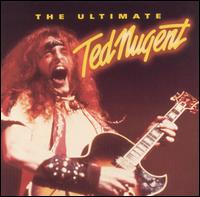
Epic/Legacy's double-disc set The Ultimate Ted Nugent falls short of its billing for a couple of reasons. First of all, even if the sound is very good, there are no liner notes -- just shots of Ted doing his guitar-face on-stage, plus pictures of his Epic albums. Second, this concentrates just on his Epic recordings, without dipping into the Amboy Dukes, while also ignoring latter-day recordings for other labels, including his manly tribute to the great hunter, "Fred Bear" (if you live in Michigan, where you can't go a day in hunting season without hearing this song, you know this is a crucial omission). So, what do you get? A double-disc collection of Ted the "wildman" at his peak -- which is good for those that just want the prime and the prime only, but it's a bit much for those that just want hits. As far as music goes, it's pretty good, since it does have those basic hits, but it's still a bit much and it could have been produced with a bit more care. -- Stephen Thomas Erlewine
Tenacious D
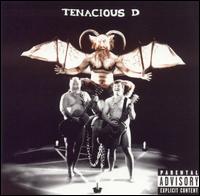
2001 - Tenacious D
Kielbasa
One Note Song
Tribute
Wonderboy
Hard Fucking
Fuck Her Gently
Explosivo
Dio
Inward Singing
Kyle Quit
The Road
Cock Pushups
Lee
Friendship Test
Friendship
Karate Schnitzel
Karate
Rock Your Socks
Drive Thru
Double Team
As anyone who witnessed their legendary shorts on HBO will attest, Tenacious D is indeed the greatest band on earth. Bad D is still better than the Beatles and good D is transcendent. Even so, Tenacious D's debut album will likely kick fans on their asses because the D is no longer just about JB and KG. They're even ready to be more than a power trio -- they're ready to be backed by a full band, complete with Dave Grohl on drums and the Dust Brothers behind the boards. After years of hearing them as an acoustic heavy metal duo, that's a real shock, but they've also overhauled their repertoire, reworking and retitling several songs and leaving many tunes behind. Most regrettably, there is no "History of Tenacious D," even if it is quoted in the liner notes, but there's also no "Rocketsauce," no "Kyle Took a Bullet for Me," no "Sasquatch," no "Cosmic Shame," no "Special Things," and no "Jesus Ranch." "You Broke the Rules" becomes "Karate," "Song of Exultant Joy" is "Kyle Quit the Band," "Sex Supreme" becomes "Double Team," "The Best Song in the World" becomes "Tribute," lacking many of the "Stairway to Heaven" allusions in this version, and so on and so forth (elements of their opening theme are incorporated into "Kielbasa," thankfully). Furthermore, the dynamic has shifted drastically because the group no longer sounds like maniacal misfits who've conquered the worlds in their own minds playing to an audience who just hasn't caught up yet. Here, they sound like victors who've had their delusions of grandeur come real (which is true when you think about it -- those shorts might not have done much on HBO, but videotapes passed through a lot of hands on the underground video railroad). This is a bigger change than you might think, and while the acoustic D sounds better, weirder, and purer, this still is a hell of a record, particularly because it rocks so damn hard. The worst thing about it are the sketches, which may be funny, but not nearly as funny as the plots that tied the shows together (nothing as funny as asides from the show, like "circle church," either) or the live routines; they tend to distract from the music. And the music is indeed what matters, since no matter how silly and gleefully profane this can be, Tenacious D rules because the music is terrific. The tunes have hooks, Kage and Jables harmonize well, and the cheerfully demented worldview is intoxicating, since their self-belief and self-referential world is delightfully absurd and warm (think about it -- the sex songs may be vulgar and may be about their prowess, but their prowess is about making those backstage Betties feel good). Sure, some listeners may chuckle because this all comes from two large, cute, 30-something slackers, but they're missing the inspirado behind this record -- Tenacious D certainly know they're funny, but that doesn't erase the fact that they rock so hard. They came to kick your ass and rock your socks off, and that is a very special thing. -- Stephen Thomas Erlewine
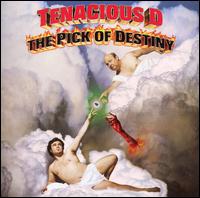
2006 - The Pick of Destiny
Kickaboo
Classico
Baby
Destiny
History
The Government Totally Sucks
Master Exploder
The Divide
Papagenu (He's My Sassafrass)
Dude (I Totally Miss You)
Break In-City (Storm the Gate!)
Car Chase City
Beelzeboss (The Final Showdown)
Pod
The Metal
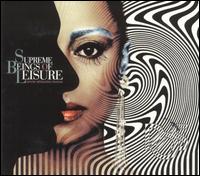
It's easy but not accurate to call Tenacious D a one-joke band, since they do love one joke best of all: that they are the greatest band in the world. It's a credit to Jack Black and Kyle Gass' strengths as writers and performers that at their best they can convince you it's true. Like the best comedians, the key is both in the writing and the delivery: jokes can be good on paper, but they need to be delivered with flair, and few have the flair of Jack Black, who has made megalomania inspiring, even adorable. That quality combined with serious vocal chops -- anybody who saw him on Mr. Show's "The Joke: The Musical" back in 1997 knew that he could sing -- gave Tenacious D both star power and musical substance, while Gass grounds it by giving Jack a comic foil, plus lead guitar and harmony. When it all gels, as it did on their short-lived HBO series and their 2001 debut, it's glorious, but even that 2001 LP indicated a problem with the D: when the scale gets larger, they get smaller, or at least their reason for being begins to unravel. Since the reason their joke works is that JB and KG are underdogs -- they're the best band in the world, it's just that the rest of the world hasn't figured it out yet -- when they're no longer underdogs, they're not quite as funny, or endearing. They're at their best when it's the two of them on-stage, playing acoustic guitars and riffing off each other. They're good enough that they can survive a bigger budget, as the debut illustrates -- it always helps to have Dave Grohl on your side, of course -- but a really big budget is still a problem, as the soundtrack to their big-screen extravaganza, The Pick of Destiny, proves. Jack and Kyle have been promising a cinematic venture chronicling their rise to power since they -- alright, since Jack turned into a star after stealing the show in the 2000 film High Fidelity, and 2006's The Pick of Destiny, made in collaboration with director/musician/prankster Liam Lynch, finally follows through on that promise. Leave aside the merits of the movie and compare the The Pick of Destiny soundtrack to the debut, and it's easy to see that this album is a very different beast than Tenacious D. That first album captured the essence of the original D -- the D that was nothing but Kage and Jables and their guitars -- but pumped up with heaps of electric guitars and thunderous drums from Grohl. It cribbed from a lot, but not all, of their standards, so it felt like a culmination of sorts: it finally felt like the D blossomed into a genuine rock band. In turn, The Pick of Destiny has greater ambitions -- appropriately for a soundtrack, it's big, sweeping, and well, cinematic -- but it doesn't feel like a breakthrough, since Tenacious D already took the D just about as far as they could go musically: it gave them muscle and might, it fleshed out their skeleton, sometimes a little bit too much, yet it worked because it sounded like this must be what JB and KG heard in their heads when they played on their own. There's no difference in sound on The Pick of Destiny, but the aesthetic of a soundtrack makes a huge difference. This may not be a concept album, but it's structured as a narrative, mirroring the plot of the movie. Unfortunately, this doesn't give The Pick of Destiny the weight or grandeur of a true concept album, because a lot of the music sounds as if it serves the movie, and doesn't stand tall when separated from the film. It's easy to figure out that songs like "Break In-City (Storm the Gate!)" and "Car Chase City" are plot points in the film, but it's not quite as simple as that: since most of the album consists of songs that run between 1:20 and 2:40 minutes, all the tunes kind of feel like narrative filler, even when they're melodic, memorable, and delivered with gusto by the D. And that's the crucial problem with the album: it's good, but it doesn't have the surplus of songs so great they sound like unearthed classics, which is the very thing that has always made Tenacious D so irresistible. Make no mistake, they're still great enough to rally: they revive "History," their indelible theme, incorporate "Sasquatch" into the deliriously atypical psych-pop "Papagenu (He's My Sassafrass)," offer a Dethklok-worthy ode to metalosity with "The Metal," and serve up two epics in "Beelzeboss (The Final Showdown)" -- served up as a duet with Dave Grohl, who plays Satan -- and the opening "Kickapoo," a tremendous mini-rock opera with cameos from Meat Loaf and Ronnie James Dio. Excellent moments, but it doesn't add up to a record that's as satisfying an album as the debut. This is a bit disappointing, but The Pick of Destiny is good as a soundtrack: a souvenir for fans of the film. That's enough for some portions of the legions of D-heads, but for some who have long loved the D, it's hard not to hear The Pick of Destiny and wish that it rocked both of your socks off instead of just one. -- Stephen Thomas Erlewine
The Arcade Fire
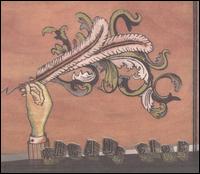
2004 - Funeral
Neighborhood #1 (Tunnels)
Neighborhood #2 (Laika)
Une Année Sans Lumière
Neighborhood #3 (Power Out)
Neighborhood #4 (7 Kettles)
Crown of Love
Wake Up
Haiti
Rebellion (Lies)
In the Backseat
The Arcade Fire are not an emo band. Fronted by the husband-and-wife team of Win Butler and Régine Chassagne, the group's emotional assault -- rendered even more poignant by the dedications to recently departed family members contained in the liner notes -- is brave, empowering, and dusted with something that many of that genre's angst-fueled acts desperately lack: an element of danger. Funeral' s mourners -- specifically Butler and Chassagne -- inhabit the same post-apocalyptic world as London Suede's Dog Man Star; they are broken, beaten, and ferociously romantic, reveling in the brutal beauty of their surroundings like a heathen Adam & Eve. "Neighborhood #1 (Tunnels)," the first of four metaphorical forays into the geography of the soul, follows a pair of young lovers who meet in the middle of the town through tunnels that connect to their bedrooms. Over a soaring piano lead that's effectively doubled by distorted guitar, they reach a Lord of the Flies-tinged utopia where they can't even remember their names or the faces of their weeping parents. Butler sings like Radiohead's Jonny Greenwood used to play, like a lion-tamer whose whip grows shorter with each and every lash. He can barely contain himself, and when he lets loose it's both melodic and primal, like Berlin-era Bowie or British Sea Power. "Neighborhood #2 (Laïka)" examines suicidal desperation through an angular Gang of Four prism; the hypnotic wash of strings and subtle meter changes of "Neighborhood #4 (7 Kettles)" winsomely capture the mundane doings of day-to-day existence; and "Neighborhood #3 (Power Out)," Funeral's victorious soul-thumping core, is a goose bump-inducing rallying cry centered around the notion that "the power's out in the heart of man, take it from your heart and put it in your hand." The Arcade Fire are not bereft of whimsy. "Crown of Love" is like a wedding cake dropped in slow motion, utilizing a Johnny Mandel-style string section and a sweet, soda-pop stand chorus to provide solace to a jilted lover yearning for a way back into the fold, and "Haiti" relies on a sunny island melody to explore the complexities of Chassagne's mercurial homeland. However, it's the sheer power and scope of cuts like "Wake Up" -- featuring all 15 musicians singing in unison -- and the mesmerizing, early-Roxy Music pulse of "Rebellion (Lies)" that make Funeral the remarkable achievement that it is. These are songs that pump blood back into the heart as fast and furiously as it's draining from the sleeve on which it beats, and by the time Chassagne dissects her love of riding "In the Backseat" with the radio on, despite her desperate fear of driving, Funeral's singular thread is finally revealed; love does conquer all, especially love for the cathartic power of music. -- James Christopher Monger
The Auteurs
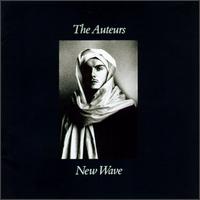
1993 - New Wave
Show Girl
Bailed Out
American Guitars
Junk Shop Clothes
Don't Trust the Stars
Starstruck
How Could I Be Wrong
Housebreaker
Valet Parking
Idiot Brother
Early Years
Home Again
While Brit-pop was still finding its feet and the mark from which to take its bow, Luke Haines' subversively smiley Auteurs were already there, effectively writing a how-to guide that would become the genre's white heat beat for nearly half a decade. Their 1993 debut, New Wave, was a glorious combination of snappy beats, sexy guitar, and retro vocals which sounded as much like the Beatles shot through the Pet Shop Boys as anything else. Little that had come before sounded even half as invigorating as this, but thanks to the Auteurs, almost everything that came after followed the blueprint page by page. Even better, the whole package was a sonic masquerade that cradled a remarkable intelligence and even more perverse wit. From the opening "Show Girl," which sets the scene, to the hazy, paisley thrift store morality epic "Junk Shop Clothes," the band set itself firmly apart from most of the slathering up-and-comers. "Starstruck" drops one fey line after another as it threatens to reignite the forgotten glam era across both guitar and vocals, a process that's repeated, albeit with a little more menace (and cello), on "How Could I Be Wrong." That just leaves the biting punch of "Early Years" to pipe the band down the road to superstardom. Except it didn't. As is so often the fate of true pioneers, the Auteurs were inexplicably shunted aside by the U.K. press in favor of sundry others' simpler sounds while the U.S. relegated these leaders to followers -- assuming it even heard the band at all. It's a sin, and a shame, but one that wasn't without a silver lining, as the Auteurs were ultimately able to follow their creative heart, bypassing the corporate marketing chart completely. -- Amy Hanson
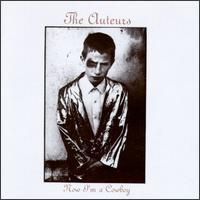
1994 - Now I'm a Cowboy
Lenny Valentino
Brainchild
I'm a Rich Man's Toy
New French Girlfriend
The Upper Classes
Chinese Bakery
A Sister Like You
Underground Movies
Life Classes/Life Model
Modern History
Daughter of a Child
"Brainchild" may have informed the title of the Auteurs' sophomore album, Now I'm a Cowboy, but it was the sneering, in-with-the-hip-crowd antics of the opening "Lenny Valentino" which flew in the face of the light retro-pop the band wielded just a year earlier. Rougher, sexier, more slipshod than before, this song had a lot to say, and the band was right behind it. But that's not to imply that the band didn't carry itself with equal aplomb across the rest of the set. The Auteurs blazed through a mixed mutant bag of smoothies and deadlies, where every title read like a trip around the world. Meanwhile, pre-empting all that Pulp would later perfect, Luke Haines' feral lyricism touched on the struggle of upper and lower classes and the horror that falls when they collide. "New French Girlfriend" hashed Haines' vocals to bits with a yummy guitar, while "Chinese Bakery" is an off-kilter rock rampage across streets that slice uptown and downtown, leaving "The Upper Classes" to fill the breach. Elsewhere, both "Life Classes/Life Model" and the sordid claustrophobia of "Underground Movies" emerge as biting commentary. Now I'm a Cowboy served the Auteurs well, becoming an edgily delicious bridge between their immediate past and their enduring future. Dig a little deeper and add a pinch of hindsight, however, and it's also easy to discern the treasure trove of embryonic nuggets that would surface in Haines' Baader Meinhof and Black Box Recorder solo projects. -- Amy Hanson
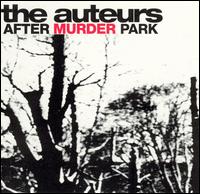
1996 - After Murder Park
Light Aircraft on Fire
Child Brides
Land Lovers
New Brat in Town
Everything You Say Will Destroy You
Unsolved Child Murder
Married to a Lazy Lover
Buddha
Tombstone
Fear of Flying
Dead Sea Navigators
After Murder Park
The pairing of two curmudgeons like Luke Haines and Steve Albini in a studio seems like a marriage made in heaven to some, and the very thought triggers an instant headache to others. The Auteurs are unlike the typical downtrodden U.S. indie bands Albini works with, but they nonetheless walked out of Abbey Road Studios with their nastiest-sounding record. That's probably what Haines wanted, and that's what he got. Grittier guitars and sharper drums don't get in the way of the more intricate arrangements that involve strings and a dash of horn every now and then. First single "Light Aircraft on Fire" is probably the most feisty Haines song yet, kicking down the doors with the opening line, "When you cut your lover's slack, you'll get a f*cking monster back." Haines' guitar lines sparkle during the chorus but dig like claws during the verses. Ace utility man James Banbury, in his usual Auteurs role as secret weapon, contributes threatening organ swells during the seething "New Brat in Town." After Murder Park serves the usual combo platter of growlers and barbed lullabies, but Haines definitely sounds more embittered than usual, quite possibly the result of watching too many of Albini's wildlife videos. He paints plenty of "sucks to be you" scenarios with sneering flair, exposing the corrupted side of humanity just as well as his engineer when he's on the other side of the glass. Not many fates could be worse than having Haines write a song with you as the subject, but listening to him air his insightful dirty laundry is an entirely unique experience. Pretentious and snotty as Haines might be, he's one of the sharpest tools in the shed. -- Andy Kellman
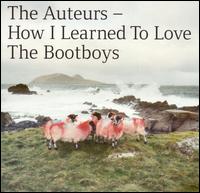
1999 - How I Learned to Love the Bootboys
The Rubettes
1967
How I Learned to Love the Bootboys
Your Gang, Our Gang
Some Changes
School
Johnny and the Hurricanes
The South Will Rise Again
Asti Supmante
Sick of Hari Krisna
Lights Out
Future Generation
The most refined of England's bands manages to refine itself even further on their fourth disc. How I Learned to Love the Bootboys is Luke Haines' most immediate sounding release to date, and even though his claim that each of the record's 12 tracks are singles sounds a bit highfalutin, he's not far off. While each of the Auteurs' three prior LPs are equally arresting, there are points at which the mind tends to wander, but not here. Haines' familiar themes of Englishness, youth, and hooliganism remain, playing like another short movie. The cohesiveness of the record is no small feat, given the wide-ranging sounds and moods. Opening bedroom tale "The Rubettes" features a delicate, Brill Building lullaby chorus while a repetitive staccato riff offplays the fragility. The title track's quiet chaos has Haines' whispered vocals buttressed by sirens, percolating electro bleeps, and a graceful dub bassline. "Your Gang Our Gang" relocates the fight scenes of Grease and West Side Story to the streets of London with equal doses of menace and tongue-in-cheek. Tough and joyful at the same time. Haines and Pete Hofmann attain the band's best production yet. Haines' guitar has never sounded so fittingly sharp while avoiding abrasiveness. Even guitar guru Steve Albini couldn't coax such an ideal sound from his guitar. Haines' supporting cast punches in with some excellent work, providing all the necessary support for an excellent record. Surely the few who have stuck around since New Wave are being spoiled rotten by the Auteurs' remarkable consistency. -- Andy Kellman
The Bangles
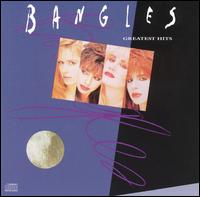
1990 - The Bangles Greatest Hits
Hero Takes a Fall
Going Down to Liverpool
Manic Monday
If She Knew What She Wants
Walk Like an Egyptian
Walking Down Your Street
Following
Hazy Shade of Winter
In Your Room
Eternal Flame
Be With You
I'll Set You Free
Everything I Wanted
Where Were You When I Needed You?
Weighing in at 14 tracks, Greatest Hits is a good, basic collection of the Bangles' biggest singles, containing all the hits, including the previously non-LP "Hazy Shade of Winter," plus a couple of album tracks and, for the dedicated, a new cover of the Grass Roots' "Where Were You When I Needed You." It may be easy to carp about fine album tracks from All Over the Place and Different Light that should have been included, yet this is a fine sampler/introduction that might not necessarily capture the Bangles' best -- in this context, their ties to the Paisley Underground and college rock seem nonexistent -- but still finds them as masters of irresistible pop singles. -- Stephen Thomas Erlewine
The Beatles
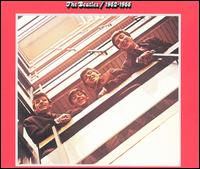
1973 - Best of 1962-1966
Love Me Do
Please Please Me
From Me To You
She Loves You
I Wanna Hold Your Hand
All My Loving
Can't Buy Me Love
A Hard Day's Night
And I Love Her
Eight Days a Week
I Feel Fine
Ticket To Ride
Yesterday
Help!
You've Got to Hide Your Love Away
We Can Work it Out
Day Tripper
Drive My Car
Norwegian Wood (This Bird Has Flown)
Nowhere Man
Michelle
In My Life
Girl
Paperback Writer
Eleanor Rigby
Yellow Submarine
Assembling a compilation of the Beatles is a difficult task, not only because they had an enormous number of hits, but also because singles didn't tell the full story; many of their album tracks were as important as the singles, if not more so. The double-album 1962-1966, commonly called the "Red Album," does the job surprisingly well, hitting most of the group's major early hits and adding important album tracks like "You've Got to Hide Your Love Away," "Drive My Car," "Norwegian Wood," and "In My Life." Naturally, there are many great songs missing from the 26-track 1962-1966, and perhaps it would have made more sense to include the Revolver cuts on its companion volume, 1967-1970, yet the Red Album captures the essence of the Beatles' pre-Sgt. Pepper records. -- Stephen Thomas Erlewine
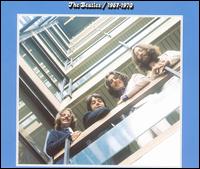
1973 - Best of 1967-1970
Strawberry Fields Forever
Penny Lane
Sgt. Pepper's Lonely Hearts Club Band
With a Little Help From My Friends
Lucy in the Sky with Diamonds
A Day in the Life
All You Need Is Love
I Am the Walrus
Hello Goodbye
Fool on the Hill
Magical Mystery Tour
Lady Madonna
Hey Jude
Revolution
Back in the USSR
While My Guitar Gently Weeps
Ob-La-Di, Ob-La-Da
Get Back
Don't Let Me Down
The Ballad of John and Yoko
Old Brown Shoe
Here Comes the Sun
Come Together
Something
Octopus's Garden
Let It Be
Across the Universe
The Long and Winding Road
Picking up where 1962-1966 left off, the double-album compilation 1967-1970, commonly called the "Blue Album," covers the Beatles' later records, from Sgt. Pepper through Let It Be. Like the Red Album, the Blue Album contains a mixture of hits, including singles like "Lady Madonna," "Hey Jude," and "Revolution" that were never included on an LP, plus important album tracks like "Lucy in the Sky with Diamonds," "A Day in the Life," "While My Guitar Gently Weeps," and "Come Together." Like its predecessor, 1967-1970 misses several great songs, but the compilation nevertheless does capture the essence of the Beatles' later recordings. -- Stephen Thomas Erlewine
The Darkness
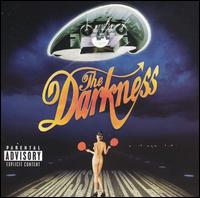
2003 - Permission to Land
Black Shuck
Get Your Hands Off My Woman
Growing on Me
I Believe in a Thing Called Love
Love Is Only a Feeling
Givin' Up
Stuck In a Rut
Friday Night
Love on the Rocks With No Ice
Holding My Own
Upon its U.K. release in summer 2003, Permission to Land, the debut album from spandex-clad retro metalheads the Darkness, was a surprise success, hitting the British charts at number two (behind only Beyoncé's Dangerously in Love). After hearing Permission to Land, it's easier to understand why the British public went crazy for it, and for the Darkness. The album is more or less straightforward pop/rock with some '80s metal window-dressing, and the Darkness themselves live up to traditional notions of what a rock band should be: louche, decadent, and harboring a don't-bore-us-get-to-the-chorus mentality. While the band is far from ironic in its homages to Kiss, Judas Priest, and Queen, the Darkness certainly are campy (and with a list of influences like that, they'd almost have to be), with a uniquely British sensibility, personified by singer Justin Hawkins. A one-man campaign to bring back the unitard as fashionable rock gear, Hawkins sings about sex, drugs, and Satan with the voice of a castrato, backed by arena-sized riffs and rhythms. The Darkness would be an utter failure if the band didn't write good songs, but miracle of miracles, they do. The first two-thirds of Permission to Land is nearly flawless, an eerily realistic simulation of '80s metal that manages to sound familiar but not rehashed. "Black Shuck" revels in pseudomystic gobbledygook like "Flames licked round the sacred spire"; on the great single "Get Your Hands off My Woman," Hawkins sings "woooomaaan" higher than most women probably could. "Growing on Me" (which includes the great lyric "I want to banish you from whence you came") and "I Believe in a Thing Called Love" are tightly crafted songs that would sound good in almost any style, while "Givin' Up" is one of the jauntiest songs about heroin ever written. Even the prerequisite power ballad, "Love Is Only a Feeling," stays on the fun side of cheesy, adrift on clouds of strummed guitars and gooey backing harmonies. The album has such a strong beginning and middle that it's not entirely surprising that Permission to Land runs out of steam near the end, although "Stuck in a Rut" is a crazed enough rocker -- complete with demonic laughter -- to nearly rival the album's earlier songs. Softer songs like "Friday Night" and "Holding My Own" make the collection unusually ballad-heavy; if anything, the Darkness could stand to rock a little harder. Even though Permission to Land isn't quite as metal as its singles suggested it might be, the album is surprisingly good, especially considering how bad the band's '80s metal revival could have been. It's hard to say whether or not the Darkness will take off in the States the way they did in their homeland; Hawkins' over-the-top vocals aside, the band may be hurt by the fact that most metal and hard rock popular in the U.S. is more concerned with brooding and angst than with having fun. But having fun is what Permission to Land is all about, even if it's just a guilty pleasure. -- Heather Phares
The Pixies
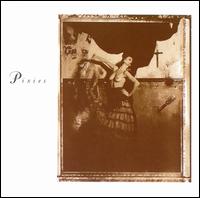
1988 - Surfer Rosa & Come On Pilgrim
Bone Machine
Break My Body
Something Against You
Broken Face
Gigantic
River Euphrates
Where Is My Mind?
Cactus
Tony's Theme
Oh My Golly!
Vamos
I'm Amazed
Brick Is Red
Caribou
Vamos
Isla De Encanta
Ed Is Dead
The Holiday Song
Nimrod's Son
I've Been Fired
Levitate Me
When Rough Trade reissued the Pixies' seminal full-length debut album Surfer Rosa on CD, they added the terrific mini-album Come on Pilgrim as a bonus. While it's nice to have these two records on one disc, the sequencing of Come on Pilgrim after Surfer Rosa is a little disconcerting, since the two album each have distinctive sounds which clash slightly. Steve Albini's production of Surfer Rosa is metallic and spare -- it's in black & white, with no shades of grey and no color. Come on Pilgrim, on the other hand, is filled with greys and colors, and while the contrast between the two is certainly interesting, it would be more enlightening if the mini-LP was placed before Surfer Rosa. Nevertheless, some fans might like having both albums on one disc, but buying them individually is a better move and, in any case, a little more cost-effective as well. -- Stephen Thomas Erlewine
1989 - Bone Machine (Live) [Bootleg]
Into the White
Bone Machine
Cactus
Caribou
Dead
Debaser
Gigantic
No Review
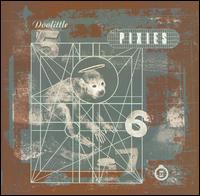
1989 - Doolittle
Debaser
Tame
Wave of Mutilation
I Bleed
Here Come Your Man
Dead
Monkey Gone to Heaven
Mr. Grieves
Crackity Jones
La La Love You
No. 13, Baby
There Goes My Gun
Hey
Silver
Gouge Away
After 1988's brilliant but abrasive Surfer Rosa, the Pixies' sound couldn't get much more extreme. Their Elektra debut, Doolittle, reins in the noise in favor of pop songcraft and accessibility. Producer Gil Norton's sonic sheen adds some polish, but Black Francis' tighter songwriting focuses the group's attack. Doolittle's most ferocious moments, like "Dead," a visceral retelling of David and Bathsheba's affair -- are more stylized than the group's past outbursts. Meanwhile, their poppy side surfaces on the irresistible single "Here Comes Your Man" and the sweetly surreal love song "La La Love You." The Pixies' arty, noisy weirdness mix with just enough hooks to produce gleefully demented singles like "Debaser," -- inspired by Bunuel's classic surrealist short Un Chien Andalou -- and "Wave of Mutilation," their surfy ode to driving a car into the sea. Though Doolittle's sound is cleaner and smoother than the Pixies' earlier albums, there are still plenty of weird, abrasive vignettes: the blankly psychotic "There Goes My Gun," "Crackity Jones," a song about a crazy roommate Francis had in Puerto Rico, and the nihilistic finale "Gouge Away." Meanwhile, "Tame," and "I Bleed" continue the Pixies' penchant for cryptic kink. But the album doesn't just refine the Pixies' sound; they also expand their range on the brooding, wannabe spaghetti western theme "Silver" and the strangely theatrical "Mr. Grieves." "Hey" and "Monkey Gone to Heaven," on the other hand, stretch Francis' lyrical horizons: "Monkey"'s elliptical environmentalism and "Hey"'s twisted longing are the Pixies' versions of message songs and romantic ballads. Their most accessible album, Doolittle's wide-ranging moods and sounds make it one of their most eclectic and ambitious. A fun, freaky alternative to most other late-'80s college rock, it's easy to see why the album made the Pixies into underground rock stars. -- Heather Phares
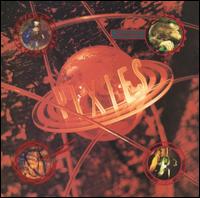
1990 - Bossanova
Cecilia Ann
Rock Music
Veloria
Allison
Is She Weird
Ana
All Over the World
Dig for Fire
Down to the Well
The Happening
Blown Away
Hang Wire
Stormy Weather
Havalina
When Bossanova arrived in 1990, it reflected the exhaustion the Pixies felt after Doolittle's enormous success: For the first time, the band seems to be running out of ideas. Tellingly, Kim Deal contributes no songs, having formed the Breeders to give her work an outlet; that summer, their debut Pod won a warmer response than Bossanova received. Arguably the Pixies' weakest album -- though Francis has said it's his favorite -- most of it finds the band in fine form. Gil Norton's spacious, reverb-heavy production makes the Pixies sound like a Martian bar band, which fits the cover of the Surftones' "Cecilia Ann" and the glorious, shimmering closer "Havalina" perfectly. On the theremin-driven "Velouria," science fiction imagery displaces Francis' penchant for fetishistic lyrics; next to the token kinky song "Down to the Well"'s tired sound, it's a refreshing change. The similarly cryptic "All Over the World" and alien abduction tale "The Happening" add to the sci-fi feel. Quirky pop songs like "Allison," a tribute to jazz cool-cat Mose Allison, and "Dig for Fire," Francis' self-professed Talking Heads homage, heighten Bossanova's playful, slightly off-kilter vibe, but rockers like "Hang Wire" and "Blown Away," fall flat. However, "Rock Music" is one of the group's most fiery outbursts, and "Is She Weird"'s chugging grind and sexy, funny lyrics make it a classic Pixies song. The band was so consistently amazing on their previous albums that when they released a slightly weaker one, critics and fans alike judged them too harshly. But on Bossanova's strongest moments, the Pixies explored their softer side and found different uses for their extreme dynamics. Like a straight-A student who suddenly receives a B+, Bossanova might have been a disappointment initially, but its (small) failings emphasize the strengths of the rest of the Pixies' work. -- Heather Phares
1991 - Subbacultcha (Live)
River Euphrates
Bone Machine
Hang Wire
Is She Weird
Subbacultcha
Tame
Isla De Encanta
The Happening
Velouria
Allison
Gouge Away
Debaser
Palace of the Brine
Mr. Grieves
Here Comes Your Man
The Sad Punk
Monkey Gone to Heaven
The Holiday Song
Motorway to Roswell
Vamos
Head On
No Review
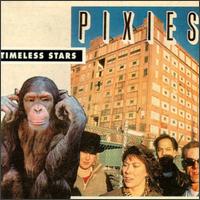
1991 - Timeless Stars (Live)
Into the White
Wave of Mutilation
There Goes My Gun
Monkey Gone to Heaven
Debaser
Isla de Encanta
Bone Machine
Cactus
Gigantic
Gouge Away
Tame
Down to the Well
Rock-A-My-Soul
Hey
In Heaven
Wild Honey Pie
Caribou
No Review
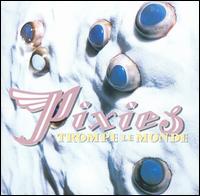
1991 - Trompe le Monde
Trompe le Monde
Planet of Sound
Alec Eiffel
The Sad Punk
Head On
U-Mass
Palace of the Brine
Letter to Memphis
Bird Dream of Olympus Mons
Space (I Believe In)
Subbacultcha
Distance Equals Rate Times Time
Lovely Day
Motorway to Roswell
The Navajo Know
The title might be French for "fool the world," but with Trompe Le Monde, the Pixies weren't fooling anyone: this was essentially Black Francis' solo debut. It focuses on Francis' sci-fi fascination and lacks any Kim Deal songs; even her backing vocals are far and few between. Yet the band sounds revitalized on Trompe Le Monde, as if it was planned as their last hurrah. The raucous "Distance Equals Rate Times Time" and the explosive cover of the Jesus & Mary Chain's "Head On" are fairly straightforward, but the lyrics remain quirky on "Planet Of Sound," a song about a Martian who lands on Earth, and "Palace of the Brine," a tribute to sea monkeys and Utah's Salt Lake. He even disses hipsters and pretentious students -- basically, the Pixies' fanbase -- with nasty little digs like "Subbacultcha"'s "I was wearing eyeliner / She was wearing eyeliner" and "U-Mass"' "It's eduuucaaationaal!" Musically, "Trompe Le Monde"'s psychedelic sheen and "Alec Eiffel"'s atmospheric keyboards prove that the Pixies' sound wasn't defined by Steve Albini-style rawness. There's also more emotional depth: "The Sad Punk" features the strangely poignant bridge "And evolving from the sea / would not be too much time for me / to walk beside you in the sun," and "Letter to Memphis" is a heartfelt, if cryptic, love song. Though Trompe Le Monde doesn't sound quite like the Pixies' other work, Come On Pilgrim's spooky beginnings, Surfer Rosa's abrasive assault, Doolittle's deceptively accessible punk-pop and Bossanova's spacy sonics helped make Trompe Le Monde a rousing swan song and a precursor to alternative rock's imminent success. Whether that means their music remained pure or they missed their chance to cash in is debatable; either way, the Pixies are one of America's greatest, most influential bands. -- Heather Phares
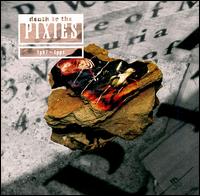
1997 - Death to the Pixies 1987-1991 (Disc 1)
Cecilia Ann
Planet of Sound
Tame
Here Comes Your Man
Debaser
Wave of Mutilation
Dig for Fire
Caribou
Holiday Song
Nimrod's Son
U-Mass
Bone Machine
Gigantic
Where Is My Mind?
Velouria
Gouge Away
Monkey Gone to Heaven
Death to the Pixies has a difficult task -- distilling the highlights of a band that concentrated on albums, not singles. The Pixies' catalog was remarkably consistent, which means that most won't agree with all the 17 selections that comprise the first disc of this retrospective, since there are so many strong songs on their records. While most of the usual suspects are here -- "Debaser," "Here Comes Your Man," "Bone Machine," "Gigantic," "Where Is My Mind?," "Velouria," "Nimrod's Son," "Wave of Mutilation," "Monkey Gone to Heaven" -- many of the selections appear to have been made at random. As good as "Cecilia Ann," "Holiday Song," "U-Mass" and "Gouge Away" are, such essentials as "River Euphrates," "Cactus," "Hey," "Allison," "Vamos," "I've Been Tired," "The Happening," "Letter to Memphis" and "Motorway to Roswell" could have easily taken their place. Some of these songs are on disc two, a 21-song live disc culled from a 1990 Dutch concert that has been heavily bootlegged. It's a terrific concert, but the pairing of a greatest-hits record with a live show is puzzling, since casual fans who want the hits won't need the live disc, and the hardcore fans only need the second disc. That pairing alone makes Death to the Pixies unnecessary for neophytes, but the hits disc itself also is an imperfect introduction, since its non-chronological sequencing distorts the Pixies' impact. Still, there's so much great music on the collection that it isn't worthless, but the presentation is so ill-conceived that the very existence of Death to the Pixies is a little puzzling. -- Stephen Thomas Erlewine
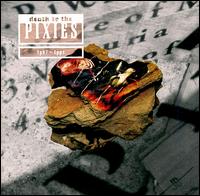
1997 - Death to the Pixies 1987-1991 (Disc 2) (Live)
Debaser
Rock Music
Broken Face
Isla de Encanta
Hang Wire
Dead
Into the White
Monkey Gone to Heaven
Gouge Away
Here Comes Your Man
Allison
Hey
Gigantic
Crackity Jones
Something Against You
Tame
Wave of Mutilation
Where Is My Mind?
Ed Is Dead
Vamos
Tony's Theme
Death to the Pixies has a difficult task -- distilling the highlights of a band that concentrated on albums, not singles. The Pixies' catalog was remarkably consistent, which means that most won't agree with all the 17 selections that comprise the first disc of this retrospective, since there are so many strong songs on their records. While most of the usual suspects are here -- "Debaser," "Here Comes Your Man," "Bone Machine," "Gigantic," "Where Is My Mind?," "Velouria," "Nimrod's Son," "Wave of Mutilation," "Monkey Gone to Heaven" -- many of the selections appear to have been made at random. As good as "Cecilia Ann," "Holiday Song," "U-Mass" and "Gouge Away" are, such essentials as "River Euphrates," "Cactus," "Hey," "Allison," "Vamos," "I've Been Tired," "The Happening," "Letter to Memphis" and "Motorway to Roswell" could have easily taken their place. Some of these songs are on disc two, a 21-song live disc culled from a 1990 Dutch concert that has been heavily bootlegged. It's a terrific concert, but the pairing of a greatest-hits record with a live show is puzzling, since casual fans who want the hits won't need the live disc, and the hardcore fans only need the second disc. That pairing alone makes Death to the Pixies unnecessary for neophytes, but the hits disc itself also is an imperfect introduction, since its non-chronological sequencing distorts the Pixies' impact. Still, there's so much great music on the collection that it isn't worthless, but the presentation is so ill-conceived that the very existence of Death to the Pixies is a little puzzling. -- Stephen Thomas Erlewine
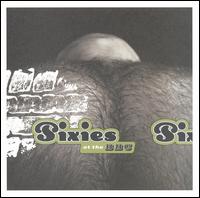
1998 - Pixies at the BBC (Live)
Wild Honey Pie
There Goes My Gun
Dead
Subbacultcha
Manta Ray
Is She Weird?
Ana
Down to the Well
Wave of Mutilation
Letter to Memphis
Levitate Me
Caribou
Monkey Gone to Heaven
Hey
In Heaven (Lady in the Radiator Song)
Between 1988 and 1991, the Pixies performed six sessions at the BBC, playing on a variety of programs. For years, these sessions were hot bootleg items, especially since their first session for John Peel (on May 3, 1988) featured two otherwise unreleased covers -- the Beatles' "Wild Honey Pie" and "(In Heaven) Lady in the Radiator Song," from Eraserhead. It took Elektra/4AD until 1998 to release the six sessions, and when the 15-track Pixies at the BBC did appear, it was a mixed blessing. Certainly, the music itself is pretty terrific -- none of the versions are radically different (although "Wave of Mutilation" is performed in its "UK Surf Arrangment" from the "Here Comes Your Man" single, not the Doolittle version), but each cut is raw and vital, and recasting "Wild Honey Pie" as pure primal dementia was brilliant. What is suspect is the presentation. Instead of keeping each session intact, the compilers have assembled individual tracks in seemingly random order so the disc bounces from 1989 to 1991 to 1988 to 1990. For an archival release, such tactics are infuriating -- the sessions make more sense in chronological order, as most bootleggers know. Still, not every hardcore fan can track bootlegs down, nor are they willing to shell out the cash, which makes Pixies at the BBC a welcome (and overdue) addition to their official catalog. (Be aware, though, that the full-price disc clocks in at about 35 minutes.) -- Stephen Thomas Erlewine
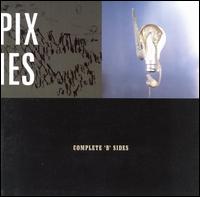
2001 - The Complete B-Sides
River Euphrates
Vamos (Live)
In Heaven (Lady in the Radiator Song)
Manta Ray
Weird at My School
Dancing the Manta Ray
Wave of Mutilation
Into the White
Bailey's Walk
Make Believe
I've Been Waiting for You
The Thing
Velvety Instrumental Version
Winterlong (Neil Young Cover)
Santo
Theme from Narc
Build High
Evil Hearted You
Letter to Memphis
Like the rest of 4AD's Pixies retrospectives, Complete B-Sides is equally exciting and frustrating: Many of their B-sides are just as good as their album tracks, so it's terrific to see them collected onto a single disc. But a number of factors make it somewhat disappointing, not the least of which is that Complete B-Sides is available only as a U.K. import, due to U.S. licensing problems. That won't dissuade Pixies diehards from seeking it out, but many longtime fans probably already have these songs, either on the original singles or on the bootlegs that proliferated while 4AD inexplicably sat on them. At any rate, Complete B-Sides mostly delivers the goods, kicking off with a ferocious version of "River Euphrates" from the Gigantic single. Witty, spooky Doolittle B-sides like "Manta Ray," "Weird at My School," and "Into the White" are so good that it's a shame they weren't saved for Bossanova, when the band really could have used them. Meanwhile, the Neil Young cover "Winterlong," which also appeared on The Bridge tribute, reaffirms the Pixies' ability to turn any artist's songs into their own. Not every song here scales these heights -- "Bailey's Walk" and "Dancing the Manta Ray" are slightly less inspired bits of Doolittle-era pop perversity, and the snappy, strutting "Santo" and demented cow punk of "Build High" weren't quite ready for prime time, but they're still more interesting than many other bands' A material. Quirky cuts like "Make Believe," David Lovering's strangely charming tribute to Debbie Gibson, give the collection extra personality. The album also features some fun, if not extremely informative, comments about each track from Frank Black, as well as the clips for "Here Comes Your Man" and "Allison," which will only make fans clamor for the next logical Pixies release: a video collection. Though it doesn't quite do justice to the band's legacy, Complete B-Sides does a good job of filling in the gaps in the Pixies' body of work. -- Heather Phares
The Smiths
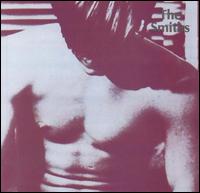
1984 - The Smiths
Reel Around the Fountain
You've Got Everything Now
Miserable Lie
Pretty Girls Make Graves
The Hand That Rocks the Cradle
This Charming Man
Still Ill
Hand In Glove
What Difference Does It Make?
I Don't Owe You Anything
Suffer Little Children
Arriving in an era dominated by synth pop and gloomy post-punk, the Smiths' eponymous debut was the bracing beginning of a new era. On the surface, the Smiths' sound wasn't radically different from traditional British guitar pop -- Johnny Marr's ringing, layered guitars were catchy and melodic -- but it was actually an astonishing subversion of the form, turning the structure inside out. Very few of the songs followed conventional verse-chorus structure, yet they were quite melodic within their own right. Marr's inventive songwriting was made all the more original and innovative by Morrissey's crooning and lyrics. Writing about unconventional topics, from homosexuality ("Hand in Glove") to child molestation and murder, Morrissey had a distinctively ironic, witty, and literate viewpoint whose strangeness was accentuated by his off-kilter voice, which would move from a croon to a yelp in a matter of seconds. While the production of The Smiths is a little pristine, the songs are vital and alive, developing a new, unique voice within pop music. Though the Smiths continued to improve over the course of their career, their debut remains startling and exciting.
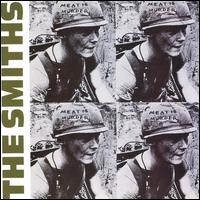
1985 - Meat Is Murder
The Headmaster Ritual
Rusholme Ruffians
I Want the One I Can't Have
What She Said
That Joke Isn't Funny Anymore
How Soon Is Now?
Nowhere Fast
Well I Wonder
Barbarism Begins at Home
Meat Is Murder
With their second proper album Meat Is Murder, the Smiths begin to branch out and diversify, while refining the jangling guitar pop of their debut. In other words, it catches the group at a crossroads, unsure quite how to proceed. Taking the epic, layered "How Soon Is Now?" as a starting point (the single, which is darker and more dance-oriented than the remainder of the album, was haphazardly inserted into the middle of the album for its American release), the group crafts more sweeping, mid-tempo numbers, whether it's the melancholy "That Joke Isn't Funny Anymore" or the failed, self-absorbed protest of the title track. While the production is more detailed than before, the Smiths are at their best when they stick to their strengths -- "The Headmaster Ritual" and "I Want the One I Can't Have" are fine elaborations of the formula they laid out on the debut, while "Rusholme Ruffians" is an infectious stab at rockabilly. However, the rest of Meat Is Murder is muddled, repeating lyrical and musical ideas of before without significantly expanding them or offering enough hooks or melodies to make it the equal of The Smiths or Hatful of Hollow. -- Stephen Thomas Erlewine
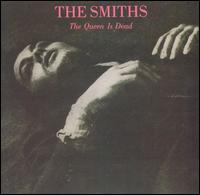
1986 - The Queen Is Dead
The Queen Is Dead (Take Me Back to Dear...[Medley]
Frankly, Mr. Shankly
I Know It's Over
Never Had No One Ever
Cemetry Gates
Bigmouth Strikes Again
The Boy With the Thorn in His Side
Vicar in a Tutu
There Is a Light That Never Goes Out
Some Girls Are Bigger Than Others
Meat Is Murder may have been a holding pattern, but The Queen Is Dead is the Smiths' great leap forward, taking the band to new musical and lyrical heights. Opening with the storming title track, The Queen Is Dead is a harder-rocking record than anything the Smiths had attempted before, but that's only on a relative scale -- although the backbeat is more pronounced, the group certainly doesn't rock in a conventional sense. Instead, Johnny Marr has created a dense web of guitars, alternating from the minor-key rush of "Bigmouth Strikes Again" and the faux rockabilly of "Vicar in a Tutu" to the bouncy acoustic pop of "Cemetry Gates" and "The Boy With the Thorn in His Side," as well as the lovely melancholy of "I Know It's Over" and "There Is a Light That Never Goes Out." And the rich musical bed provides Morrissey with the support for his finest set of lyrics. Shattering the myth that he is a self-pitying sap, Morrissey delivers a devastating set of clever, witty satires of British social mores, intellectualism, class, and even himself. He also crafts some of his finest, most affecting songs, particularly in the wistful "The Boy With the Thorn in His Side" and the epic "There Is a Light That Never Goes Out," two masterpieces that provide the foundation for a remarkable album. -- Stephen Thomas Erlewine
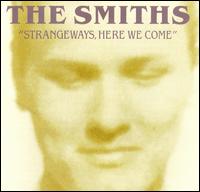
1987 - Strangeways, Here We Come
A Rush and a Push and the Land Is Ours
I Started Something I Couldn't Finish
Death of a Disco Dancer
Girlfriend in a Coma
Stop Me if You Think You've Heard This One Before
Last Night I Dreamt Somebody Loved Me
Unhappy Birthday
Paint a Vulgar Picture
Death at One's Elbow
I Won't Share You
Recorded as the relationship between Morrissey and Johnny Marr was beginning to splinter, Strangeways, Here We Come is the most carefully considered and elaborately produced album in the group's catalog. Though it aspires greatly to better The Queen Is Dead, it falls just short of its goals. With producer Stephen Street, the Smiths created a subtly shaded and skilled album, one boasting a fuller production than before. Morrissey and Marr also labored hard over the songs, working to expand the Smiths' sound within their very real boundaries. For the most part, they succeed. "I Started Something I Couldn't Finish," "Girlfriend in a Coma," "Stop Me if You Think You've Heard This One Before," and "I Won't Share You" are classics, while "A Rush and a Push and the Land Is Ours," "Death of a Disco Dancer," and "Last Night I Dreamt That Somebody Loved Me" aren't far behind. However, the songs also have a tendency to be glib and forced, particularly on "Unhappy Birthday" and the anti-record company "Paint a Vulgar Picture," which has grown increasingly ironic in the wake of the Smiths' and Morrissey's love of repackaging the same material in new compilations. Still, Strangeways is a graceful way to bow out. While it doesn't match The Queen Is Dead or The Smiths, it is far from embarrassing and offers a summation of the group's considerable strengths. -- Stephen Thomas Erlewine
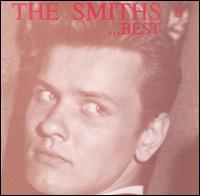
1992 - The Best of The Smiths, Vol.1
This Charming Man
William, It Was Really Nothing
What Difference Does It Make?
Stop Me If You've Heard This One
Girlfriend in a Coma
Half a Person
Rubber Ring
How Soon Is Now?
Hand in Glove
Shoplifters of the World Unite
Sheila Take a Bow
Some Girls Are Bigger Than Others
Panic
Please, Please, Please Let Me Get What I Want
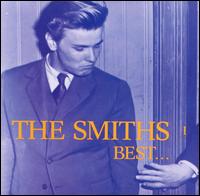
With or without its companion volume, this remains a less than excellent compilation. Even when viewed with Volume 2, these collections include odd selections at the expense of more obvious ones. The faithful will already have everything here. And neophyte fans would do better with Louder than Bombs along with Queen and the debut. -- Steve Aldrich
1992 - The Best of The Smiths, Vol.2
The Boy With the Thorn in His Side
The Headmaster Ritual
Heaven Knows I'm Miserable
Ask
Oscillate Wildly
Nowhere Fast
Still III
Bigmouth Strikes Again
That Joke Isn't Funny Anymore
Shakespeare's Sister
Girl Afraid
Reel Around the Fountain
Last Night I Dreamt That Somebody Loved Me
There Is a Light That Never Goes Out
Picking up where the first volume left off, Best, Vol. 2 does contain some of the Smiths very best songs -- "The Boy With the Thorn in His Side," "Heaven Knows I'm Miserable Now," "Bigmouth Strikes Again," "Reel Around the Fountain," "There Is a Light That Never Goes Out," among others. Even so, it doesn't work as its own record since it deliberately complements the first volume, which itself wasn't a great overview of the Smiths' best. Since these two comps were released, better collections like Singles and The Very Best of the Smiths have been released, supplanting these two botched efforts. -- Stephen Thomas Erlewine
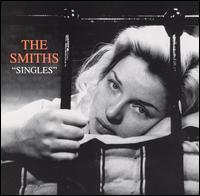
1995 - Singles
Hand in Glove
This Charming Man
What Difference Does It Make?
Heaven Knows I'm Miserable Now
William, It Was Really Nothing
How Soon Is Now?
Shakespeare's Sister
That Joke Isn't Funny Anymore
The Boy With the Thorn in His Side
Bigmouth Strikes Again
Panic
Ask
Shoplifters of the World Unite
Sheila Take a Bow
Girlfriend in a Coma
I Started Something I Couldn't Finish
Last Night I Dreamt That Somebody Loved Me
There Is a Light That Never Goes Out
The Best of the Smiths collections didn't work because they didn't have a sense of history and distorted the underlying sense of urgency that helped make the Smiths important. Singles simply collects all of the singles from one of the greatest singles bands since the Beatles. It's essential and influential guitar pop, presented in a way that makes sense and is endlessly listenable -- Stephen Thomas Erlewine
The Vaselines
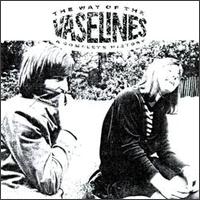
1992 - The Way of The Vaselines: A Complete History
Son of a Gun
Rory Rides Me Raw
You Think You're a Man
Dying for It
Molly's Lips
Teenage Superstars
Jesus Wants Me for a Sunbeam
Sex Sux (Amen)
Slushy
Monsterpussy
Bitch
No Hope
Oliver Twisted
The Day I Was a Horse
Dum-Dum
Hairy
Lovecraft
Dying for It (The Blues)
Let's Get Ugly
Kurt Cobain loved the Vaselines. Nirvana covered one of their songs for their MTV Unplugged session, and two other covers show up on the Incesticide record. Kurt made a lot of mistakes in his life but loving the Vaselines was not one of them. From 1986 to 1989, the Vaselines were the best rock band on the planet. Sub Pop was kind enough to cash in on the Nirvana connection and release everything the Vaselines recorded. From the stomping, singalong opener "Son of a Gun" to the distorted and nasty "Let's Get Ugly" 17 tracks later, this collection is the Holy Grail of indie pop music. It is amateurish, almost completely unserious, occasionally quite perverted, and always about sex. The music has the simplicity and ear-grabbing melodies of the best bubblegum, the loud and semi-competent guitars of punk, and some of the attitude and lo-fi sound of the noise rock scenesters like the Jesus & Mary Chain. Throw in a bunch of religion and add simplistic choruses that will have you singing along the first time you hear the songs (as well as the thousandth) and you've got just about all the bases covered. It is near impossible to pick any songs as standouts since they are all so first-rate. A few moments that stand out are Frances McKee's sweet schoolgirl vocal on "Molly's Lips" (she and co-leader Eugene Kelly both have great voices with a fleeting acquaintance to pitch but filled with humor, attitude, and style), the amazing lyrics to "Sex Sux (Amen)" including the immortal line "Father, Son, and the Holy Ghost/I'm the Sacred Host with the most," the rare serious beauty of "Jesus Wants Me for a Sunbeam," the meows on "Monsterpussy," the very rude bicycle horn on "Molly's Lips," and the very loose vocal harmonies on "Lovecraft." The whole of their recorded output is lousy with one amazing moment after another. If by some strange kink of fate you are reading this and don't already own this CD, you have to get it. You've probably heard that a million times, but if you ever believe it, believe it now. You need the hilarious beauty of the Vaselines in your life and this CD gives it to you in its complete glory. -- Tim Sendra
The White Stripes
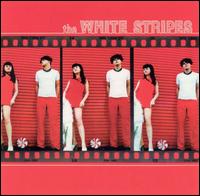
1999 - The White Stripes
Jimmy The Exploder
Stop Breaking Down
The Big Three Killed My Baby
Suzy Lee
Sugar Never Tasted So Good
Wasting My Time
Cannon
Astro
Broken Bricks
When I Hear My Name
Do
Screwdriver
One More Cup of Coffee
Little People
Slicker Drips
St. James Infirmary Blues
I Fought Piranhas
Minimal to the point of sounding monumental, this Detroit guitar-drums-voice duo makes the most of its aesthetic choices and the spaces between riffage and the big beat. In fact, the White Stripes sound like arena rock as hand-crafted in the attic. Singer/guitarist Jack White's voice is a singular, evocative combination of punk, metal, blues, and backwoods while his guitar work is grand and banging with just enough lyrical touches of slide and subtle solo work to let you know he means to use the metal-blues riff collisions just so. Drummer Meg White balances out the fretwork and the fretting with methodical, spare, and booming cymbal, bass drum, and snare cracks. In a word, economy (and that goes for both of the players). The Whites' choice of covers is inspired, too. J. White's voice is equally suited to the task of tackling both the desperation of Robert Johnson's "Stop Breakin' Down" and the loneliness of Bob Dylan's "One More Cup of Coffee." Neither are equal to the originals, but they take a distinctive, haunting spin around the turntable nevertheless. All D.I.Y. punk-country-blues-metal singer/songwriting duos should sound this good. -- Chris Handyside
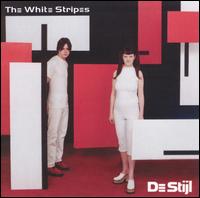
2000 - De Stijl
You're Pretty Good Looking (For a Girl)
Hello Operator
Little Bird
Apple Blossom
I'm Bound to Pack It Up
Death Letter
Sister, Do You Know My Name
Truth Doesn't Make a Noise
Boy's Best Friend
Let's Build a Home
Jumble, Jumble
Why Can't You Be Nicer to Me?
Your Southern Can Is Mine
Despite their reputation as garage rock revivalists, the White Stripes display an impressive range of styles on their second album, De Stijl, which is Dutch for "the style." Perhaps the album's diversity -- which incorporates elements of bubblegum, cabaret, blues, and classic rock -- shouldn't come as a surprise from a band that dedicates its album to bluesman Blind Willie McTell and Dutch artist Gerrit Rietveld. Nevertheless, it's refreshing to hear the band go from the Tommy James-style pop of "You're Pretty Good Looking" to the garagey stomp of "Hello Operator" in a one-two punch. It's even more impressive that the theatrical, piano-driven ballad "Apple Blossom" and a cover of Son House's "Death Letter" go so well together on the same album. Jack White's understated production work and versatile guitar playing and vocals also stand out on the languid, fuzzy "Sister, Do You Know My Name?" as well as insistent rockers like "Little Bird" and "Why Can't You Be Nicer to Me?" As distinctive as it is diverse, De Stijl blends the Stripes' arty leanings with enough rock muscle to back up the band's ambitions. -- Heather Phares
2000 - Live at the Empty Bottle - 15th January 2000
Dead Leaves And the Dirty Ground
You're Pretty Good Looking (For a Girl)
Hello Operator
Jack White Rabbit
Unbekkant
Let's Shake Hands
Apple Blossom
Sister, Do You Know My Name?
Suzy Lee
Let's Build a Home
Jolene (Dolly Parton Cover)
Truth Doesn't Make a Noise
Do
Astro
Jack, The Ripper (Screaming Lord Sutch Cover)
Red Death at 6.14
Your Southern Can Is Mine
Look Me Over Closely
No Review
2001 - Live at the Forum, London - 6th December 2001
Dead Leaves and the Dirty Ground (SNL 20th Oct 2002)
We're Going to Be Friends (SNL 20th Oct 2002)
When I Hear My Name
I Think I Smell a Rat
Dead Lives on a Dirty Ground
Sick of Love
Expecting
Death Letter
Little Room
Jolene (Dolly Parton Cover)
I'm Finding It Harder to be Gentleman
Isis (Bob Dylan Cover)
You're Pretty Good Looking (For a Girl)
We're Going to Be Friends
Apple Blossom
Going Back to Memphis
Astro
Jack, The Ripper (Screaming Lord Sutch Cover)
Rated X
Feeling Going
No Review
2001 - Live at the Maida Vale - 25th July 2001
Let's Shake Hands
When I Hear My Name
Jolene (Dolly Parton Cover)
Death Letter
Cannon
Astro
Jack, The Ripper
Hotel Yorba
I'm Finding It Harder to Be a Gentleman
Screwdriver
We're Going to Be Friends
You're Pretty Good Looking for a Girl
Boll Weevil
Hello Operator
No Review
2001 - White Blood Cells
Dead Leaves and the Dirty Ground
Hotel Yorba
I'm Finding It Harder to Be a Gentleman
Fell In Love With a Girl
Expecting
Little Room
The Union Forever
The Same Boy You've Always Known
We're Going to Be Friends
Offend In Every Way
I Think I Smell a Rat
Aluminium
I Can't Wait
Now Mary
I Can Learn
This Protector
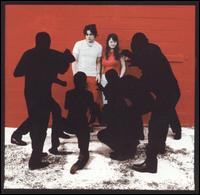
Despite the seemingly instant attention surrounding them -- glowing write-ups in glossy magazines like Rolling Stone and Mojo, guest lists boasting names like Kate Hudson and Chris Robinson, and appearances on national TV -- the White Stripes have stayed true to the approach that brought them this success in the first place. White Blood Cells, Jack and Meg White's third effort for Sympathy for the Record Industry, wraps their powerful, deceptively simple style around meditations on fame, love, and betrayal. As produced by Doug Easley, it sounds exactly how an underground sensation's breakthrough album should: bigger and tighter than their earlier material, but not so polished that it will scare away longtime fans. Admittedly, White Blood Cells lacks some of the White Stripes' blues influence and urgency, but it perfects the pop skills the duo honed on De Stijl and expands on them. The country-tinged "Hotel Yorba" and immediate, crazed garage pop of "Fell in Love With a Girl" define the album's immediacy, along with the folky, McCartney-esque "We're Going to Be Friends," a charming, school-days love song that's among Jack White's finest work. However, White's growth as a songwriter shines through on virtually every track, from the cocky opener "Dead Leaves and the Dirty Ground" to vicious indictments like "The Union Forever" and "I Think I Smell a Rat." "Same Boy You've Always Known" and "Offend in Every Way" are two more quintessential tracks, offering up more of the group's stomping riffs and rhythms and us-against-the-world attitude. Few garage rock groups would name one of their most driving numbers "I'm Finding It Harder to Be a Gentleman," and fewer still would pen lyrics like "I'm so tired of acting tough/I'm gonna do what I please/Let's get married," but it's precisely this mix of strength and sweetness, among other contrasts, that makes the White Stripes so intriguing. Likewise, White Blood Cells' ability to surprise old fans and win over new ones makes it the Stripes' finest work to date. -- Heather Phares
2002 - Live at Glastonbury - 29th June 2002
Little Room
Dead Leaves and the Dirty Ground
I Think I Smell a Rat
When I Hear My Name
Jolene (Dolly Parton Cover)
Hotel Yorba
Ball and Biscuit
Apple Blossom
Death Letter
Lovesick (Bob Dylan Cover)
Astro
Jack, The Ripper (Screaming Lord Sutch Cover)
We Are Going to Be Friends
Jimmy the Exploder
Rated X
The Union Forever / Pick a Bale of Cotton / Baby Blue / Boll Weevil
No Review
2003 - Elephant
Seven Nation Army
Black Math
There's No Home for You Here
I Just Don't Know What to Do with Myself
In the Cold, Cold Night
I Want to Be the Boy to Warm Your Mother's Heart
You've Got Her In Your Pocket
Ball and Biscuit
The Hardest Button to Button
Little Acorn
Hypnotize
The Air Near My Fingers
Girl, You Have No Faith in Medicine
It's True That We Love One Another
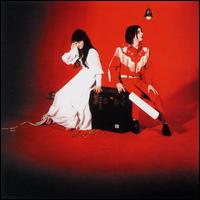
White Blood Cells may have been a reaction to the amount of fame the White Stripes had received up to the point of its release, but, paradoxically, it made full-fledged rock stars out of Jack and Meg White and sold over half a million copies in the process. Despite the White Stripes' ambivalence, fame nevertheless seems to suit them: They just become more accomplished as the attention paid to them increases. Elephant captures this contradiction within the Stripes and their music; it's the first album they've recorded for a major label, and it sounds even more pissed-off, paranoid, and stunning than its predecessor. Darker and more difficult than White Blood Cells, the album offers nothing as immediately crowd-pleasing or sweet as "Fell in Love With a Girl" or "We're Going to Be Friends," but it's more consistent, exploring disillusionment and rejection with razor-sharp focus. Chip-on-the-shoulder anthems like the breathtaking opener, "Seven Nation Army," which is driven by Meg White's explosively minimal drumming, and "The Hardest Button to Button," in which Jack White snarls "Now we're a family!" -- one of the best oblique threats since Black Francis sneered "It's educational!" all those years ago -- deliver some of the fiercest blues-punk of the White Stripes' career. "There's No Home for You Here" sets a girl's walking papers to a melody reminiscent of "Dead Leaves and the Dirty Ground" (though the result is more sequel than rehash), driving the point home with a wall of layered, Queen-ly harmonies and piercing guitars, while the inspired version of "I Just Don't Know What to Do With Myself" goes from plaintive to angry in just over a minute, though the charging guitars at the end sound perversely triumphant. At its bruised heart, Elephant portrays love as a power struggle, with chivalry and innocence usually losing out to the power of seduction. "I Want to Be the Boy" tries, unsuccessfully, to charm a girl's mother; "You've Got Her in Your Pocket," a deceptively gentle ballad, reveals the darker side of the Stripes' vulnerability, blurring the line between caring for someone and owning them with some fittingly fluid songwriting. The battle for control reaches a fever pitch on the "Fell in Love With a Girl"-esque "Hypnotize," which suggests some slightly underhanded ways of winning a girl over before settling for just holding her hand, and on the show-stopping "Ball and Biscuit," seven flat-out seductive minutes of preening, boasting, and amazing guitar prowess that ranks as one the band's most traditionally bluesy (not to mention sexy) songs. Interestingly, Meg's star turn, "In the Cold, Cold Night," is the closest Elephant comes to a truce in this struggle, her kitten-ish voice balancing the song's slinky words and music. While the album is often dark, it's never despairing; moments of wry humor pop up throughout, particularly toward the end. "Little Acorns" begins with a sound clip of Detroit newscaster Mort Crim's Second Thoughts radio show, adding an authentic, if unusual, Motor City feel. It also suggests that Jack White is one of the few vocalists who could make a lyric like "Be like the squirrel" sound cool and even inspiring. Likewise, the showy "Girl, You Have No Faith in Medicine" -- on which White resembles a garage rock snake-oil salesman -- is probably the only song featuring the word "acetaminophen" in its chorus. "It's True That We Love One Another," which features vocals from Holly Golightly as well as Meg White, continues the Stripes' tradition of closing their albums on a lighthearted note. Almost as much fun to analyze as it is to listen to, Elephant overflows with quality -- it's full of tight songwriting, sharp, witty lyrics, and judiciously used basses and tumbling keyboard melodies that enhance the band's powerful simplicity (and the excellent "The Air Near My Fingers" features all of these). Crucially, the White Stripes know the difference between fame and success; while they may not be entirely comfortable with their fame, they've succeeded at mixing blues, punk, and garage rock in an electrifying and unique way ever since they were strictly a Detroit phenomenon. On these terms, Elephant is a phenomenal success. -- Heather Phares
2003 - Live at The Orpheum, Boston - 20th April 2003
Black Math
Dead Leaves and the Dirty Ground
Let's Shake Hands
I Think I Smell a Rat
Jolene (Dolly Parton Cover)
Hardest Button to Button
Look Me Over Closely
Apple Blossom
You're Pretty Good Looking (For a Girl)
In the Cold, Cold Night
Death Letter / Motherless Child
Red Bird (Leadbelly Cover)
Fell in Love with a Girl
Don't Blame Me
Hotel Yorba
Lord, Send Me an Angel
Ball and Biscuit
Astro / Jack, The Ripper (Screaming Lord Sutch Cover)
Seven Nation Army
Boll Weevil
No Review
They Might Be Giants
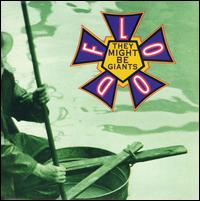
1990 - Flood
Theme from Flood
Birdhouse in Your Soul
Lucky Ball & Chain
Istanbul (Not Constantinople)
Dead
Your Racist Friend
Particle Man
Twisting
We Want a Rock
Someone Keeps Moving My Chair
Hearing Aid
Minimum Wage
Letterbox
Whistling in the Dark
Hot Cha
Women and Men
Sapphire Bullets of Pure Love
They Might Be Giants
Road Movie to Berlin
On their major-label debut Flood, They Might Be Giants exchange quirky artiness for unabashed geekiness and a more varied and polished musical attack. Although the album contains two of the group's finest singles in "Birdhouse in Your Soul" and "Istanbul (Not Constantinople)," the overall record is uneven, since the group's hooks aren't quite as sharp as before and the humor is either too geeky or leavened with awkward social statements like "Your Racist Friend." Even with its faults, Flood has a number of first-rate songs, and it's a strong addition to their catalog, even if it isn't as weirdly intoxicating as its predecessors. -- Stephen Thomas Erlewine
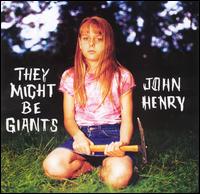
1994 - John Henry
Subliminal
Snail Shell
Sleeping in the Flowers
Unrelated Thing
AKA Driver
I Should Be Allowed to Think
Extra Savoir Faire
Why Must I Be Sad?
Spy
O, Do Not Forsake Me
No One Knows My Plan
Dirt Bike
Destination Moon
A Self Called Nowhere
Meet James Ensor
Thermostat
Window
Out of Jail
Stomp Box
The End of the Tour
Just in case you thought that the only thing they were capable of was smart-aleck herky-jerk novelty tunes, on this album John Flansburgh and John Linnell put together an honest-to-goodness rock band and show that they know how to use it. And the result is one of the more satisfying TMBG projects, a crunchy yet sweet assortment of the usual bemusement ("Unrelated Thing"), weirdness ("Spy") and smart-aleck herky-jerk novelty tunes ("Meet James Ensor," "Extra Savoir Faire") bolstered by unusually hard-rocking accompaniment. Kudos to bass player (and Pere Ubu alumnus) Tony Maimone and to drummer Brian Doherty for coming up with the tectonic groove that powers "AKA Driver" and to everyone involved for the irresistible guitar pop of "Subliminal" and "I Should Be Allowed to Think." Skip over "O, Do Not Forsake Me" and the throwaway instrumental "Spy." -- Rick Anderson
Thievery Corporation
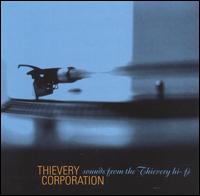
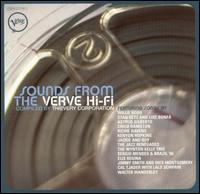
1996 - Sounds from the Thievery Hi-Fi
A Warning [Dub] (feat. Hutchy)
2001 Spliff Odyssey
Shaolin Satellite
Transcendence
Universal Highness
Incident at Gate 7 (feat. Pamela Bricker)
Mañha
Scene at the Open Air Market
The Glass Bead Game
Encounter in Bahia
The Foundation
Interlude
The Oscillator
Assault on Babylon (feat. See-I)
.38.45 (A Thievery Number) (feat. See-I)
One
Collecting Thievery Corporation's first four singles plus several new tracks, Sounds From the Thievery Hi-Fi uses the sampler as its main weapon, constructing songs around pilferings from '60s reggae and pop. The effect approaches the easy listening kitsch-core of the Gentle People, but with more of an unsettling feel. -- John Bush
1996 - Sounds from the Thievery Hi-Fi [Deutch]
A Warning [Dub] (feat. Hutchy)
2001 Spliff Odyssey
Shaolin Satellite
Vivid
Universal Highness
Incident at Gate 7 (feat. Pamela Bricker)
Mañha / Scene at the Open Air Market
The Glass Bead Game
The Foundation
Interlude
The Oscillator
So Vast As the Sky
.38.45 (A Thievery Number) (feat. See-I and AI Williams)
Walking through Babylon
Collecting Thievery Corporation's first four singles plus several new tracks, Sounds From the Thievery Hi-Fi uses the sampler as its main weapon, constructing songs around pilferings from '60s reggae and pop. The effect approaches the easy listening kitsch-core of the Gentle People, but with more of an unsettling feel. -- John Bush [Text refers to the U.S. release.]
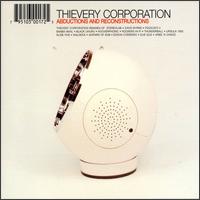
1999 - Abductions and Reconstructions
David Byrne - Dance on Vaseline
Baaba Maal - I Will Follow You [Souka Nayo]
Slide Five - KC Doppler
Stereolab - Tickertape of the Unconscious
Pizzicato 5 - Porno 3003
Thunderball - Hijack
Edson Cordeiro - Ave Maria
Waldeck - Defenceless
Gus Gus - Polyesterday
Hooverphonic - The Strange Effect
Avatars of Dub - Sexelevatormuzik
Black Uhuru - Boof N' Baff' N Biff
Ursula 1000 - Savoir Faire
Urbs N' Chaos - Closer to God
Abductions & Reconstructions, the 15-track collection of Thievery Corporation remixes done for other artists, includes luscious trip-hop versions of a more diverse cast of artists than most remix LPs -- including Rockers HiFi, Slide Five, David Byrne, Baaba Maal, Black Uhuru, Stereolab, Pizzicato 5, Gus Gus and Hooverphonic. The Thievery touch is effortlessly applied to each artist in turn, softening the edges and giving a stoner vibe to tracks like Maal's "I Will Follow You (Souka Nayo)" and Byrne's "Dance on Vaseline." All in all, Garza and Hilton prove themselves one of the best remixing teams around. -- John Bush
1999 - DJ Kicks
Les Baxter - Tropicando
Forest Mighty Black - Rebirth
De Lata - Beija Flor
Fun-Da-Mental - Mother Africa Feeding Sister India (feat. Thievery Corporation)
13th Sign - Rainbow
DJ Cam - Success [Thievery Corporation Mix]
Up, Bustle and Out - Emerald Alley
Karminsky Experience Inc - Exploration
Thievery Corporation - Coming from the Top
Da Lata - Ponteio [Bonus Beats]
Bobby Matos - Guiro Electric [Rainer Truby Trio Mix]
Jazzanova - Fedime's Flight
Pronoia - Janine
Lazyboy - Imperial
Rockers Hi-Fi - Transmission Central [Thievery Corporation Mix]
Indian Vibes - Mathar [R. Fearless Mix]
Dual Tone - Reign Dub
Thievery Corporation - It Takes a Thief
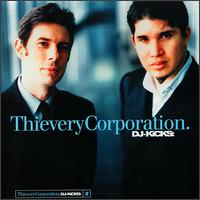
Just as sampladelic as their debut album, Thievery Corporation's entry in Studio !K7's growing DJ Kicks mix-album series charts the duo's interest in not only blunted trip-hop but also Brazilian music, exotica and easy listening. Featuring a few of their own tracks ("It Takes a Thief," "Coming from the Top") plus tracks by Rockers HiFi and Fun-Da-Mental, DJ Kicks is a solid chill-out album. -- Keith Farley
2000 - Departures
Nicola Conte - Bossa Per Due
Ursula 1000 - Mr. Hrundi's Holiday
Thievery Corporation - Coming from the Top
Avatars of Dub - 3kDub
Thunderball - Pop the Trunk
Desmond - Comeback Dub
Thunderball - This Girl
Desmond - Theme from a Dream
Thievery Corporation - Assault on Babylon
Ursula 1000 - Chase Sequence No.3
Avatars of Dub - Sexelevatormusik [Thievery Corporation Mix]
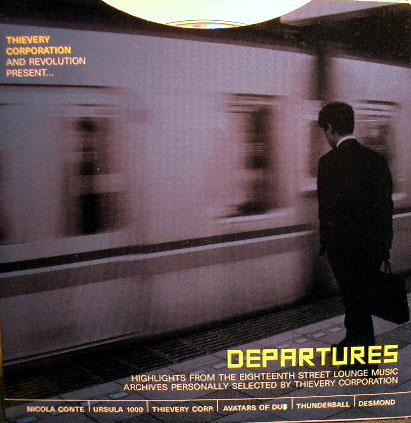
Offering mixed hors d'oeuvres of downtempo easy listening breaks, Thievery Corporation presents their label's roster for the August 2000 issue of Revolution magazine. Whether due to its ebb of sampledelic styles or the sheer "please like us" atmosphere, it's actually quite good. Ursula 1000 grooves as if in the opening credits to a James Bond film, Avatars of Dub take the extraterrestrial dub of the Orb and hijack it for the big beat massive, and it doesn't seem to matter that this hour-long mix barely unleashes more than about four different acts. Slinky and chilled, Departures is both a modest arrival and a fine introduction to the Eighteenth Street Lounge kin. -- Dean Carlson
2000 - The Mirror Conspiracy
Treasures
Le Monde
Indra
Lebanese Blonde
Focus on Sight
Air Batacuda
So Com Voce
Samba Tranquille
Shadows of Ourselves
Hong Kong Triad
Illumination
The Mirror Conspiracy
Tomorrow
Like their debut album, Thievery Corporation's second, The Mirror Conspiracy, is a pleasant album of sublime mid-tempo trip-hop, reminiscent of easy listening groove music, and continually referencing the breezier, atmospheric side of Brazilian, Jamaican, French, and Indian forms. The nocturnal dub-poetry of "Treasures" sets a tone for the bruising bass lines and echoey keys throughout the album, and "Lebanese Blonde" is another early highlight, with the graceful vocalese of Pam Bricker framing live sitar by Rob Myers and a Jamaican-style horn section. Brazil represents with a triple-shot of "Air Batucada," "So Com Voce" (with vocals from Bebel Gilberto), and "Samba Tranquille." French chanteuse Lou Lou adds a bit of downtempo continental flair on "Le Monde" and "Shadows of Ourselves," and Thievery Corporation even samples Ella Fitzgerald on the ambient-jungle closer "Tomorrow." As on their first LP, Garza and Hilton occasionally appear satisfied to just push a few grooves and reference their favorite styles of music over the top -- at the expense of any new ideas -- but The Mirror Conspiracy is excellently produced and almost as stylish as the duo's swinging suits on the cover. -- John Bush
2001 - Sounds from the Verve Hi-Fi
Stan Getz / Luis Bonfá - Menina Floor
Gergio Mendes & Brazil 66 - Chove Chuva
Jimmy Smith / Wes Montgomery - OGD (Road Song)
Kenyon Hopkins - Hard Latin
Cal Tjader - The Fakir (with Lalo Schifrin)
Richie Havens - Something Else Again
Astrud Gilberto - Light My Fire (The Doors Cover)
Elis Regina - Bala Com Bala
Walter Wanderley - Batacuda
Jackie & Roy - Samba Triste
Cal Tjader - Cuchy Frito Man
The Wynton Kelly Trio - Escapade
Jazz Renegades - Do It the Hard Way
The D.C. production duo and easy-going lounge mix team Thievery Corporation received the high honor of compiling Sounds From the Verve Hi-Fi, a collection of their favorite cuts originally appearing on the trend-setter jazz label of the '60s. Jazz at the Philharmonic fans read no farther; Thievery Corporation's respect for the label begins in the early '60s -- Jazz Samba Encore! is a major touchstone -- and focuses mostly on breezy Brazilian pop (Jobim, the Gilbertos, Walter Wanderley, Sergio Mendes) as well as acid jazz precursors like Wes Montgomery or Jackie & Roy. Still, this is more than just another new-generation hipster's Talkin' Verve compilation. Thievery Corporation are veteran DJs and obsessive record collectors, so they know how to put together a mix album, balancing a bare few well-known classics with a raft of unreleased gems. And yes, there are a lot of rarities: almost half of the tracks are seeing CD release for the first time (in America, that is), and the track listing includes comparatively obscure names like Kenyon Hopkins, the Jazz Renegades, and Wynton Kelly. One for the collectors and archivists, then; a great mix for laid-back afternoon drinking sessions, definitely not the Greatest Hits of Verve. -- John Bush
2002 - The Richest Man In Babylon
Heaven's Gonna Burn Your Eyes
Facing East
The Outernationalist
Interlude
Omid (Hope)
All That We Percieve
Un Simple Historie (A Simple Story)
Meu Destino (My Destiny)
Exilio (Exile)
From Creation
The Richest Man in Babylon
Liberation Front
The State of the Union
Until Morning
Resolution
Even more similar to its predecessor, The Mirror Conspiracy, than that one was to the first Thievery Corporation LP, The Richest Man in Babylon provides some beat-heavy, languorous excursions into territory long-favored by Thievery Corporation -- namely, the music of Brazil, India, and Jamaica -- but doesn't have the hooks or the production finesse to compete with The Mirror Conspiracy. On the opener, "Heaven's Gonna Burn Your Eyes," guest Emiliana Torrini treasures her vocals endearingly, but the backing could've been taken wholesale from any of a dozen Thievery productions (or perhaps Air's Moon Safari). "The Outernationalist," a bass-heavy trip into ambient-dub headspace, sounds great too, but it also occupies the same territory as a previous track (2000's "Treasure"). Vocalists LouLou and Pam Bricker both return for two features each, practically indistinguishable from their previous tracks. (Of course, it's difficult to resist a bland sound when the bass line for an entire song, "Un Simple Histoire (A Simple Story)," encompasses only four different notes and continues throughout.) Fortunately, a few tracks on the backside do plow new ground, thanks in part to new guests: "Meu Destino (My Destiny)," with the ephemeral falsetto of Patrick de Santos; "Exilio (Exile)," which introduces Afro-Cuban percussion into the Thievery template; and a great feature for Shinehead on "The State of the Union," while Garza and Hilton throw in a few extra beats (for once). Admittedly, a solid set of treading-water productions is vastly preferred to a bad album, especially on the dancefloor. Sure, it could've been worse, but it also could've been slightly different. -- John Bush
2004 - Babylon Rewound
The State Of the Union [Thievery Remix]
Until the Morning [Thievery Remix]
The Outernationalist [Thievery Remix]
Exilio [Thievery Remix]
Until the Morning [Kid Loco's Dr. Feelgood Mix]
Truth and Rights
Un Simple Histoire [Voidd Mix]
The Richest Man In Babylon [Video]
Electronic music ordinances decree Babylon Rewound a "remix collection," but the eight-track set has a lot in common with traditional Jamaican dub albums as it stretches out the tunes from the Richest Man in Babylon album to their laziest and druggiest potential. Problem is, these so-so tunes don't really deserve this treatment, but they're actually improved by all the wandering, since Thievery Corporation are groovier remixers than most. Groovier than Kid Loco -- judging from his smooth jazzing and unnecessary take on "Until the Morning" -- but not as cool as Voidd, who adds a light house touch to "Un Simple Histoire," the highlight by far. Getting lost in Thievery Corporation's dubby remixes is easy, since lazier and looser are qualities their buttoned-up Richest Man could have benefited from. The crooked path the new, reggae-drenched track "Truth and Rights" takes suggests even they're aware of the need to loosen the tie, but it fades right as it catches fire, pulling its punch. Still, there's more sensi and less sensibility than usual, which makes Babylon Rewound necessary for fans and worth checking for dabblers. -- David Jeffries
2004 - The Outernational Sound
David Snell - International Flight
The Gimmicks - Ya Ma Le
Thunderball - Vai Vai
Troublemakers - Chez Roger Boite Funk
Crazy Penis - 3 Play It Cool
Block 16 - Slow Hot Wind
Boozoo Bajou - Under My Sensi [Thievery Corporation Mix]
Thievery Corporation - Lagos Communique
Big Boss Man - Sea Groove
Beatfanatic - Cookin' [Version]
Breakestra - Cramp Your Style
Antonio Carlos Jocafi - Simbarere
Major Force - Re-Return of the Original Artform
The Karminsky Experience - Shall We Dance
Alan Lorber Orchestra - Within You Without You
Indian Vibes - Mathar
Alan Moorhouse - Expo in Tokyo
The Bobby Hughes Experience - My French Brother
Thievery Corporation - The Richest Man in Babylon
Delroy Wilson - Better Must Come
Even more similar to its predecessor, The Mirror Conspiracy, than that one was to the first Thievery Corporation LP, The Richest Man in Babylon provides some beat-heavy, languorous excursions into territory long-favored by Thievery Corporation -- namely, the music of Brazil, India, and Jamaica -- but doesn't have the hooks or the production finesse to compete with The Mirror Conspiracy. On the opener, "Heaven's Gonna Burn Your Eyes," guest Emiliana Torrini treasures her vocals endearingly, but the backing could've been taken wholesale from any of a dozen Thievery productions (or perhaps Air's Moon Safari). "The Outernationalist," a bass-heavy trip into ambient-dub headspace, sounds great too, but it also occupies the same territory as a previous track (2000's "Treasure"). Vocalists LouLou and Pam Bricker both return for two features each, practically indistinguishable from their previous tracks. (Of course, it's difficult to resist a bland sound when the bass line for an entire song, "Un Simple Histoire (A Simple Story)," encompasses only four different notes and continues throughout.) Fortunately, a few tracks on the backside do plow new ground, thanks in part to new guests: "Meu Destino (My Destiny)," with the ephemeral falsetto of Patrick de Santos; "Exilio (Exile)," which introduces Afro-Cuban percussion into the Thievery template; and a great feature for Shinehead on "The State of the Union," while Garza and Hilton throw in a few extra beats (for once). Admittedly, a solid set of treading-water productions is vastly preferred to a bad album, especially on the dancefloor. Sure, it could've been worse, but it also could've been slightly different. -- John Bush
U2
1980 - Boy
I Will Follow
Twilight
A Cat Dubh
Into the Heart
Out of Control
Stories for Boys
The Ocean
A Day Without Me
Another Time, Another Place
The Electric Co.
Shadows and Tall Trees
From the outset, U2 went for the big message -- every song on their debut album Boy sounds huge, with oceans of processed guitars cascading around Bono's impassioned wail. It was an inspired combination of large, stadium-rock beats and post-punk textures. Without the Edge's echoed, ringing guitar, U2 would have sounded like a traditional hard rock band, since the rhythm section and Bono treat each song as an anthem. Of course, that's the charm of Boy: all of its emotions are on the surface, delivered with optimistic, youthful self-belief, yet the unusual, distinctive guitar textures give it an unexpected tension that makes it an exhilarating debut. The songs may occasionally show some weakness -- the driving "I Will Follow," the dark "An Cat Dubh" and the shimmering "The Ocean" stand out among the sonic textures -- yet the band's musical and lyrical vision keep Boy compelling until the finish. -- Stephen Thomas Erlewine
1981 - October
Gloria
I Fall Down
I Threw a Brick Through a Window
Rejoice
Fire
Tomorrow
October
With a Shout
Stranger in a Strange Land
Scarlet
Is That All?
U2 sounded so confident and assured on their debut that perhaps it was inevitable they would stumble slightly on its follow-up, October. The record isn't weaker than its predecessor because it repeats the formula of Boy, it's because the band tries too hard to move forward. Bono, in particular, tries too hard to make big political, emotional, and religious statements, but the remainder of the band isn't innocent. In general, the music is too pompous, with the sound overwhelming the actual songs. But when U2 do marry the message, melody and sound together, as on "Gloria," "I Threw a Brick Through a Window" and "I Fall Down," the results are thoroughly impressive. -- Stephen Thomas Erlewine
1983 - Under a Blood Red Sky (Live)
Gloria
11 O'Clock Tick Tock
I Will Follow
Party Girl
Sunday Bloody Sunday
The Electric Co.
New Year's Day
40
War turned U2 into arena-rock stars, and the EP Under a Blood Red Sky captures the band on its supporting tour as they adjusted to their larger audiences. Unsurprisingly for a band that always favored the grand statement, the group flourished in such a setting, as this mini-EP attests. Comprised of material recorded in America and Germany, Under a Blood Red Sky draws equally from the band's first three albums, and these live versions, while less textured, are considerably tougher than their studio counterparts and illustrate quite effectively why U2 were considered one of the best, most exhilarating live bands of the '80s. -- Stephen Thomas Erlewine
1983 - War
Sunday Bloody Sunday
Seconds
New Year's Day
Like a Song
Drowning Man
The Refugee
Two Hearts Beat As One
Red Light
Surrender
40
Opening with the ominous, fiery protest of "Sunday Bloody Sunday," War immediately announces itself as U2's most focused and hardest-rocking album to date. Blowing away the fuzzy, sonic indulgences of October with propulsive, martial rhythms and shards of guitar, War bristles with anger, despair and, above all, passion. Previously, Bono's attempts at messages came across as grandstanding, but his vision became remarkably clear on this record, as his anthems ("New Year's Day," "40," "Seconds") are balanced by effective, surprisingly emotional love songs ("Two Hearts Beat As One"), which are just as desperate and pleading as his protests. He performs the difficult task of making the universal sound personal, and the band helps him out by bringing the songs crashing home with muscular, forceful performances that reveal their varied, expressive textures upon repeated listens. U2 always aimed at greatness, but War was the first time they achieved it. -- Stephen Thomas Erlewine
1984 - Unforgettable Fire
A Sort of Homecoming
Pride (In the Name of Love)
Wire
The Unforgettable Fire
Promenade
4th of July
Band
Indian Summer Sky
Elvis Presley and America
MLK
In many ways, U2 took their fondness for sonic bombast as far as it could go on War, so it isn't a complete surprise that they chose to explore the intricacies of the Edge's layered, effects-laden guitar on the follow-up, The Unforgettable Fire. Working with producers Brian Eno and Daniel Lanois, U2 created a dark, near-hallucinatory series of interlocking soundscapes that are occasionally punctuated by recognizable songs and melodies. In such a setting, the band both flourishes and flounders, creating some of their greatest music, as well as some of their worst. "Elvis Presley and America" may well be Bono's most embarrassing attempt at poetry, yet it is redeemed by the chilling and wonderful "Bad," a two-chord elegy for an addict that is stunning in its control and mastery. Similarly, the wet, shimmering textures of the title track, the charging "A Sort of Homecoming," and the surging Martin Luther King Jr. tribute "Pride (In the Name of Love)" are all remarkable, ranking among their very best music, making the missteps that clutter the remainder of the album somewhat forgivable. -- Stephen Thomas Erlewine
1987 - The Joshua Tree
Where the Streets Have No Name
I Still Haven't Found What I'm Looking For
With or Without You
Bullet the Blue Sky
Running to Stand Still
Red Hill Mining Town
In God's Country
Trip Through Your Wires
One Tree Hill
Exit
Mothers of the Disappeared
Using the textured sonics of The Unforgettable Fire as a basis, U2 expanded those innovations by scaling back the songs to a personal setting and adding a grittier attack for its follow-up, The Joshua Tree. It's a move that returns them to the sweeping, anthemic rock of War, but if War was an exploding political bomb, The Joshua Tree is a journey through its aftermath, trying to find sense and hope in the desperation. That means that even the anthems -- the epic opener "Where the Streets Have No Name," the yearning "I Still Haven't Found What I'm Looking For" -- have seeds of doubt within their soaring choruses, and those fears take root throughout the album, whether it's in the mournful sliding acoustic guitars of "Running to Stand Still," the surging "One Tree Hill" or the hypnotic elegy "Mothers of the Disappeared." So it might seem a little ironic that U2 became superstars on the back of such a dark record, but their focus has never been clearer, nor has their music been catchier, than on The Joshua Tree. Unexpectedly, U2 have also tempered their textural post-punk with American influences. Not only are Bono's lyrics obsessed with America, but country and blues influences are heard throughout the record, and instead of using these as roots, they're used as ways to add texture to the music. With the uniformly excellent songs -- only the clumsy, heavy rock and portentous lyrics of "Bullet the Blue Sky" fall flat -- the result is a powerful, uncompromising record that became a hit due to its vision and its melody. Never before have their big messages sounded so direct and personal. -- Stephen Thomas Erlewine
1988 - Rattle and Hum
Helter Skelter [Live]
Van Diemen's Land
Desire
Hawkmoon 269
All Along the Watchtower [Live]
I Still Haven't Found What I'm Looking For [Live]
Freedom for My People
Silver and Gold [Live]
Pride (In the Name of Love) [Live]
Angel of Harlem
Love Rescue Me
When Love Comes to Town
Heartland
God, Pt. 2
The Star Spangled Banner
Bullet the Blue Sky [Live]
All I Want Is You
Functioning as both the soundtrack to the group's disastrous feature-film documentary and as a tentative follow-up to their career-making blockbuster, Rattle and Hum is all over the place. The live cuts lack the revelatory power of Under a Blood Red Sky and are undercut by heavy-handed performances and Bono's embarrassing stage patter; prefacing a leaden cover of "Helter Skelter" with "This is a song Charles Manson stole from the Beatles, and now we're stealing it back," is bad enough, but it pales next to Bono's exhortation "OK, Edge, play the blues!" on the worthy, decidedly unbluesy "Silver and Gold." Both comments reveal more than they intend -- throughout the album, U2 sound paralyzed by their new status as "rock's most important band." They react by attempting to boost their classic rock credibility, they embrace American roots rock, something they ignored before. Occasionally, these experiments work: "Desire" has an intoxicating Bo Diddley beat, "Angel of Harlem" is a punchy, sunny Stax-soul tribute, "When Loves Come to Town" is an endearingly awkward blues duet with B.B. King, and the Dylan collaboration "Love Rescue Me" is an overlooked minor bluesy gem. However, these get swallowed up in the bluster of the live tracks, the misguided gospel interpretation of "I Still Haven't Found What I'm Looking For" and the shameful answer to John Lennon's searing confession "God," "God Part II." A couple of affecting laments -- the cascading "All I Want Is You" and "Heartland," which sounds like a Joshua Tree outtake -- do slip out underneath the posturing, but Rattle and Hum is by far the least-focused record U2 ever made, and it's little wonder that they retreated for three years after its release to rethink their whole approach. -- Stephen Thomas Erlewine
1990 - No Surrender (Live) (Bootleg)
Twilight
Surrender
I Threw a Brick Through a Window
A Day Without Me
A Cat Dubh / Into the Heart
Sunday Bloody Sunday
The Electric Co.
I Fall Down
October
New Year's Day
Gloria
I Will Follow
Fire
A Celebration
11 O'Clock Tick Tock
The Ocean
I Will Follow
No Review
1991 - Achtung, Baby
Zoo Station
Even Better Than the Real Thing
One
Until the End of the World
Who's Gonna Ride Your Wild Horses
So Cruel
The Fly
Mysterious Ways
Tryin' to Throw Your Arms Around the World
Ultraviolet (Light My Way)
Acrobat
Love is Blindness
Reinventions rarely come as thorough and effective as Achtung Baby, an album that completely changed U2's sound and style. The crashing, unrecognizable distorted guitars that open "Zoo Station" are a clear signal that U2 have traded their Americana pretensions for post-modern, contemporary European music. Drawing equally from Bowie's electronic, avant-garde explorations of the late '70s and the neo-psychedelic sounds of the thriving rave and Madchester club scenes of early '90s England, Achtung Baby sounds vibrant and endlessly inventive. Unlike their inspirations, U2 rarely experiment with song structures over the course of the album. Instead, they use the thick dance beats, swirling guitars, layers of effects and found sounds to break traditional songs out of their constraints, revealing the tortured emotional core of their songs with the hyper-loaded arrangements. In such a dense musical setting, it isn't surprising that U2 have abandoned the political for the personal on Achtung Baby, since the music, even with its inviting rhythms, is more introspective than anthemic. Bono has never been as emotionally naked as he is on Achtung Baby, creating a feverish nightmare of broken hearts and desperate loneliness; unlike other U2 albums, it's filled with sexual imagery, much of it quite disturbing, and it ends on a disquieting note. Few bands as far into their career as U2 have recorded an album as adventurous or fulfilled their ambitions quite as successfully as they do on Achtung Baby, and the result is arguably their best album. -- Stephen Thomas Erlewine
1993 - Zooropa
Zooropa
Babyface
Numb
Lemon
Stay (Faraway, So Close!)
Daddy's Gonna Pay for Your Crashed Car
Some Days Are Better Than Others
The First Time
Dirty Day
The Wanderer
U2 planned to record a new EP before launching the European leg of their ambitious Zoo TV tour in 1993, but the EP quickly turned into the full-length album Zooropa. Picking up where Achtung Baby left off, Zooropa delves heavily into U2's newfound affection for experimental music and dance clubs. While the title track marries those inclinations to the anthems of The Joshua Tree, most of the record is far more daring than its predecessor. While that occasionally means it's unfocused and meandering, it also results in a number of wonderful moments, like the quiet menace of "Daddy's Gonna Pay for Your Crashed Car," and the space-age German disco of "Lemon," Edge's droning mantra "Numb," and the gentle, heartbroken "Stay (Faraway, So Close!)," one of U2's very best love songs. As the album winds to a close, it drifts off track, yet the best moments of Zooropa rank among U2's most inspired and rewarding music. -- Stephen Thomas Erlewine
1997 - Pop
Discothèque
Do You Feel Loved
Mofo
If God Will Send His Angels
Staring at the Sun
Last Night on Earth
Gone
Miami
The Playboy Mansion
If You Wear That Velvet Dress
Please
Wake Up, Dead Man
No matter which way you look at it, Pop doesn't have the same shock of the new that Achtung Baby delivered on first listen. Less experimental and more song-oriented than Zooropa, Pop attempts to sell the glitzy rush of techno to an audience weaned on arena rock. And that audience includes U2 themselves. While they never sound like they don't believe in what they're doing, they still remove most of the radical elements of electronic dance, which is evident to anyone with just a passing knowledge of the Chemical Brothers and Underworld. To a new listener, Pop has flashes of surprise -- particularly on the rampaging "Mofo" -- but underneath the surface, U2 relies on anthemic rockers and ballads. "Discotheque" might be a little clumsy, but "Staring at the Sun" shimmers with synthesizers borrowed from Massive Attack and a Noel Gallagher chorus. Similarly, "Do You Feel Loved" and "If You Wear That Velvet Dress" fuse old-fashioned U2 dynamism with a keen sense of the cool eroticism that makes trip-hop so alluring. Problems arise when the group tries to go for conventional rock songs, some of which are symptomatic of the return of U2's crusade for salvation. Pop is inflected with the desire for a higher power to save the world from its jaded spiral of decay and immorality, which is why the group's embrace of dance music never seems joyous -- instead of providing an intoxicating rush of gloss and glamour, it functions as a backdrop for a plea of salvation. Achtung Baby also was a comment on the numbing isolation of modern culture, but it made sweeping statements through personal observations; Pop makes sweeping statements through sweeping observations. The difference is what makes Pop an easy record to admire, but a hard one to love. -- Stephen Thomas Erlewine
1998 - Best of 1980-1990 / B-Sides
Pride (In the Name of Love)
New Years Day
With or Without You
I Still Haven't Found What I'm Looking For
Sunday Bloody Sunday
Bad
Where the Streets Have No Name
I Will Follow
The Unforgettable Fire
Sweetest Thing [The Single Mix]
Desire
When Love Comes to Town
Angel of Harlem
All I Want Is You
The Three Sunrises
Spanish Eyes
Sweetest Thing
Love Comes Tumbling
Bass Trap
Dancing Barefoot
Everlasting Love
Unchained Melody
Walk to the Water
Luminous Times (Hold on to Love)
Hallelujah, Here She Comes
Silver and Gold
Endless Deep
A Room at the Heartbreak Hotel
Trash, Trampoline, and the Party Girl
Island and U2 realized that longtime fans of the band wouldn't need The Best of 1980-1990. Unlike the proposed The Best of 1990-2000, which would likely boast the non-LP "Hold Me, Thrill Me, Kiss Me, Kill Me" and the Passengers' "Miss Sarajevo," 1980-1990 contained nothing but material culled directly from the albums, which didn't exactly entice hardcore followers. So, the label and the band decided to pair the compilation with a collection of the group's B-sides from the '80s, none of which had ever appeared on an album before. For diehard U2 fans, this is something of a godsend -- not necessarily a holy grail, which would have been a complete B-sides collection, including the long-missing early EPs -- since many of these tracks have been out of print for years. That's not to say they'll be entirely pleased with what they hear. The B-Sides is wildly uneven, fluctuating between a handful of lost masterpieces ("Spanish Eyes," "Sweetest Thing," "Hallelujah Here She Comes," "Silver and Gold," "A Room at the Heartbreak Hotel," "Trash, Trampoline and the Party Girl"), a momentum-crushing triptych of mediocre karaoke ("Dancing Barefoot," "Everlasting Love," "Unchained Melody") and gormless filler (pretty much everything else). Despite the uneven music, fans will need The B-Sides, not just for the handful of worthy contenders, but for its sheer rarity. Not only have the B-sides themselves been difficult to locate, but the disc itself was designed as a collectors' item: after the first week of sales, The B-Sides was pulled from the market, and Island shipped only The Best of 1980-1990. Clearly, this was a tactic to raise press awareness and boost sales, but that doesn't mean that fans shouldn't take advantage of its limited release. -- Stephen Thomas Erlewine
2000 - All That You Can't Leave Behind
Beautiful Day
Stuck in a Moment You Can't Get Out Of
Elevation
Walk On
Kite
In a Little While
Wild Honey
Peace on Earth
When I Look at the World
New York
Grace
Nearly ten years after beginning U2 Mach II with their brilliant seventh album Achtung Baby, U2 eases into their third phase with 2000's All That You Can't Leave Behind. The title signifies more than it seems, since the group sifts through its past, working with Daniel Lanois and Brian Eno, all in an effort to construct a classicist U2 album. Thankfully, it's a rock record from a band that absorbed all the elastic experimentation, studio trickery, dance flirtations, and genre bending of Achtung, Zooropa, and Pop -- all they've shed is the irony. U2 chooses not to delve as darkly personal as they did on Achtung or Zooropa, yet they also avoid the alienating archness of Pop, returning to the generous spirit that flowed through their best '80s records. On that level, All may be reminiscent of The Joshua Tree, but this is a clever and craftsmanlike record, filled with nifty twists in the arrangements, small sonic details, and colors. U2 take subtle risks, such as their best pure pop song ever with "Wild Honey"; they're so self-confident they effortlessly write their best anthem in years with "Beautiful Day"; they offer the gospel-influenced "Stuck in a Moment," never once lowering it to the schtick it would have been on Rattle & Hum. Like any work from craftsmen, All That You Can't Leave Behind winds up being a work of modest pleasures, where the way the verse eases into the chorus means more than the overall message, and this is truly the first U2 album where that sentiment applies -- but there is genuine pleasure in their craft, for the band and listener alike. -- Stephen Thomas Erlewine
2002 - Seven
Summer Rain
Always
Big Girls Are Best
Beautiful Day [Quincey & Sonance Remix]
Elevation [Influx Remix]
Walk On [Single Version]
Stuck in a Moment You Can't Get Out Of (Acoustic)
If U2 isn't trying to save the world of music, they're trying to save the world. U2 is unstoppable, and the continuous success of All That You Can't Leave Behind and the Elevation tour, as well as eight Grammy nominations, proved true in 2001. And their loyalty for the fans remained steadfast and passionate. The limited-edition U2 7 EP, issued in January 2002, was a bit of a celebration for fans, and Target was the lucky sponsor. U2 and Target? Together? It may seem a bit odd, but it's all about the music. The seven-song set of rare tracks and remixes is an additional treat for diehards. From the spiritual inquisitions of the rollicking "Summer Rain" and the "Beautiful Day" sister song "Always" to the campy rock twist of sleazy riffs and tantalizing hooks of "Big Girls Are Best," U2's impeccability for kitsch and cool is right on. The world beat tinges of "Elevation (Influx Remix)" make it a stronger, anthemic single, whereas the charismatic acoustic version of one of the band's sharpest singles to date, "Stuck in a Moment You Can't Get Out Of," showcases the band's everlasting appeal. Bono and The Edge vocally intertwine for something beautiful and enchanting. U2 still knows what it takes. All That You Can't Leave Behind confirmed that first, and U2 7 is merely a sweet reminder. -- MacKenzie Wilson
Ugress
2002 - Resound
Spider-Man Theme [Live]
Queen of Darkness
E-Pipe
Reason to Believe
Decepticons
Loungemeister
Falling
Autumn Colors
Trigger 22
Kaleido Scope
Atlantis Coastguard Corruption
No Review
Van Morrison
1990 - The Best of Van Morrison
Bright Side of the Road
Gloria
Moondance
Baby, Please Don't Go
Have I Told You Lately
Brown-Eyed Girl
Sweet Thing
Warm Love
Wonderful Remark
Jackie Wilson Said (I'm in Heaven When You Smile)
Full Force Gale
And It Stoned Me
Here Comes the Night
Domino
Did Ye Get Healed?
Wild Night
Cleaning Windows
Whenever God Shines His Light
Queen of the Slipstream
Dweller on the Threshold
For an artist that's doggedly album-oriented, plus a songwriter who revels in subtlety, Van Morrison doesn't seem like a logical candidate for a successful greatest-hits compilation. Nevertheless, The Best of Van Morrison is a cracker-jack compilation, tracing Van the Man from his days with Them, through his best-known tunes ("Brown-Eyed Girl," "Moondance," "Blue Money," "Wild Night"), to highlights from the '70s and '80s cult efforts, topped off by "Wonderful Remark," a song first heard on the King of Comedy soundtrack. This collection makes Morrison's work seem a little more immediate and accessible than it usually is, but that's a blessing, since it provides a great summary of his hits and a nice introduction for the curious. Yes, it could have dug deeper into the catalog, but as a sampler, it can't be faulted. -- Stephen Thomas Erlewine
Victor Wooten
1997 - What Did He Say?
Yo Victa
What Did He Say?
What You Won't Do for Love
Cherokee
Don't Wanna Cry
The Lonliest Monk
A Chance
Radio W-00-10
Norwegian Wood (This Bird Has Flown)
Bro John
Naima
Sometimes I Laugh
My Life
Sojourn of Arjuna
Buzz Intro
A Little Buzz
Kids Didn't Change
Heaven Is Where the Heart Is
A superb, varied, playfully crafted disc, and an absolutely stunning effort that surpasses expectations. The music varies from funk and rap to a fantastic version of John Coltrane's "Naima," to a beautiful, very different -- yet quite recognizable without being boring -- version of the Lennon/McCartney standard "Norwegian Wood." The shifts of stance, posture, and presentation are at times abrupt but never disconcerting; rather, they provoke thought and reflection. These shifts appear at times between the tracks and at times in the midst of the pieces themselves. The disc is never inaccessible; the combination of jazz and Irish music brings to mind the seemingly ridiculous combinations of Paddy Moloney of the Chieftains. The big departure from the first album is that this is not a solo bass album. He uses other instruments, and uses them well. Not to be missed. -- Bob Gottlieb
Weezer
1994 - Weezer (Blue)
My Name Is Jonas
No One Else
The World Has Turned and Left Me Here
Buddy Holly
Undone: The Sweater Song
Surf Wax America
Say It Ain't So
In the Garage
Holiday
Only In Dreams
Falling between the warped pop of The Pixies and the straightahead thump of arena rock, Weezer's debut album offers embarrassingly pleasurable pop thrills. Weezer is unabashedly pop. Songs like "Buddy Holly," "Undone -- The Sweater Song," "In the Garage," "The World Has Turned and Left Me Here," and "Surf Wax America" are filled with strong, simple guitar hooks and relentlessly catchy melodies. What makes the band so enjoyable is their charming geekiness; instead of singing about despair, they sing about love, which is kind of refreshing in the gloom-drenched world of '90s guitar-pop. -- Stephen Thomas Erlewine
1996 - Pinkerton
Tired of Sex
Getchoo
The Boxer
No Other One
Why Bother
Across the Sea
The Good Life
El Scorcho
Pink Triangle
Falling for You
Butterfly
From the pounding, primal assault of the opening track "Tired of Sex," it's clear from the outset that Pinkerton is a different record than the sunny, heavy guitar-pop of Weezer's eponymous debut. The first noticible difference is the darker, messier sound -- the guitars rage and squeal, the beats are brutal and visceral, the vocals are mixed to the front, filled with overlapping, off-the-cuff backing vocals. In short, it sounds like the work of a live band, which makes it all the more ironic that Pinkerton, at its core, is a singer/songwriter record, representing Rivers Cuomo's bid for respectability. Since he hasn't changed Weezer's blend of power-pop and heavy metal (only the closing song, "Butterfly," is performed acoustically), many critics and much of the band's casual fans didn't notice Cuomo's signficant growth as a songwriter. Loosely structured as a concept album based on Madame Butterfly, each song works as an individual entity, driven by powerful, melodic hooks, a self-deprecating sense of humor ("Pink Triangle" is about a crush on a lesbian) and a touching vulnerability ("Across the Sea," "Why Bother?"). Weezer can still turn out catchy, off-beat singles -- "The Good Life" has a chorus that is more memorable than "Buddy Holly," "El Scorcho" twists Pavement's junk-culture references in on itself, "Falling for You" is the most propulsive thing they've yet recorded -- but their endearing geekiness isn't as cutesy as before, which means the album wasn't as successful on the charts. But, it's the better album, full of crunching power-pop with a surprisingly strong emotional undercurrent that becomes all the more resonant with each play. -- Stephen Thomas Erlewine
2001 - Weezer (Green)
Don't Let Go
Photograph
Hash Pipe
Island in the Sun
Crab
Knock-Down Drag-Out
Smile
Simple Pages
Glorious Day
O Girlfriend
There's a reason why Weezer's third album consciously recalls their first, not just in its eponymous title, but in its stark cover, Ric Ocasek production, and tight pop songs. That's not because Weezer was trying to recapture their core audience because, unbeknownst to them, they already had. Once their second album Pinkerton stiffed on the charts and was lambasted in the press (including an devastatingly unfair pan from Rolling Stone, who named it the worst album of 1996), the group dropped out of sight and leader Rivers Cuomo went into seclusion. Remarkably, the group's following, unlike so many of their peers -- from forgotten label-sponsored alt-rockers like Nada Surf to indie rockers as respected as Sebadoh -- never waned, it only strengthened, as fans slowly realized the brilliance of Pinkerton and how the debut only seemed better, catchier, funnier as the years passed. Weezer eventually realized this through the magic of the internet (plus an uproarious Japanese tour), and they toured in 2000, knocking out a new album at the end of the year, when they realized that there were thousands of fans eager to hear a new record. The cynical out there might interpret this as crass commercialism -- Hey! They only made a record when they realized people were listening -- but it's actually a reflection of one of Weezer's greatest strengths: Cuomo's shyness and awkwardness, neither of which he can disguise, no matter how he tries. He didn't want to record another album unless he knew somebody was listening, because he didn't know if there was a purpose otherwise. This is the quality that came shining through on Pinkerton (and is most likely the reason he disdains the album as too personal, no matter how great it is), and it's also apparent on this Weezer album (which will inevitably be known as the Green Album, much like how fans dubbed the debut the Blue Album, due to its cover background), even if he consciously shies away from the stark autobiography that made their previous album. Sure, there may be clues tucked away in any of these songs, but for the most part, this is simply a collection of punk-pop songs in the now-patented Weezer style. And that, quite frankly, is more than enough. This may be a very short album -- a mere 28:34, actually -- but that just makes it bracing, a reminder of how good, nay great, this band can be. Especially since this is a conscious return to their debut, this may seem like nothing special -- it's just punk-pop, delivered without much dynamic range but with a whole lot of hooks -- but nobody else does it this well, no matter how many bands try. And, frankly, that's enough, because this band rocks tight and focused, with wonderful melodies, and songs that have enough little details to give them personality, even when Rivers is avoiding personality. This is a combination of great performances and great songwriting, something that puts to shame both the mainstream rockers and underground wannabes of the early '00s. That's Weezer's great strength -- they certainly are accessible, but they're so idiosyncratic within that realm, it's hard not to think of them as outsiders. The fact that this Weezer sounds as fresh as the first Weezer is as much a testament to the band's talents as the musical stagnation of the post-grunge, post-Britpop '90 Britpop, but, three albums out, they've yet to deliver a record that isn't immensely satisfying. Yeah, it's about 70 cents per minute, but you'd be a fool not to consider it just about the best value of any rock record yet released in 2001. -- Stephen Thomas Erlewine
2002 - Maladroit
American Gigolo
Dope Noise
Keep Fishin'
Take Control
Death and Destruction
Slob
Burndt Jamb
Space Rock
Slave
Fall Together
Possiblities
Love Explosion
December
Bands used to make records like this all the time. They'd release an album, tour all year, write a bunch of songs, record 'em, release another album a year later. Since hardly anybody -- not even indie bands -- does that in 2002, it's a remarkable event when Weezer does exactly that, especially following a half-a-decade of inactivity. But, it's hard not to think that this is the way it should be done by all bands, since Maladroit retains the high quality of The Green Album. True, it doesn't offer much that's new -- it has a similarly short length, clocking in at 33 minutes, it favors riff-heavy, melodic rockers and has a lack of ballads, while Rivers Cuomo is doggedly avoiding the exposed-nerve confessions of Pinkerton -- but there are a couple of notable differences that gives it its own character. Since the band has returned to self-producing, there's a tougher sound -- nowhere near as raw as Pinkerton, yet similarily loud and raucous, overflowing with guitars spitting out riffs and solos with a gleeful abandon. So, it's essentially a harder-rocking version of the last album. But you know what? It doesn't matter because the band is at a peak. Cuomo continues to write consistently strong songs, occasionally penning a flat-out stunner ("Dope Nose" is one of their all-time greatest songs), the band is tighter than ever, the record crackles with energy -- nothing new, per se, but still vibrant, catchy, and satisfying. It's so good, it's hard not to think that it offers definitive proof that even in 2002, it's best for a band to keep going once they've hit a peak, to turn out a bunch of records that find them at the top of their game instead of waiting three or four years to craft a follow-up. After all, that's what builds not only a body of work, but a legacy. -- Stephen Thomas Erlewine
Weird "Al" Yankovic
1999 - Running with Scissors
The Saga Begins
My Baby's In Love With Eddie Vedder
Pretty Fly for a Rabbi
The Weird Al Show Theme
Jerry Springer
Germ
Polka Power
Your Horoscope for Today
It's All About the Pentiums
Truck Driver Song
Grapefruit Diet
Albuquerque
Like many of Weird Al's 1990s albums, Running With Scissors is something of a mixed bag, although devoted fans will definitely find enough of interest to add it to their collections. As usual, the highlights tend to be song parodies; "The Saga Begins" is a retelling of Star Wars Episode I: The Phantom Menace from Obi-Wan Kenobi's point of view set to the tune of "American Pie," while "Jerry Springer" is a clever rewrite of the Barenaked Ladies' "One Week." Not all of them quite hit the mark, though: "Pretty Fly for a Rabbi" has the same borderline ethnic condescension of the Offspring's original, and Yankovic's mimicry of the sound of his source material on the Puff Daddy takeoff "It's All About the Pentiums" isn't quite up to his usual standards. The originals tend to come off as forced, as though Yankovic is trying way too hard to live up to his nickname; although the snarky rip of "My Baby's in Love with Eddie Vedder" hits pretty close to the mark, the eleven-minute closer "Albuquerque" is interminable. Overall, there are some songs worthy of adding to Yankovic's next best-of, and some more that no one will miss. -- Steve Huey
Wynton Marsalis & Ellis Marsalis
1994 - Joe Cool's Blues
Linus and Lucy
Buggy Ride
Peppermint Patty
On Peanuts Playground
Oh, Good Grief
Wright Brothers Rag
Charlie Brown
Little Red-Haired Girl
Pebble Beach
Snoopy & Woodstock
Little Birdie
Why, Charlie Brown
Joe Cool's Blue (Snoopy's Return)
For this CD Wynton and Ellis Marsalis perform music both old and new that is heard on the Peanuts television specials. Wynton's septet (altoist Wessell Anderson, Victor Goines on tenor, trombonist Wycliffe Gordon, pianist Eric Reed, bassist Benjamin Wolfe and drummer Herlin Riley in addition to the trumpeter-leader) jam on several of Marsalis's compositions, Ellis Marsalis's trio performs six of Vince Guaraldi's themes and, on "Little Birdie," an all-star group (including three of the Marsalises but not Wynton) back Germaine Bazzle's vocal. The music is reasonably enjoyable but not too substantial, worth getting even if it is not one of Wynton's more significant albums. -- Scott Yanow
<-
1
2
3 ->