A List of my Albums:
(All Reviews Ripped Without Permission from
AMG
.)
In June, my hard drive had a major failure, and all my music was lost. Herein remains memoriam.
Update: Huzzah! Recovery! Even if it is temporary!
Further Update: It was temporary! I dropped my music hard drive while it was transferring. A lot of it is fortunately on my iPod.
Expand All
Leonard Bernstein
1999 - West Side Story (The Bloomsbury Set)
Prologue
Jet Song
Something's Coming
Dance at the Gym
Maria
America
Tonight
Gee, Officer Krupke
I Feel Pretty
One Hand, One Heart
Quintet
The Rumble
Cool
A Boy Like That and I Have a Love
Somewhere
No Review
Limp Bizkit
1997 - 3 Dollar Bill Y'All
Intro
Pollution
Counterfeit
Stuck
Nobody Loves Me
Sour
Stalemate
Clunk
Faith
Stink Finger
Indigo Flow
Leech [Demo Version]
Everything
With their major-label debut, Three Dollar Bill Y'All, Limp Bizkit quickly rose to the top of the alt-metal subgenre known as rapcore. Part of the reason the band stood out from their peers was their kinetic, frenzied energy. They might not have many original ideas -- they are largely an outgrowth of Korn, Faith No More and the Chili Peppers -- but they do the sound well. They have a powerful rhythm section and memorable hooks, most of which make up for the uneven songwriting. Then again, you're not looking for perfection on a debut -- you're looking for a promising sound, and on that front, Limp Bizkit delivers. -- Stephen Thomas Erlewine
Louis Armstrong
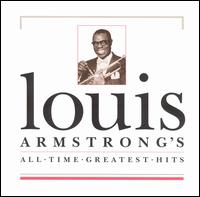
1997 - All Time Greatest Hits
What A Wonderful World
Hello, Dolly!
Sittin' in the Sun
Mack the Knife [Theme from Three Penny Opera]
A Kiss to Build a Dream On
It Takes Two to Tango
That Lucky Old Sun
Kiss of Fire
(When We're Dancing) I Get Ideas
Gone Fishin'
Skokiaan (South African Song)
La Vie en Rose
The Dummy Song
Chloe
I Still Get Jealous
When You're Smiling (The Whole World Smiles With You)
Blueberry Hill
When It's Sleepy Time Down South
The title of this compilation, All-Time Greatest Hits, is misleading. That's no disrespect to the material here, which is mostly very good. It's just not Louis Armstrong's all-time greatest. These 18 tracks come from Armstrong's "pop" era, the final decades of his career where, under the tutelage of producer Milt Gabler and arranger Gordon Jenkins, the jazz pioneer moved full-bore into a genial form of heavily orchestrated pop music. The Armstrong of this era, a large, bear-like man with an infectious laugh and a gravelly voice, immaculately dressed in a crisp suit with a white linen handkerchief in one hand and a rarely played trumpet in the other, has become the iconic image of the man, which unfairly relegates his best, most passionate and most influential work to the background. "What a Wonderful World," "Hello Dolly," "A Kiss to Build a Dream On," and "When You're Smiling" are masterful pop songs, and this well-annotated, perfectly remastered set does them justice. But when a compilation calls itself Louis Armstrong's All-Time Greatest Hits yet doesn't include "Dippermouth Blues," "Yes! I'm in the Barrel," or "Struttin' With Some Barbecue," just to name a few, it's difficult to agree with the name. -- Stewart Mason
Maroon 5
2002 - Songs About Jane
Harder to Breathe
This Love
Shiver
She Will Be Loved
Tangled
The Sun
Must Get Out
Sunday Morning
Secret
Through With You
Not Coming Home
Sweetest Goodbye
The boys of Maroon 5 have certainly come a long way since their days in the indie outfit Kara's Flowers. After the band's demise in 1999, frontman Adam Levine surrounded himself with New York City's urban hip-hop culture and found a new musical calling. Maroon 5 was born and their debut album, Songs About Jane, illustrates an impressive rebirth. It's groovy in spots, offering bluesy funk on "Shiver" and a catchy, soulful disposition on "Harder to Breathe." "Must Get Out" slows things down with its dreamy lyrical story, and Levine is a vocal dead ringer for Men at Work's Colin Hay. Don't wince -- it works brilliantly. Songs About Jane is love-drunk on what makes Maroon 5 tick as a band. They're not as glossy as the Phantom Planet darlings; they've got grit and a sexy strut, personally and musically. It's much too slick to cross over commercially in 2002, but it's good enough for the pop kids to take notice. -- MacKenzie Wilson
Michael Bublé
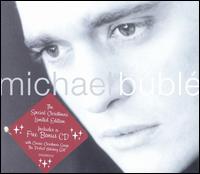
2003 - Michael Bublé
Fever
Moondance
Kissing a Fool
For Once In My Life
How Can You Mend a Broken Heart
Summer Wind
You'll Never Find Another Love
Crazy Little Thing Called Love
Put Your Head On My Shoulder
Sway
The Way You Look Tonight
Come Fly With Me
That's All
Unlike most young guys who gravitate towards the latest rock or rap trend, Michael Bublé chose to study the classic works of pop vocal masters like Ella Fitzgerald and Frank Sinatra while slowly developing his own technique and career as a vocal interpreter. Thanks to producer David Foster, the 25-year-old Bublé has graduated to the big time with a self-titled debut disc that shows off his knowledge and appreciation for a style of music that is mostly unfamiliar to his generation. Swinging his way through a set of pop standards both classic ("The Way You Look Tonight"), and more recent ("Moondance"), Bublé already possesses a quality that reaches beyond his youthfulness, with a voice that incorporates his influences into a sound that is fresh yet familiar. When he launches into a standard like "Come Fly With Me," images of Sinatra are conjured up; but as the song progresses, the listener realizes that this is not Sinatra, or Bobby Darin, or any other famous vocalist. It is someone who has learned the art of popular song and is creating his own colorful music from shades of the past. In doing so, Bublé throws a fresh coat of paint on an old standard like "Fever," and gives it a satiny sheen that the song hasn't seen in years. In addition to revitalizing the classics, he draws in a younger audience by covering more recent, rock-era songs in a swinging gloss. Songs like George Michael's "Kissing a Fool" or Queen's "Crazy Little Thing Called Love" are jazzed up even further than their retro-based originals, and flow easily alongside the standards. The only interruption comes when Barry Gibb guests on his own "How Can You Mend a Broken Heart," with a reverb-laced vibrato that simply does not fit in this musical environment. Throughout the disc it is apparent that Bublé has done his homework and aced the test, but there is always room for improvement. Sinatra haunts his vocals a bit too much on songs like "Summer Wind," and there are moments throughout the disc when he forces his technique instead of following a natural cadence, but these minor criticisms will improve with time; and nothing can really diminish the sheer pleasure and joy he expresses in each performance. He sounds absolutely thrilled to be singing these songs, and that goes a long way in making Michael Bublé an exciting debut. -- Aaron Latham
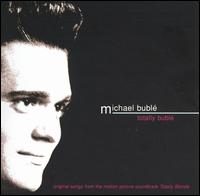
2003 - Totally Bublé
That's How It Goes
Peroxide Swing
Me & Mrs. You
Love at First Sight
Anyone to Love
Guest I'm Falling 4 U
Tell Him He's Yours
That's How It Goes [Video]
Love at First Sight [Video]
Anyone to Love [Video]
After the success of Michael Bublé's self-titled debut, DRG belatedly released this jazzy soundtrack from the 2001 film Totally Blonde in which Bublé had a co-starring role as a nightclub singer. Capitalizing on Bublé's newfound stardom, DRG basically ignores the music's connection to the film by altering the title and putting a shot of Bublé on the cover making it appear as if this was a proper Michael Bublé release. The slight misrepresentation was not lost on Bublé who has stated on his website that he did not want these songs released but that it was out of his control. In reality, the disc is not the complete disaster he makes it out to be, but buyers should be wary of the disc and understand what it is they are purchasing. The film's director, Andrew Van Slee, wrote or co-wrote all of the songs on this short, energetic disc while an as-yet unsigned Bublé does his best to breathe some life into these imitation swing-style songs. As with the standards he interpreted on his debut disc, Bublé sounds in command and comfortable fronting these slight tunes, making the songs sound much more interesting than they really are. Throughout most of the tracks Bublé channels his inner Sinatra in a way that is complementary but not imitative, as in the swagger of the disc's opening number, "That's How It Goes," where his Frank-ish vocals get revved up and zoom into a final Bobby Darin growl. His youthfulness does show through on the ballad "Anyone to Love," a boozy ode to losing at love in which Bublé's vocals lack the experience needed to truly portray the song's older, depressed character, but that is his only vocal misstep throughout these seven audio tracks. Although one could understand why Bublé would not want these early recordings to sit beside his stellar debut in CD bins, he shouldn't be too concerned as Totally Bublé does show what this gifted vocalist can do with even second-rate material. -- Aaron Latham
Milla
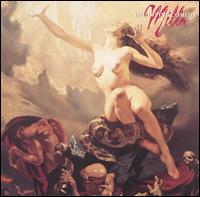
1994 - The Divine Comedy
Alien Song (For Those Who Listen)
Gentleman Who Fell
It's Your Life
Reaching from Nowhere
Charlie
Ruby Lane
Bang Your Head
Clock
Don't Fade Away
You Did It All Before
In a Glade
Milla is supermodel and actress Milla Jovovich, and 1994's The Divine Comedy was her debut release. While it's now common for models and actors to try their hand at music, the good results of The Divine Comedy are not as common. Produced by Rupert Hine, the album is a low-key, laid-back affair featuring guest appearances by Eric Bazilian and Martha Davis. Milla has a pleasant voice and above-average songwriting ability, and the songs are organic, light, airy concoctions that work well in their understated settings. The jaunty, folk-inflected "Gentlemen Who Fell" was an alternative rock hit. Other noteworthy cuts include the otherworldly "The Alien Song (For Those Who Listen)" and the medieval "Charlie." -- Tom Demelon
Moby
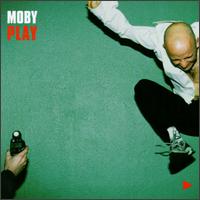
1999 - Play
Honey
Find My Baby
Porcelain
Why Does My Heart Feel So Bad?
South Side
Rushing
Bodyrock
Natural Blues
Machete
7
Run On
Down Slow
If Things Were Perfect
Everloving
Inside
Guitar Flute and String
The Sky Is Broken
My Weakness
Following a notorious flirtation with alternative rock, Moby returned to the electronic dance mainstream on the 1997 album I Like to Score. With 1999's Play, he made yet another leap back toward the electronica base that had passed him by during the mid-'90s. The first two tracks, "Honey" and "Find My Baby," weave short blues or gospel vocal samples around rather disinterested breakbeat techno. This version of blues-meets-electronica is undoubtedly intriguing to the all-important NPR crowd, but it is more than just a bit gimmicky to any techno fans who know their Carl Craig from Carl Cox. Fortunately, Moby redeems himself in a big way over the rest of the album with a spate of tracks that return him to the evocative, melancholy techno that's been a specialty since his early days. The tinkly piano line and warped string samples on "Porcelain" frame a meaningful, devastatingly understated vocal from the man himself, while "South Side" is just another pop song by someone who shouldn't be singing -- that is, until the transcendent chorus redeems everything. Surprisingly, many of Moby's vocal tracks are highlights; he has an unerring sense of how to frame his fragile vocals with sympathetic productions. Occasionally, the similarities to contemporary dance superstars like Fatboy Slim and Chemical Brothers are just a bit too close for comfort, as on the stale big-beat anthem "Bodyrock." Still, Moby shows himself back in the groove after a long hiatus, balancing his sublime early sound with the breakbeat techno evolution of the '90s. -- John Bush
Morrissey
2006 - Ringleader of the Tormentors
I Will See You In Far Off Places
Dear God, Please Help Me
You Have Killed Me
The Youngest was the Most Loved
In the Future When All's Well
The Father Who Must Be Killed
Life is a Pigsty
I'll Never Be Anybody's Hero
On the Streets I Ran
To Me You Are a Work of Art
I Just Want To See the Boy Happy
At Last I Am Born
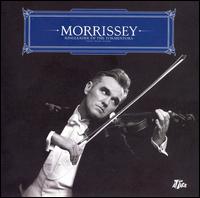
Few comebacks are ever as expertly executed as Morrissey's 2004 return to the stage, You Are the Quarry. It may have not sold gangbusters but it was certainly a hit, proving that he still had legions of devoted fans who would follow through hell and high water (or at the very least, seven years between albums), and earned his best reviews in years, elevating him to the status of well-respected elder statesman. It also gave him the opportunity to return to regular record-making, an opportunity that he seizes with Quarry's quickly delivered sequel, 2006's Ringleader of the Tormentors. Despite its near-genius title, perfect artwork, and pedigree -- instead of working with modern punk producer Jerry Finn as he did last time around, Moz has hired the legendary Tony Visconti, best known for his work with T. Rex and David Bowie, and even has the iconic Ennio Morricone provide orchestration for the epic "Dear God Please Help Me" -- Ringleader of the Tormentors is about as close to standard-issue Morrissey as it gets. There's always been a certain similarity to his work, particularly on his solo recordings, but each of his records either had a distinct sonic or aesthetic point of view or, at the very least, was graced by a handful of songs distinguished by a particularly sharp turn of phrase, whether it was lyrical or musical. It would seem that Ringleader has all the elements of being a cut above an average Morrissey LP, since not only are his collaborators storied themselves, but it's supported by a press campaign where the once celibate, often miserable singer has declared that he's abandoned L.A. for Rome, where he is living happily and living in love. All of these elements seem to be the core ingredients for a classic Morrissey record, but there is little about Ringleader that's distinctive: whether it's the standard-issue single "You Have Killed Me" or the grinding seven-minute art rock centerpiece "Life Is a Pigsty," each tune has an all-too-clear antecedent elsewhere in Moz's catalog. Again, since Morrissey often works within a strict formula, this familiarity isn't necessarily bad, but the songs lack memorable moments. Not to say that there aren't highlights -- the dirgeful opener, "I Will See You in Far Off Places," is dreamily evocative, "In the Future When All Is Well" and "On the Streets I Ran" are nicely propulsive -- but there is nothing noteworthy or fresh here besides Morrissey's new tendency toward blunt words. He writes candidly about his personal life on this record in a way that he never has before -- he implicitly outs himself on "Dear God Please Help Me" -- and while this outburst of frank emotion may add some resonance to his declarations of love and rebirth, his words are clunky, lacking his trademark elegant wit ("I see the world, it makes me puke" and "there are explosive kegs between my legs" are a long way from "Why pamper life's complexity/When the leather runs smooth on the passenger seat?"). That is also true of the very sound of Ringleader of the Tormentors, which is just a shade too slick and sequenced, veering too close to comfort to the overly glossy '80s productions Morrissey routinely denounced during his days with the Smiths. These are subtle flaws, something that only the Morrissey diehard can dig out, but that's pretty much the only kind of fan Morrissey has in 2006. And since these flaws are not enough to derail the record, just enough to annoy, it's easy to enjoy Ringleader of the Tormentors as merely an everyday Morrissey record, but it's hard not to shake the suspicion that this album is the closest he's ever been to forgettable. -- Stephen Thomas Erlewine
Natalie Imbruglia
1998 - Left of the Middle
Torn
One More Addiction
Big Mistake
Leave Me Alone
Wishing I Was There
Smoke
Pigeons and Crumbs
Don't You Think
Impressed
Intuition
City
Left of the Middle
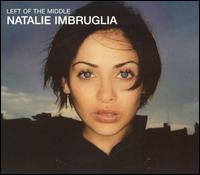
Expectations for Natalie Imbruglia's debut album Left of the Middle were high because of the runaway success of the pre-album single "Torn" during 1997-1998. Fans of the single will be pleased to hear that the album is quite similar in approach and sound to the breakthrough single: laid-back alterna-pop with sweetly melodic vocals. Admittedly, some of the material will be seen as pop fluff by certain listeners, but fans of popular latter-day female artists like Paula Cole, Sheryl Crow, and Meredith Brooks will find Imbruglia's debut most enjoyable. What separates Imbruglia from the aforementioned artists is her willing to experiment with electronic sounds, no doubt courtesy of mixer Nigel Godrich (of Radiohead fame), which can be heard on such tracks as "Smoke." "Torn" proves to be the best song on the album, with its bouncy acoustic feel, but the pop/rocker "Big Mistake" is almost as good. Not all of the material on Left of the Middle fairs as well, however, such as the Alanis Morissette sound-alike "Intuition," but Natalie Imbruglia need not worry about being lumped into the copycat category; for the most part, she has a style all her own. -- Greg Prato
Nelly Furtado
2000 - Whoa, Nelly!
Hey, Man!
Shit on the Radio (Remember the Days)
Baby Girl
Legend
I'm Like a Bird
Turn Off the Light
Trynna Finda Way
Party
Well, Well
My Love Grows Deeper, Pt. 1
I Will Make U Cry
Scared of You
Nelly Furtado's Whoa, Nelly! is one of those albums that's designed to be a surprising, precocious debut -- the kind of record that's meant to make a listener exclaim, well, "whoa nelly" upon the first spin. From that first play, it's evident that Furtado is indeed an audacious songwriter, not at all hesitant to bare her emotions, tackle winding melodies, and bend boundaries to the point that much of the record sounds like folk-pop tinged with bossa nova and backed by a production designed for TLC. Clearly, this is a musician with big, serious ambitions, a notion that is supported not only by her naked lyrics but especially by her singing. Furtado is a restless vocalist, skitting and scatting with abandon, spitting out rapid repetitions, bending notes, and frequently indulging in melismas. This, more than anything, makes her a bit of an acquired taste, since her relentless vocalizing can obscure hooks that are nevertheless there. Once you appreciate (or grow to understand) her quirks, Whoa, Nelly! unfolds as a rewarding, promising debut, albeit one with its flaws. True, most of those flaws arise from its naïveté: a tendency to push too hard, whether it's in piecing together genres in attempt to create something original or lyrics that can sound a little sophomoric in their soul searching. These don't arrive in isolated instances, either -- they're wound into the songs themselves. You either choose to be annoyed by these quirks or become charmed by them, realizing it's a first album, and savoring the talent that's apparent on much of the album. Many of her blends of pop, folk, dance, and Latin are beguiling; she has a knack for strong pop hooks (particularly on "On the Radio," "Well, Well," and "Turn off the Light"); her lyrical imagery can be evocative; she has a sly sense of humor; and, when she doesn't get carried away, she's an inventive, endearingly eccentric vocalist. These are the things that endure after that first slightly bewildering spin of Whoa, Nelly! and those are the things that make you wonder where she goes from here. -- Stephen Thomas
2003 - Folklore
One-Trick Pony
Powerless (Say What You Want)
Explode
Try
Fresh Off the Boat
Força
The Grass is Green
Picture Perfect
Saturday
Build You Up
Island of Wonder
Childhood Dreams
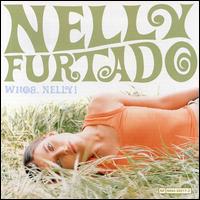
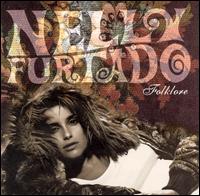
Unlike some of her modern-day neo-singer/songwriter peers, Nelly Furtado never hid her ambition or her desire to be an "important" artist, which was part of the charm of her debut, Whoa, Nelly! Despite (or perhaps because of) her youth, she was willing to try anything, blending a number of sounds and styles, all of which were tied together by her sincerity and audacious desire to say something grand, or at least say everything grandly. Her musical restlessness was underpinned by a sensibility that was fundamentally serious but leavened by sly humor, all of which made Whoa, Nelly! a bracing listen. Her second album, Folklore, is a bit of a different situation. Released three years after her debut, it picks up where the first record leaves off, but it's a much more serious affair, a situation telegraphed by the album covers. Whoa, Nelly! and Folklore mirror each other -- both bear the same Nelly Furtado logo and both feature a reclining Furtado, but where the debut was bright, girlish, and rather innocent, finding her lying to the right in a field, she's now bathed in warm, dark colors, looking rather sultry as she lies to the left among a bunch of leaves. The artwork implies she's more mature, and it's a sentiment that's mirrored in the album titles, since the plainspoken Folklore lacks the humor of Whoa, Nelly! and suggests she'd rather play it straight than play around. And that's the problem with Folklore: though it surely has impressive moments, the album is a self-conscious, somber affair that takes itself far too seriously. At this point, Furtado's Achilles' heel is that she doesn't see a world outside herself. While there's a certain truth to the old axiom "write what you know," she, like many of her peers, takes this credo to extremes, believing that every emotional fluctuation she had in the aftermath of her mild stardom can make for a captivating album. While some have made great art from a similar viewpoint, the key is depersonalizing the situation and turning it toward the universal; for instance, on Nirvana's In Utero, Kurt Cobain turned his agony into poetry by alluding to it, not chronicling it, thereby making it resonate to anyone who felt disillusioned and despairing. In contrast, Furtado's songs play like entries in a diary, so consumed with the particulars of her world that they can be suffocating in their solipsism. To a certain extent, this was true on Whoa, Nelly!, but since she had yet to reach stardom, she was writing about more universal subjects. Plus, her thrill in making her first album was palpable, giving the album a naïve, exciting charm. While there are some interesting musical moments on Folklore -- enough to make it worth a listen -- the dogged seriousness and didactic worldview become a bit overbearing not long before the album is a quarter of the way finished, particularly since the fusion of worldbeat and adult alternative pop often seems heavy-handed. Furtado does have skills and ambition, which makes her music interesting, but that's not the same thing as compelling or memorable. Much of Folklore resides in the "interesting" category, never reaching the effortlessly catchy heights of "I'm Like a Bird" or "Turn Out the Lights," and given the po-faced soberness of the record, that lack of catchiness can't help but be seen as her bid to be taken as a serious, important artist. And Furtado could very well be the serious, important artist she desires to be, but she'll need to regain some of the guileless, loose spirit of Whoa, Nelly! and temper the quirks that make Folklore an awkward transitional album. -- Stephen Thomas Erlewine
New Order
2005 - Waiting for the Sirens' Call [UK Import]
Who's Joe?
Hey Now What You Doing
Waiting for the Sirens' Call
Krafty
I Told You So
Morning, Night and Day
Dracula's Castle
Jetstream
Guilt is a Useless Emotion
Turn
Working Overtime
When New Order returned in 2001 with their first new record in eight years, the album they created (Get Ready) was given a great deal of leeway by fans (if not critics). Was it original? Not very. Although the band never recycled a riff, many of the songs recalled not just the band's salad days, but often specific performances from '80s touchstones Brotherhood or Low-life. What saved Get Ready from irrelevance was a brace of great songs, a new look at the band as capable rockers, and what's more, that uncanny ability to produce timeless, everfresh recordings. Almost as surprising as that comeback record was its quick follow-up, Waiting for the Sirens' Call, which followed two and a half years later. If New Order's ambition were only to reinforce themselves in their fans' imaginations as members of a working band (à la their contemporaries Echo & the Bunnymen or even Duran Duran, for that matter), then the album is a success. Unfortunately, however, the adjectives that need to be attached to this record -- workmanlike, customary, unembarrassing -- aren't going to make music fans flood the record stores seeking copies. Unaccustomed to needing another album's worth of material so soon, Bernard Sumner quickly showed the effects of writing drought, returning to old musical themes he'd visited (and revisited) before, and writing lyrics that make their 1993 single "Regret" a career classic in comparison. Titling a dramatic rocker "Dracula's Castle" may be perfectly acceptable, but then making explicit mention of that metaphor within a set of clumsy lyrics ("You came in the night and took my heart/to Dracula's castle, in the dark") is taking the easy way out, to say the least. The first single, "Krafty," makes the band's ties to Kraftwerk obvious, but while the German motorische experts manufactured cleverly simplistic productions, they never reached the rudimentary levels of this single. (And they surely knew better than making it sound like they meant it, as Sumner does, with the awful rhyme "But the world is a wonderful place/with mountains, lakes, and the human race.") Even the mainstream dance tracks, "Jetstream" and "Guilt Is a Useless Emotion," evince a cold heartlessness that the band never strayed into during the '80s. If New Order continues making albums every three years instead of every decade, critics will quickly begin to strain for new ways to describe Peter Hook's plangent bass work or Sumner's half-bemused, half-baffled songwriting and vocal delivery. Still, that's nothing compared to what New Order might be reduced to recycling. -- John Bush [Text refers to the U.S. release.]
Nick Drake
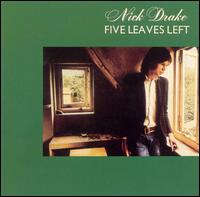
1969 - Five Leaves Left
Time Has Told Me
River Man
Three Hours
Way to Blue
Day is Done
Cello Song
Thoughts of Mary Jane
Man in a Shed
Fruit Tree
Saturday Sun
It's little wonder why Drake felt frustrated at the lack of commercial success his music initially gathered, considering the help he had on his debut record. Besides fine production from Joe Boyd and assistance from folks like Fairport Convention's Richard Thompson and his unrelated bass counterpart from Pentangle, Danny Thompson, Drake also recruited school friend Robert Kirby to create most of the just-right string and wind arrangements. His own performance itself steered a careful balance between too-easy accessibility and maudlin self-reflection, combining the best of both worlds while avoiding the pitfalls on either side. The result was a fantastic debut appearance, and if the cult of Drake consistently reads more into his work than is perhaps deserved, Five Leaves Left is still a most successful effort. Having grown out of the amiable but derivative styles captured on the long-circulating series of bootleg home recordings, Drake assays his tunes with just enough drama -- world-weariness in the vocals, carefully paced playing, and more -- to make it all work. His lyrics capture a subtle poetry of emotion, as on the pastoral semi-fantasia of "The Thoughts of Mary Jane," which his soft, articulate singing brings even more to the full. Sometimes he projects a little more clearly, as on the astonishing voice-and-strings combination "Way to Blue," while elsewhere he's not so clear, suggesting rather than outlining the mood. Understatement is the key to his songs and performances' general success, which makes the combination of his vocals and Rocky Dzidzornu's congas on "Three Hours" and the lovely "'Cello Song," to name two instances, so effective. Danny Thompson is the most regular side performer on the album, his bass work providing subtle heft while never standing in the way of the song -- kudos well deserved for Boyd's production as well. -- Ned Raggett
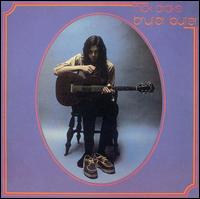
1970 - Bryter Layter
Introduction
Hazy Jane II
At the Chime of a City Clock
One of These Things First
Hazy Jane I
Bryter Layter
Fly
Poor Boy
Northern Sky
Sunday
With even more of the Fairport Convention crew helping him out -- including bassist Dave Pegg and drummer Dave Mattacks along with, again, a bit of help from Richard Thompson -- as well as John Cale and a variety of others, Drake tackled another excellent selection of songs on his second album. Demonstrating the abilities shown on Five Leaves Left didn't consist of a fluke, Bryter Layter featured another set of exquisitely arranged and performed tunes, with producer Joe Boyd and orchestrator Robert Kirby reprising their roles from the earlier release. Starting with the elegant instrumental "Introduction," as lovely a mood-setting piece as one would want, Bryter Layter indulges in a more playful sound at many points, showing that Drake was far from being a constant king of depression. While his performances remain generally low-key and his voice quietly passionate, the arrangements and surrounding musicians add a considerable amount of pep, as on the jazzy groove of the lengthy "Poor Boy." The argument could be made that this contravenes the spirit of Drake's work, but it feels more like a calmer equivalent to the genre-sliding experiments of Van Morrison at around the same time. Numbers that retain a softer approach, like "At the Chime of a City Clock," still possess a gentle drive to them. Cale's additions unsurprisingly favor the classically trained side of his personality, with particularly brilliant results on "Northern Sky." As his performances on keyboards and celeste help set the atmosphere, Drake reaches for a perfectly artful reflection on loss and loneliness and succeeds wonderfully. -- Ned Raggett
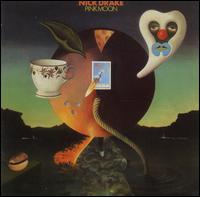
1972 - Pink Moon
Pink Moon
Place to Be
Road
Which Will
Horn
Things Behind the Sun
Know
Parasite
Free Ride
Harvest Breed
From the Morning
After two albums of tastefully orchestrated folk-pop, albeit some of the least demonstrative and most affecting around, Drake chose a radical change for what turned out to be his final album. Not even half-an-hour long, with 11 short songs and no more -- he famously remarked at the time that he simply had no more to record -- Pink Moon more than anything else is the record that made Drake the cult figure he remains. Specifically, Pink Moon is the bleakest of them all; that the likes of Belle and Sebastian are fans of Drake may be clear enough, but it's doubtful they could ever achieve the calm, focused anguish of this album, as harrowing as it is attractive. No side musicians or outside performers help this time around -- it's simply Drake and Drake alone on vocals, acoustic guitar, and a bit of piano, recorded by regular producer Joe Boyd but otherwise untouched by anyone else. The lead-off title track was eventually used in a Volkswagen commercial nearly 30 years later, giving him another renewed burst of appreciation -- one of life's many ironies, in that such an affecting song, Drake's softly keened singing and gentle strumming, could turn up in such a strange context. The remainder of the album follows the same general path, with Drake's elegant melancholia avoiding sounding pretentious in the least thanks to his continued embrace of simple, tender vocalizing. Meanwhile, the sheer majesty of his guitar playing -- consider the opening notes of "Radio" or "Parasite" -- makes for a breathless wonder to behold. If anyone needs confirmation as to why artists like Mark Eitzel, Elliot Smith, Lou Barlow, or Robert Smith hold Drake close to their hearts, it's all here, still as beautiful as the day it was released. -- Ned Raggett
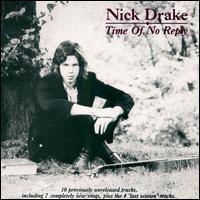
1986 - Time of No Reply
Time Of No Reply
I Was Made to Love Magic
Joey
Clothes of Sand
Man in a Shed
Mayfair
Fly
Thoughts of Mary Jane
Been Smoking Too Long
Strange Meeting II
Rider on the Wheel
Black-Eyed Dog
Hanging on a Star
Voice from the Mountain
Released in the mid-'80 during one of the many Drake revivals over the years, combining tracks from the original Fruit Tree box set and other outtakes unreleased until then, Time of No Reply is a fine coda to Drake's all too brief recording career. A collection of outtakes and alternate versions of more familiar songs, it parallels Pink Moon in that all songs but two are simply Drake on his own, his guitar and his voice doing all that needs to be done. The majority of the recordings come from the late '60s, from the slew of sessions and home recordings predating the release of Five Leaves Left. They still show Drake working in a touch more traditional mode, but his unmistakable vocal approach is well in place throughout. The title track itself is a gem, raising the question as to why Drake thought it unworthy for initial release, with a softly catchy chorus and sweet, reflective lyrical cast. The takes on "Man in a Shed" and "The Thoughts of Mary Jane," with Richard Thompson adding electric guitar on the latter, make for an intersting contrast to their more familiar studio incarnations. The release concludes with the "final session," four last songs recorded two years after Pink Moon, shortly before his death. The songs included on Time of No Reply should be considered demos and experiments, but there's no questioning Drake's power for understated exploration of darker moments and emotions remained. -- Ned Raggett
Nirvana
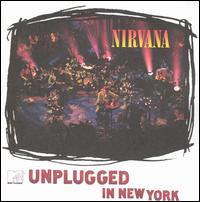
1994 - MTV Unplugged in New York
About a Girl
Come As You Are
Jesus Wants Me for a Sunbeam
The Man Who Sold the World
Pennyroyal Tea
Dumb
Polly
On a Plain
Something in the Way
Plateau
Oh, Me
Lake of Fire
All Apologies
Where Did You Sleep Last Night?
If In Utero is a suicide note, MTV Unplugged in New York is a message from beyond the grave, a summation of Kurt Cobain's talents and pain so fascinating, it's hard to listen to repeatedly. Is it the choice of material or the spare surroundings that make it so effective? Well, it's certainly a combination of both, how the version of the Vaselines' "Jesus Doesn't Want Me for a Sunbeam" or the three covers of Meat Puppets II songs mean as much as "All Apologies" or "Something in the Way." This, in many senses, isn't just an abnormal Nirvana record, capturing them in their sincerest desire to be R.E.M. circa Automatic for the People, it's the Nirvana record that nobody, especially Kurt, wanted revealed. It's a nakedly emotional record, unintentionally so, as the subtext means more than the main themes of how Nirvana wanted to prove its worth and diversity, showcasing the depth of their songwriting. As it turns out, it accomplishes its goals rather too well; this is a band, and songwriter, on the verge of discovering a new sound and style. Then, there's the subtexts, as Kurt's hurt and suicidal impulses bubble to the surface even as he's trying to suppress them. Few records are as unblinkingly bare and naked as this, especially albums recorded by their peers. No other band could have offered covers of David Bowie's "The Man Who Sold the World" and the folk standard "Where Did You Sleep Last Night" on the same record, turning in chilling performances of both -- performances that reveal as much as their original songs. -- Stephen Thomas Erlewine
Norah Jones
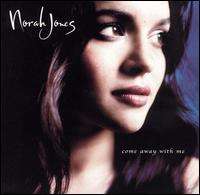
2002 - Come Away With Me
Don't Know Why
Seven Years
Cold, Cold Heart
Feelin' the Same Way
Come Away With Me
Shoot the Moon
Turn Me On
Lonestar
I've Got to See You Again
Painter Song
One Flight Down
Nightingale
The Long Day is Over
The Nearness of You
Norah Jones's debut on Blue Note is a mellow, acoustic pop affair with soul and country overtones, immaculately produced by the great Arif Mardin. (It's pretty much an open secret that the 22-year-old vocalist and pianist is the daughter of Ravi Shankar.) Jones is not quite a jazz singer, but she is joined by some highly regarded jazz talent: guitarists Adam Levy, Adam Rogers, Tony Scherr, Bill Frisell, and Kevin Breit; drummers Brian Blade, Dan Rieser, and Kenny Wolleson; organist Sam Yahel; accordionist Rob Burger; and violinist Jenny Scheinman. Her regular guitarist and bassist, Jesse Harris and Lee Alexander, respectively, play on every track and also serve as the chief songwriters. Both have a gift for melody, simple yet elegant progressions, and evocative lyrics. (Harris made an intriguing guest appearance on Seamus Blake's Stranger Things Have Happened.) Jones, for her part, wrote the title track and the pretty but slightly restless "Nightingale." She also includes convincing readings of Hank Williams's "Cold Cold Heart," J.D. Loudermilk's "Turn Me On," and Hoagy Carmichael's "The Nearness of You." There's a touch of Rickie Lee Jones in Jones's voice, a touch of Bonnie Raitt in the arrangements; her youth and her piano skills could lead one to call her an Alicia Keys for grown-ups. While the mood of this record stagnates after a few songs, it does give a strong indication of Jones' alluring talents. -- David R. Adler
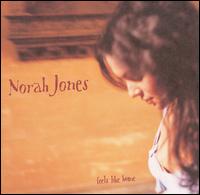
2004 - Feels Like Home
Sunrise
What Am I To You?
Those Sweet Words
Carnival Town
In the Morning
Be Here to Love Me
Creepin' In
Toes
Humble Me
Above Ground
The Long Way Home
The Prettiest Thing
Don't Miss You At All
It may be far too obvious to even mention that Norah Jones' follow-up to her 18-million-unit-selling, eight-Grammy-winning, genre-bending, super-smash album Come Away With Me has perhaps a bit too much to live up to. But that's probably the biggest conundrum for Jones: having to follow up the phenomenal success of an album that was never designed to be so hugely popular in the first place. Come Away With Me was a little album by an unknown pianist/vocalist who attempted to mix jazz, country, and folk in an acoustic setting -- who knew? Feels Like Home could be seen as "Come Away With Me Again" if not for that fact that it's actually better. Smartly following the template forged by Jones and producer Arif Mardin, there is the intimate single "Sunrise," some reworked cover tunes, some interesting originals, and one ostensible jazz standard. These are all good things, for also like its predecessor, Feels Like Home is a soft and amiable album that frames Jones' soft-focus Aretha Franklin voice with a group of songs that are as classy as they are quiet. Granted, not unlike the dippy albeit catchy hit "Don't Know Why," they often portend deep thoughts but come off in the end more like heartfelt daydreams. Of course, Jones could sing the phone book and make it sound deep, and that's what's going to keep listeners coming back. What's surprising here are the bluesy, more jaunty songs that really dig into the country stylings only hinted at on Come Away With Me. To these ends, the infectious shuffle of "What Am I to Do" finds Jones truly coming into her own as a blues singer as well as a writer. Her voice has developed a spine-tingling breathy scratch that pulls on your ear as she rises to the chorus. Similarly, "Toes" and "Carnival Town" -- co-written by bassist Lee Alexander and Jones -- are pure '70s singer/songwriting that call to mind a mix of Rickie Lee Jones and k.d. lang. Throw in covers of Tom Waits and Townes Van Zandt along with Duke Ellington's "Melancholia," retitled here "Don't Miss You at All" and featuring lyrics by Jones, and you've got an album so blessed with superb songwriting that Jones' vocals almost push the line into too much of a good thing. Thankfully, there is also a rawness and organic soulfulness in the production that's refreshing. No digital pitch-correction was employed in the studio and you can sometimes catch Jones hitting an endearingly sour note. She also seems to be making good on her stated desire to remain a part of a band. Most all of her sidemen, who've worked with the likes of Tom Waits and Cassandra Wilson, get writing credits. It's a "beauty and the beast" style partnership that harks back to the best Brill Building-style intentions and makes for a quietly experimental and well-balanced album. -- Matt Collar
Otep
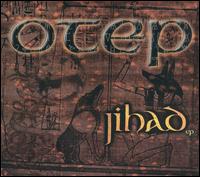
2001 - Jihad [EP]
Possession
The Lord Is My Weapon
Germ
Filthee
.T.R.I.C.
No Review
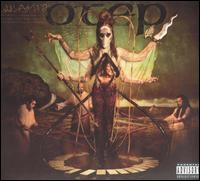
2002 - Sevas Tra
Tortured
Blood Pigs
.T.R.I.C.
My Confession
Sacrilege
Battle Ready
Emptee
Possession
Thots
Filthee
Menocide
Jonestown Tea
[Bonus Track]
Sevas Tra stands for "art saves," a philosophy written all over Otep's debut full-length, an album that yanks itself from the jaws of suffering with rage, anger, doom, and a sound heavier than Slipknot. Female lead singer Otep, whose name is an Egyptian suffix meaning "creative offerings," growls, screams, and throws in the occasional hip-hop sound ("Battle Ready" and "Sacrilege") as she wipes the slate clean of any preconceptions of how intense a female-fronted metal band could be. Marilyn Manson has said, "That girl scares me," of Otep, not surprising when you hear the eerie, pained opening of "Emtee" or frightening whine of "Blood Pigs." Sevas Tra is a record that raises the high watermark for goth metal. -- Charles Spano
2004 - House of Secrets
Requiem
Warhead
Buried Alive
Sepsis
House of Secrets
Hooks and Splinters
Gutter
Autopsy Song
Suicide Trees
Nein
Self-made
Shattered Pieces
The sophomore effort from art house nu-metal practitioners Otep only briefly flirts with the genre's anarchic political leanings ("Warhead"), focusing instead on the medium's most revered theme: angst. The lupine howl of a shattered youth proclaiming that "I hate my life" is nothing new, so when frontwoman -- and namesake -- Otep screams the phrase endlessly throughout "Buried Alive," she's channeling everyone from post-rock mouthpieces Gordon Gano and Exene Cervenka to pop/rock tunesmiths like Roger Waters and Ricky Nelson. This would be all fine and dandy if the music contained a mere particle of the cathartic spirit of the aforementioned artists. When House of Secrets isn't pummeling the listener into submission with predictable riffs and distorted vocals, it's leading the listener into a sterile waiting room -- bereft of even the most mundane periodical -- of spoken word poetry wrapped in tedious post-Nine Inch Nails soundscapes. Otep is at her most genuine on the title cut, an atmospheric dirge that finds the artist assuming a sultry Chrissie Hynde-like croon, but it's merely a deviation from an exercise that in its entirety is mediocre at best. House of Secrets is an aggressive, brooding, dynamic, and ultimately boring offering from a band that has yet to find its own voice. -- James Christopher Monger
OutKast
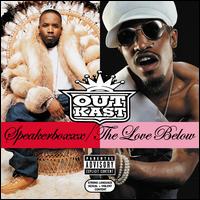
2003 - Speakerboxx
Intro
Ghetto Musik
Unhappy
Bowtie (feat. Sleepy Brown and Jazze Pha)
The Way You Move (feat. Sleepy Brown)
The Rooster
Bust (with Killer Mike)
War
Church
Bamboo (Interlude)
Tomb of the Boom (with Ludacris, Konkrete, and Big Gipp)
E-Mac (Interlude)
Knowing
Flip Flop Rock (with Killer Mike and JayZ)
Interlude
Reset (feat. Khujo Goodie and Ceelo)
D-Boi (Interlude)
Last Call (with Slimm Calhoun, Lil Jon, and The East Side Boyz and Mello)
Bowtie (Postlude)
To call OutKast's follow-up to their 2000 masterpiece Stankonia the most eagerly awaited hip-hop album of the new millennium may be hyperbole, but not by much. In its kaleidoscopic, deep-fried amalgam of Dirty South, dirty funk, techno, and psychedelia, Stankonia was fearlessly exploratory and giddy with possibilities. It was hard to imagine where the duo was going to go next, but one possibility that few entertained was that Big Boi and Andre 3000 would split apart, each recording an album on his own and then releasing the pair as the fifth OutKast album, Speakerboxxx/The Love Below, in the fall of 2003. Although both albums have their own distinct character, the effect is kind of like if the Beatles issued The White Album as one LP of Lennon tunes, the other of McCartney songs -- the individual records may be more coherent, but the illusion that the group can do anything is tarnished. By isolating themselves from each other, Big Boi and Andre 3000 diminish the idea of OutKast slightly, since the focus is on the individuals, not the group. Which, of course, is part of the point of releasing solo albums under the group name -- it's to prove that the two can exist under the umbrella of the OutKast aesthetic while standing as individuals. Thing is, while it would have been a wild, bracing listen to hear these 39 songs mixed up, alternating between Boi and Dre cuts, the two albums do prove that the music can be solo in execution but remain OutKast records through and through. Both records are visionary, imaginative listens, providing some of the best music of 2003, regardless of genre. If conventional wisdom, based on their public personas and previous music, held that Big Boi's record, Speakerboxxx, would be the more conventional of the two and Andre 3000's The Love Below the more experimental, that doesn't turn out to be quite true. From the moment Speakerboxxx kicks into gear with "GhettoMusick" and its relentless blend of old-school 808s and breakneck breakbeats, it's clear that Boi is ignoring boundaries, and the rest of his album follows suit. It's grounded firmly within hip-hop, but the beats bend against the grain and the arrangements are overflowing with ideas and thrilling, unpredictable juxtapositions, such as how "Bowtie" swings like big-band jazz filtered through George Clinton, how "The Way You Move" offsets its hard-driving verses with seductive choruses, or how "The Rooster" cheerfully rides a threatening minor-key mariachi groove, salted by slippery horns and loose-limbed wah-wah guitars. It's a hell of a ride, reclaiming the adventurous spirit of the golden age and pushing it into a new era. By contrast, The Love Below isn't so much visionary as it is unapologetically eccentric. And as the cocktail jazz pianos that sparkle through the first few songs indicate, it's not much of a hip-hop album. Instead, Andre 3000 has created the great lost Prince album -- the platter that the Purple One recorded somewhere between Around the World in a Day and Sign 'o' the Times. It's not just that the music and song titles cheekily recall Prince -- "She Lives in My Lap" is a close relation of the B-side "She's Always in My Hair" -- it's that Dre disregards any rules on a quest to create his own interior world, right down to a dialogue with God. The difference between Andre 3000 and Prince is in that dialogue, too: Prince was tortured; Andre is trying to get laid. That cheerfully randy spirit surges through The Love Below, even on the spooky-serious closer, "A Life in the Day of Benjamin Andre," and it gives Andre the freedom to try a little of everything, from mock crooning on "Love Haters" to a breakbeat jazz interpretation of "My Favorite Things" to the strange one-man funk of "Roses" and the incandescent "Hey Ya!," where classic soul and electro-funk coexist happily. So, both records are very different, but the remarkable thing is, they both feel thoroughly like OutKast music. Big Boi and Andre 3000 took off in different directions from the same starting point, yet they wind up sounding unified because they share the same freewheeling aesthetic, where everything is alive and everything is possible within their music. That spirit fuels not just the best hip-hop, but the best pop music, and both Speakerboxxx and The Love Below are among the best hip-hop and best pop music released this decade. Each is a knockout individually, and paired together, their force is undeniable. -- Stephen Thomas Erlewine
2003 - The Love Below
The Love Below (Intro)
Love Hater
God (Interlude)
Happy Valentine's Day
Spread
Where Are My Panties?
Prototype
She Lives in my Lap
Hey Ya!
Roses
Good Day, Good Sir
Behold a Lady
Pink & Blue
Love in War
She's Alive
Dracula's Wedding
My Favorite Things
Take Off Your Cool (with Norah Jones)
Vibrate
A Day In the Life of Andre Benjamin (Incomplete)
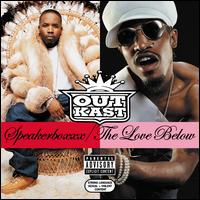
To call OutKast's follow-up to their 2000 masterpiece Stankonia the most eagerly awaited hip-hop album of the new millennium may be hyperbole, but not by much. In its kaleidoscopic, deep-fried amalgam of Dirty South, dirty funk, techno, and psychedelia, Stankonia was fearlessly exploratory and giddy with possibilities. It was hard to imagine where the duo was going to go next, but one possibility that few entertained was that Big Boi and Andre 3000 would split apart, each recording an album on his own and then releasing the pair as the fifth OutKast album, Speakerboxxx/The Love Below, in the fall of 2003. Although both albums have their own distinct character, the effect is kind of like if the Beatles issued The White Album as one LP of Lennon tunes, the other of McCartney songs -- the individual records may be more coherent, but the illusion that the group can do anything is tarnished. By isolating themselves from each other, Big Boi and Andre 3000 diminish the idea of OutKast slightly, since the focus is on the individuals, not the group. Which, of course, is part of the point of releasing solo albums under the group name -- it's to prove that the two can exist under the umbrella of the OutKast aesthetic while standing as individuals. Thing is, while it would have been a wild, bracing listen to hear these 39 songs mixed up, alternating between Boi and Dre cuts, the two albums do prove that the music can be solo in execution but remain OutKast records through and through. Both records are visionary, imaginative listens, providing some of the best music of 2003, regardless of genre. If conventional wisdom, based on their public personas and previous music, held that Big Boi's record, Speakerboxxx, would be the more conventional of the two and Andre 3000's The Love Below the more experimental, that doesn't turn out to be quite true. From the moment Speakerboxxx kicks into gear with "GhettoMusick" and its relentless blend of old-school 808s and breakneck breakbeats, it's clear that Boi is ignoring boundaries, and the rest of his album follows suit. It's grounded firmly within hip-hop, but the beats bend against the grain and the arrangements are overflowing with ideas and thrilling, unpredictable juxtapositions, such as how "Bowtie" swings like big-band jazz filtered through George Clinton, how "The Way You Move" offsets its hard-driving verses with seductive choruses, or how "The Rooster" cheerfully rides a threatening minor-key mariachi groove, salted by slippery horns and loose-limbed wah-wah guitars. It's a hell of a ride, reclaiming the adventurous spirit of the golden age and pushing it into a new era. By contrast, The Love Below isn't so much visionary as it is unapologetically eccentric. And as the cocktail jazz pianos that sparkle through the first few songs indicate, it's not much of a hip-hop album. Instead, Andre 3000 has created the great lost Prince album -- the platter that the Purple One recorded somewhere between Around the World in a Day and Sign 'o' the Times. It's not just that the music and song titles cheekily recall Prince -- "She Lives in My Lap" is a close relation of the B-side "She's Always in My Hair" -- it's that Dre disregards any rules on a quest to create his own interior world, right down to a dialogue with God. The difference between Andre 3000 and Prince is in that dialogue, too: Prince was tortured; Andre is trying to get laid. That cheerfully randy spirit surges through The Love Below, even on the spooky-serious closer, "A Life in the Day of Benjamin Andre," and it gives Andre the freedom to try a little of everything, from mock crooning on "Love Haters" to a breakbeat jazz interpretation of "My Favorite Things" to the strange one-man funk of "Roses" and the incandescent "Hey Ya!," where classic soul and electro-funk coexist happily. So, both records are very different, but the remarkable thing is, they both feel thoroughly like OutKast music. Big Boi and Andre 3000 took off in different directions from the same starting point, yet they wind up sounding unified because they share the same freewheeling aesthetic, where everything is alive and everything is possible within their music. That spirit fuels not just the best hip-hop, but the best pop music, and both Speakerboxxx and The Love Below are among the best hip-hop and best pop music released this decade. Each is a knockout individually, and paired together, their force is undeniable. -- Stephen Thomas Erlewine
Peace Orchestra
1999 - Peace Orchestra
The Man, Pt. 1
Meister Petz
Double Drums
Domination
Marakesh
Henry
Who Am I
Shining
The Man, Pt. 2
Peace Orchestra, the debut album by Kruder & Dorfmeister's Peter Kruder, suffers little for its lack of both producers. The kind of trance-state trip-hop that sounds freshly minted by God himself, these nine tracks belie the notion that trip-hop is a style scavenger, content to paste sampled jazz-funk over a few hip-hop breaks. Peace Orchestra is so lovingly crafted, so finely detailed, that comparisons with the glut of trip-hop sinking the market seems almost laughable. A languid clarinet line does a slow waltz with K&D's oft-used shuffle-beat on the highlight "Meister Petz," while "Double Drums" works a mutated tech-synth line with strong breakbeats. Kruder's musical sense comes from a variety of musical capitals, including Rio de Janeiro (the fine, delicate swing), New York (the jazz chords and shadings), East L.A. (Latin percussion), and London (acid house ). Only Kruder (or perhaps Dorfmeister) could distill so many elements into one cohesive album without risk of blandness or musical fragmentation. -- John Bush
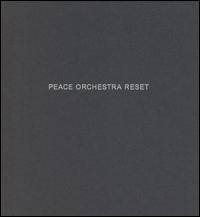
2002 - Reset
The Man (performed by Gotan Project)
Meister Petz [Beanfield Remix]
Double Drums [DJ DSL Remix]
Domination [Raw Deal Remix]
Marakesh [Meitz Remix]
Henry [Zero dB Remix]
Domination [Guillaume Boulard Remix]
Who Am I [Chateau Flight Remix]
Henry [Soulpatrol Remix]
Shining (performed by Truby Trio)
The Man (performed by Kosmo)
It's the rare producer whose skills can match that of Peace Orchestra (aka Peter Kruder, half of all-timers Kruder & Dorfmeister), so it's easy to expect good things from the remix album Reset. Not to say that these tracks improve on the originals, though the imagination, range of ideas, and quality of sound is at an extremely high level throughout. Among well-wishers and fellow beat heads like Trüby Trio and Kosma, highlights come with the deeper-than-deep R&B and thick hip-hop of newcomer DJ D.S.L.'s "Double Drums," the pointed beats and precise acid-house of fab Frenchmen Chateau Flight, abstract tribal breakbeats from Gotan Project, and the distorted keyboard progressions of Beanfield on "Meister Petz." -- John Bush
Placebo
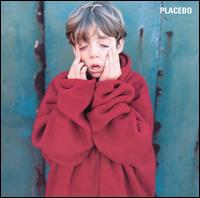
1996 - Placebo
Come Home
Teenage Angst
Bionic
36 Degrees
Hang on to You
Nancy Boy
I Know
Bruise Pristine
Lady of the Flowers
Swallow
The key to Placebo's sound is singer/guitarist Brian Molko, whose impersonation of a woman goes far beyond his appearance and into his singing voice. His trio brings together various influences -- the epic, noisy "Chicago sound," late-'70s prog rock, and late-'80s "college rock" -- but boils them down into fairly conventional, guitar-heavy melodrama, with the sort of opaque and angst-ridden lyrics usually found in that genre. That's not to say that Placebo's sound is boring; churning guitars and direct, heavy basslines give the album a good deal of strength, and Molko is able to write moving, gritty melodies and fairly clever lyrics. Placebo may sound like a mix between the Smashing Pumpkins and Rush -- and the levels of melodrama on the album may stretch far beyond most people's tolerance -- but it's well-written and performs enough variations on those genres to keep it interesting. -- Nitsuh Abebe
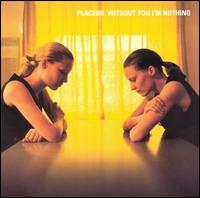
1998 - Without You I'm Nothing
Pure Morning
Brick Shithouse
You Don't Care About Us
Ask for Answers
Without You I'm Nothing
Allergic (To Thoughts of Mother Earth)
The Crawl
Every You Every Me
My Sweet Prince
Summer's Gone
Scared of Girls
Burger Queen
While Placebo's self-titled debut contained mostly elements of '90s alternative (Smashing Pumpkins, etc.), their second album, Without You I'm Nothing, is full of '70s glam rock and punk references. Placebo's rhythm section of Stefan Olsdal (bass) and Steve Hewitt (drums) is impressively tight, but the band's star attraction is undoubtedly androgynous singer/guitarist Brian Molko. Whereas the debut was written solely by Molko, their latest is a bona fide group effort, with Molko still handling the lyric-writing. The swirling anthemic album opener, "Pure Morning," is a self-proclaimed "celebration of friendship with women," and should be a guaranteed hit single, while the racing "Brick Shithouse" merges '90s electro-rock with Sonic Youth punk guitars. "You Don't Care About Us" shows that Molko can easily re-create J Mascis' late-'80s guitar tones, and "Scared of Girls" contains gender-bending vocals from Molko and a tribal-rock accompaniment. With massive success already underway back home in England, Without You I'm Nothing deserves to break through everywhere else. -- Greg Prato
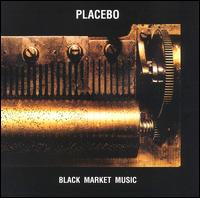
2000 - Black Market Music
Taste In Men
Days Before You Came
Special K
Spite and Malice
Passive Aggressive
Black-Eyed
Blue American
Slave to the Wage
Commercial for Levi
Haemoglobin
Narcoleptic
Peeping Tom
After almost five years, the vile, nasty, spunk-filled world of Placebo refuses to go away. Marilyn Manson has turned a satirical eye on his own media status and even Suede have since come to swoon over girls "shaped like a cigarette." Yet it's Brian Molko that's steered his band from premature randiness (Placebo) to fearful regrouping (Without You I'm Nothing) without once batting a make-up smeared eyelash. Black Market Music finds Molko in such moody lust that his strangled, androgynous wailing rivals anything the band has previously flashed to the world. Whether it's the dripping, slithery punk circle of songs like "Black Eyed" or the choir-boy enthusiasm of others like "Special K" (strangely echoing Midnight Oil's "Warakurna"), Placebo seem to have finally found that sweet wet spot between beauty and perversion. Even at its worst (the "Block Rockin' Beats"-sampling "Taste In Men"), past glories sometimes fail to be repeated with at least grand, post-coital contentment. Because it's hard to hate an album with such fascinating softer touches. In one moment, Molko cries respect to his mother, in another he counsels, "You better keep it in check/Or you'll end up a wreck/And you'll never wake up" -- a paternal warning seemingly directed at his fellow hedonists. Of course, there's a thin line between trying to perfect old efforts and stumbling into laughable self-parody. But Placebo now seem more in control than they ever have before. The spectacular "Commercial for Levi," for example, is some perverted, weary take on a childhood lullaby, only one written in a parallel dimension about "spunk and bestiality." True, there's no "Nancy Boy" or "Pure Morning," yet the album's consistency easily outmatches even the highest watermarks of either predecessor. This is a dank, lusty, moment in the band's career that is about as good as Placebo "mark 1" can go. They now have the talent, the intelligence, and the distorted arousal to possibly become unstoppable. It's only a matter of time before they finally find love amidst the lust. -- Dean Carlson
2003 - Sleeping With Ghosts
Bulletproof Cupid
English Summer Rain
This Picture
Sleeping With Ghosts
The Bitter End
Something Rotten
Plasticine
Special Needs
I'll Be Yours
Second Sight
Protect Me from What I Want
Centrefolds
Since the band's 1996 self-titled debut, Placebo has penchant for delivering spiky, stylishly slick pop songs, in particular "Nancy Boy" and "Pure Morning." Brian Molko's femme-like vocal curdle and androgynous appearance is matched with Stefan Olsdal and Steve Hewitt's solid glam-inspired instrumentation, giving Placebo a spot of its own in the typically cheeky Brit-pop scene. Fourth album Sleeping With Ghosts works with the band's post-grunge/experimental desire to keep things campy and emotionally intact; however, Placebo's a bit reserved this time around. While Without You I'm Nothing boasted a glam rock edge and Black Market Music captured more of a punk-glam polish, Sleeping With Ghosts crawls with mopish, gnarled ballads. "Bulletproof Cupid" is a vibrant album opener with classic guitar snarling, but the album's intensity quickly drops when "English Summer Rain"'s flimsy electronic bits lose step with Molko's dismal interpretation of nature. The electric riffs of "The Bitter End" stick with Placebo's frenzied rock style, and "Plasticine" and "Second Sight" are equally cool dark pop, but stand in contrast to the bigger standouts of "Taste in Men" from Black Market Music and "Every You Every Me" from Without You I'm Nothing. Placebo has an undeniable swagger, and any attempt to tame its overconfident character simply doesn't work. The whiny, synth-driven "Protect Me from What I Want" is a perfect example; Molko's sharp wit is much too literal in criticizing social conformity, typically mocking and self-deprecating as in the song "Special Needs." Sleeping With Ghosts doesn't venture out lyrically or sonically, but that's not to say it's a bad album. The members of Placebo, now in their early thirties, move beyond the spit and scowl of their previous albums, and new fans will find Sleeping With Ghosts to be a good record. Old fans, though, might think the band wimped out while growing up. -- MacKenzie Wilson
2006 - Meds
Meds
Infra-Red
Drag
Space Monkey
Follow the Cops Back Home
Post Blue
Because I Want You
Blind
Peirrot the Clown
Broken Promise
One of a Kind
In the Cold Light of Morning
Song to Say Goodbye
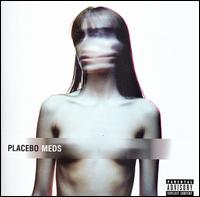
With 2004's release of Placebo's singles collection the band reaffirmed that they've never quite fit into any particular fad. Their success has been gradual in the sense that their style and sound has progressed naturally with each album. Meds builds upon that notion while also embarking on a new phase for Placebo. Meds is their second coming. Frontman Brian Molko is no longer the glam-chic, gender-bending firestarter he once was. His songs are still angry and twisted in self-reflection and social rejection. Meds doesn't contain the rush to experiment like their previous records do. It's as bare and honest as Placebo has ever been, thanks to French producer Dimitri Tikovoi's straight-forward approach in getting the band to make a bona fide rock record. There's a fresh vulnerability here and a sense of danger, too; the album's title track quickly enters this sphere. It's an obsessive moment confronting the social hypnosis and dependence of medication. The Kills' Alison Mosshart lends an anxious vocal backdrop as Placebo delivers an aggressive guitar-driven assault. Meds doesn't stop for breath until its end. Fans should be pleased with the menacing "Infra-Red" and the sexy ensnaring of "One of a Kind," two tracks which showcase Placebo's signature fiery performance style. When they're not deconstructing social expectations, Placebo's storytelling is equally powerful on the more lilting tracks. The shifty slow burn of "Space Monkey" is an epic ballad for the band. Placebo step out of their skin here. A squall of fuzzed guitars, strings, and Molko's brooding vocals strike to knock down the celebrity pedestal that creates a false human image. "Broken Promise," a duet with Michael Stipe, takes similar shape as a dramatic tale of adultery unfolds into a dark, emotional storm. Letting go of toxic relationships on "Song to Say Goodbye," a melancholic closing to Meds, brings the album full circle. To some, Meds might come off as less interesting compared to the slickness of older tracks such as "Taste in Men" and "Every You Every Me." Some may be over Molko's constant analysis of sex, drugs, and desire. What you see if what you get with Placebo and for the first time in a long time, that vision is clear. -- MacKenzie Wilson
Portishead
1994 - Dummy
Mysterons
Sour Times
Strangers
It Could Be Sweet
Wandering Star
It's a Fire
Numb
Roads
Pedestal
Biscuit
Glory Box
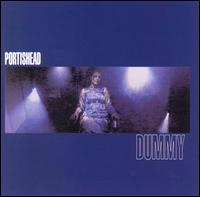
Portishead's album debut is a brilliant, surprisingly natural synthesis of claustrophobic spy soundtracks, dark breakbeats inspired by frontman Geoff Barrow's love of hip-hop, and a vocalist (Beth Gibbons) in the classic confessional singer/songwriter mold. Beginning with the otherworldly theremin and martial beats of "Mysterons," Dummy hits an early high with "Sour Times," a post-modern torch song driven by a Lalo Schifrin sample. The chilling atmospheres conjured by Adrian Utley's excellent guitar work and Barrow's turntables and keyboards prove the perfect foil for Gibbons, who balances sultriness and melancholia in equal measure. Occasionally reminiscent of a torchier version of Sade, Gibbons provides a clear focus for these songs, with Barrow and company behind her laying down one of the best full-length productions ever heard in the dance world. Where previous acts like Massive Attack had attracted dance heads in the main, Portishead crossed over to an American, alternative audience, connecting with the legion of angst-ridden indie fans as well. Better than any album before it, Dummy merged the pinpoint-precise productions of the dance world with pop hallmarks like great songwriting and excellent vocal performances. -- John Bush
Quincy Jones
1964 - Big Band Bossa Nova
Soul Bossa Nova
Boogie Stop Shuffle
Desafinado
Manha de Carnaval (Morning of the Carnival)
Se E Tarde Me Pardoa
On the Street Where You Live
One Note Samba
Lalo Bossa Nova
Serenata
Chega de Saudade (No More Blues)
A Taste of Honey
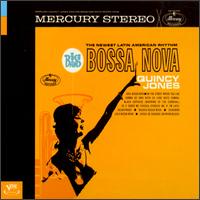
A by-product of the bossa nova fad that followed the success of "Desafinado" (and preceded the famous recording Getz/Gilberto), this set finds Quincy Jones utilizing and exploiting bossa nova rhythms in his arrangements for a big band. The personnel includes flugelhornist Clark Terry, altoist Phil Woods, pianist Lalo Schifrin, guitarist Jim Hall and (on "Soul Bossa Nova") the remarkable Rahsaan Roland Kirk. However, since the selections are all quite brief, and some of the charts are a bit cheesy and inappropriate for the gentle rhythms, this disc (although pleasant enough) is of lesser interest. -- Scott Yanow
Radiohead
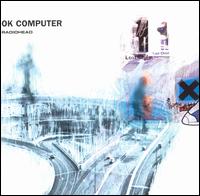
1997 - OK Computer
Airbag
Paranoid Android
Subterranean Homesick Alien
Exit Music (For a Film)
Let Down
Karma Police
Fitter Happier
Electioneering
Climbing Up the Walls
No Surprises
Lucky
The Tourist
Using the textured soundscapes of The Bends as a launching pad, Radiohead delivered another startlingly accomplished set of modern guitar rock with OK Computer. The anthemic guitar heroics present on Pablo Honey and even The Bends are nowhere to be heard here. Radiohead have stripped away many of the obvious elements of guitar rock, creating music that is subtle and textured, yet still has the feeling of rock & roll. Even at its most adventurous -- such as the complex, multi-segmented "Paranoid Android" -- the band is tight, melodic, and muscular, and Thom Yorke's voice effortlessly shifts from a sweet falsetto to vicious snarls. It's a thoroughly astonishing demonstration of musical virtuosity, and becomes even more impressive with repeated listens, which reveal subtleties like electronica rhythms, eerie keyboards, odd time signatures, and complex syncopations. Yet all of this would simply be showmanship if the songs weren't strong in themselves, and OK Computer is filled with moody masterpieces, from the shimmering "Subterranean Homesick Alien" and the sighing "Karma Police" to the gothic crawl of "Exit Music (For a Film)." OK Computer is the album that establishes Radiohead as one of the most inventive and rewarding guitar-rock bands of the '90s. -- Stephen Thomas Erlewine
Reel Big Fish
1997 - Keep Your Receipt
Alternative Baby
Why Do All Girls Think They're Fat?
I'm Cool
S.R.
Unity
No Review
Scissor Sisters
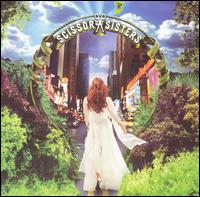
2004 - Scissor Sisters [UK]
Laura
Take Your Mama
Comfortably Numb
Mary
Lovers in the Backseat
Tits on the Radio
Filthy / Gorgeous
Music is the Victim
Better Luck
It Can't Come Quickly Enough
Return to Oz
Message from Miss Matronic
Skins [*]
Get It Get It [*]
Midway through the 2000s, theft with an artful nod and wink has become quite fashionable, and frilly is the new black. Combos like Chromeo and the Electric Six are finding mileage in long-shuttered, retrospectively laughable genres like synth pop and new romantic, and revisiting disco's most damning elements with a vigor for recombination. The results certainly elicit some snickering, but they can also be too cool -- or, for the insecure, too much of a guilty pleasure -- to ignore. New York's Scissor Sisters access these ideas and more on their debut full-length for Polygram. The eponymous release is a gleaming composite of epic, unabashedly pretty '70s songwriting and fancy-pants disco hedonism, reflecting the decadent dance-pop afterglow of all that George Michael wrought. "Lovers in the Backseat" is powered by the androgynous groove of Michael's "Everything She Wants." "Jealous glances/Now I'm lookin' for another song on the radio," they sing. "I'll take it to a side street/In the shadows you can touch one another/And I'll just watch the show." This flirty, satiny sexuality tingles in every lyrical inch of Scissor Sisters, as the Sisters save their subtlety for the songcraft. Opener "Laura" is a swaggering, absolutely irresistible update of vintage Stevie Wonder, illustrated with piano breaks and a honking sax. "Take Your Mama" chirps in a high register, a honky chateau dreamland of the Beta Band covering Elton John. All of this wackiness occurs before Scissor Sisters drop their dusky dancefloor version of "Comfortably Numb." They're hopped up over a twittering glitterball beat, referencing Frankie Goes to Hollywood and the Bee Gees even as the song functions as a Floyd redux. "I! I! I've become...'fortably numb!" As fun as all of this is (and the lip-smack glam of "Music Is the Victim" is very, very fun), the Sisters' revisionism can also get them in trouble. "It Can't Come Quickly Enough"'s dance-pop is too accurate, getting the bland side way too right, while "Return to Oz" cribs from Pink Floyd without the salve of artful dance club redirection. Still, these missteps are forgivable when pseudonyms like Del Marquis and Paddy Boom populate the band. Like some of their in-the-know peers, Scissor Sisters are happy to raid rock and pop's simpering peony past to soundtrack the parties and prurience of the silvery present day. -- Johnny Loftus
Serge Gainsbourg
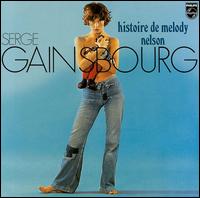
1971 - L'Histoire de Melody Nelson
Melody
Ballade de Melody Nelson
Valse de Melody
Ah! Melody
L'Hotel Particulier
En Melody
Cargo Culte
You don't need to speak a word of French to understand Histoire de Melody Nelson -- one needs only to look at the front cover (with its nearly pornographic portrait of a half-naked nymphet clutching a rag doll) or hear the lechery virtually dripping from Serge Gainsbourg's sleazily seductive voice to realize that this is the record your mother always warned you about, a masterpiece of perversion and corruption. A concept record exploring the story of -- and Gainsbourg's lust for -- the titular teen heroine, Histoire de Melody Nelson is arguably his most coherent and perfectly realized studio album, with the lush arrangements which characterize the majority of his work often mixed here with funky rhythm lines which underscore the musky allure of the music. Perhaps best described as a dirty old bastard's attempt to make his own R&B love-man's record along the lines of a Let's Get It On (itself still two years away from release), it's by turns fascinating and repellent, hilarious and grim, but never dull -- which, in Gainsbourg's world, would be the ultimate (and quite possibly the only) sin. -- Jason Ankeny
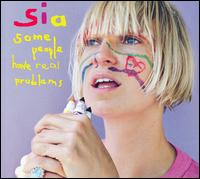
Sia
2008 - Some People Have Real Problems
Little Black Sandals
Lentil
Day Too Soon
You Have Been Loved
The Girl You Lost to Cocaine
Academia
I Go to Sleep
Playground
Death by Chocolate
Soon We'll Be Found
Electric Bird
Beautiful Calm Driving
Lullaby / Buttons
Some People Have Real Problems is Sia's first release on the Starbucks-affiliated Hear Music label, following acts like Paul McCartney and Joni Mitchell. Given the burst of attention Sia got when her song "Breathe Me" was used to excellent effect in the final scenes of the series finale of the HBO show Six Feet Under, which brought the Australian singer/songwriter to a much wider audience than was familiar with her earlier work with Zero 7 and Massive Attack, it makes perfect sense. With her old-school soul vocal style, with just a hint of roughness under her delicate high-register tones, set against the contemporary sophistication of her music, Sia is exactly the sort of artist a middle-aged Starbucks devotee who wants to remain at least tangentially hip would flock to: if Amy Winehouse did yoga instead of Jack Daniels, she'd sound a lot like Sia. But fans of Sia's earlier releases may well be in for a shock: Some People Have Real Problems sounds like a concerted grab for the Mum Rock demographic, those looking for something to listen to while they're waiting for Corinne Bailey Rae and Regina Spektor to release new albums. Considerably more pop-oriented and uptempo than the chilly electronica that made her name, songs like "Buttons" and "Academia" (one of two songs featuring Beck on harmony vocals; the other, "Death by Chocolate," also features fellow Scientologists Jason Lee and Giovanni Ribisi) also seem designed to attract the audience that fell for Feist's "1234." It would be easy to condemn Sia for such a naked brass ring grab (remember the hubbub over Liz Phair's self-titled album?) except for one somewhat surprising point: the change actually suits her. The newly varied arrangements, moods, and textures of this album, from the mournful piano-led cover of the Kinks' "I Go to Sleep" through the horn-based R&B swing of "Electric Bird" to the sarcastic bounce of "The Girl You Lost to Cocaine," make Some People Have Real Problems Sia's most engrossing and satisfying album yet. -- Stewart Mason
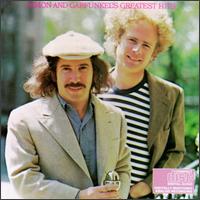
Simon And Garfunkel
1972 - Simon and Garfunkel's Greatest Hits
Mrs. Robinson
For Emily, Whenever I May Find Her
The Boxer
The 59th Street Bridge Song (Feelin' Groovy)
The Sound of Silence
I Am a Rock
Scarborough Fair/Canticle
Homeward Bound
Bridge Over Troubled Water
America
Kathy's Song
El Condor Pasa (If I Could)
Bookends
Cecilia
This album was released within weeks of the duo getting back together for a benefit concert at Madison Square Garden on behalf of George McGovern's 1972 presidential campaign. Simon & Garfunkel's work had never been compiled before, but their albums were still selling so well as catalog items that this record should have been superfluous. Instead, it touched all the right buttons, providing an overview of the duo's most popular songs and biggest singles, but also offering longtime fans a previously unissued alternate take of "America" and live versions of "For Emily, Whenever I May Find Her," "Homeward Bound," "Feelin' Groovy," and "Kathy's Song," which meant that even fans who already had everything else they'd ever released wanted to own it -- understandably, it peaked at number five on the charts. Over the years, its value has lessened somewhat with the release of more ambitious, wider-ranging compilations of their work that were also mastered more carefully, from better sources, though this is still the best easily available single disc on the duo. All of their most identifiable and widely embraced hits, from "The Sounds of Silence" to "Bridge Over Troubled Water," are represented here, along with the duo's best-known and most personal album cuts ("Kathy's Song," etc.), making it a decent introduction for the total neophyte -- what's missing are some interesting and ambitious singles that either haven't stood the test of time ("Fakin' It") or were artistic blind alleys ("The Dangling Conversation"), plus "Punky's Dilemma," a perennial FM radio favorite that lay just below Columbia Records' and the duo's radar. -- Bruce Eder
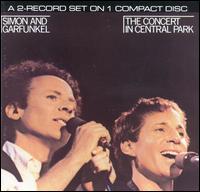
1982 - Concert In Central Park
Mrs. Robinson
Homeward Bound
America
Me and Julio, Down by the Schoolyard
Scarborough Fair
April Come She Will
Wake Up, Little Susie
Still Crazy After All These Years
American Tune
Late in the Evening
Slip Slidin' Away
A Heart in New York
Kodachrome/Maybelline
Bridge Over Troubled Water
Fifty Ways to Leave Your Lover
The Boxer
Old Friends
The 59th Street Bridge Song (Feelin' Groovy)
The Sound of Silence
Simon & Garfunkel reunited on September 19, 1981, to perform a free concert in Central Park, New York City. This two-record set presents some of the duo's biggest hits in a live context, and also allows listeners a chance to hear what many Simon solo numbers could sound like in S&G mode. -- William Ruhlmann
Soundtracks
1983 - Flashdance
Irene Cara - Flashdance...What a Feeling
Shandi - He's a Dream
Helen St. John - Love Theme from "Flashdance"
Karen Kamon - Manhunt
Joe Esposito - Lady, Lady, Lady
Laura Branigan - Imagination
Donna Summer - Romeo
Cycle V - Seduce Me Tonight
Kim Carnes - I'll Be Here Where the Heart Is
Michael Sembello - Maniac
Giorgio Moroder's score for this dance fantasy album turned into a blockbuster (five million copies and counting) due to the title track, sung by Irene Cara, Michael Sembello's "Maniac," and a bunch of other modern dance tracks. -- William Ruhlmann
1987 - Good Morning, Vietnam
(Dialogue) Robin Williams - Adrian Cronauer
Martha & the Vandellas - Nowhere to Run
The Beach Boys - I Get Around
Wayne Fontana & the Mind Benders - Game of Love
(Dialogue) Robin Williams - Adrian Cronauer
The Searchers - Sugar and Spice
(Dialogue) Robin Williams - Adrian Cronauer
The Castaways - Liar, Liar
The Beach Boys - The Warmth of the Sun
(Dialogue) Robin Williams - Adrian Cronauer
James Brown - I Got You (I Feel Good)
(Dialogue) Robin Williams - Adrian Cronauer
Them - Baby, Please Don't Go
(Dialogue) Robin Williams - Adrian Cronauer
The Marvelettes - Danger, Heartbreak Dead Ahead
The Vogues - Five O'Clock World
The Rivieras - California Sun
(Dialogue) Robin Williams - Adrian Cronauer
Louis Armstrong - What a Wonderful World
Good Morning Vietnam was a comedy/drama starring Robin Williams as an American Army DJ in Vietnam. Appropriately, the soundtrack is filled with oldies -- from Louis Armstrong's "What A Wonderful World" and Martha & the Vandellas' "Nowhere to Run" to the Rivieras' "California Sun" and James Brown's "I Got You (I Feel Good)" -- punctuated by Williams' manic comic routines. Some listeners will find the routines a bit tedious, but it's a thoroughly entertaining and well-paced collection of oldies that manages to evoke the mid-'60s quite well. -- Stephen Thomas Erlewine
1994 - Pulp Fiction
Dick Dale and the Deltones - Miserlou
(Dialogue) John Travolta / Samuel L. Jackson - Royale with Cheese
Kool & the Gang - Jungle Boogie
Al Green - Let's Stay Together
The Tornadoes - Bustin' Surfboards
Ricky Nelson - Lonesome Town
Dusty Springfield - Son of a Preacher Man
The Centaurians - Bullwinkle (Part 2)
Chuck Berry - You Never Can Tell
Urge Overkill - Girl, You'll Be A Woman Soon
Maria McKnee - If Love is a Red Dress (Hang Me in Rags)
The Revels - Comanche
The Statler Brothers - Flowers on the Wall
(Dialogue) John Travolta / Samuel L. Jackson - Personality Goes a Long Way
The Lively Ones - Surf Rider
(Dialogue) Samuel L. Jackson - Ezekiel 25:17
The soundtrack to Quentin Tarantino's darkly funny crime classic Pulp Fiction manages to recreate the film's wildly careening sense of style, violence and humor by concentrating on the surf music that comprises the bulk of the movie's incidental music and adding a few sexy oldies integral to the film's story ("Let's Stay Together," "Son of A Preacher Man," "You Never Can Tell"). Of course, the inclusion of dialogue and Urge Overkill's seductive cover of Neil Diamond's "Girl, You'll Be A Woman Soon" don't hurt either. -- Stephen Thomas Erlewine
1995 - Friends: Music from the TV Series
The Rembrandts - I'll Be There for You [TV Version]
Hootie & The Blowfish - I Go Blind
Toad the Wet Sprocket - Good Intentions
Lou Reed - You'll Know You Were Loved
K.D. Lang - Sexuality
Barenaked Ladies - Shoe Box
R.E.M. - It's a Free World, Baby
Paul Westerberg - Sunshine
The Pretenders - Angel of the Morning
Grant Lee Buffalo - In My Room
Joni Mitchell - Big Yellow Taxi
Paul Westerberg - Stain Yer Blood
The Rembrandts - I'll Be There for You [Long Version]
Friends successfully targets the same demographic of the television show -- twentysomethings that have grown too old for the noise and clutter of college life, yet reluctant to give up the commraderie (and, indeed, friendship) that stress creates. So, it's a collection of '80s college rock favorites (R.E.M., Paul Westerberg), '80s college rock founding fathers (Pretenders, Lou Reed), and '90s artists that don't really have that much to do with '80s college rock but they're mellow and inoffensive and appear to be genuine since they strum acoustic guitars. In other words, bands like Hootie And The Blowfish. So, most of the album sounds pleasant and upwardly mobile. Apart from the distracting snatches of dialogue, there is nothing to break the flow or engage your attention. -- Stephen Thomas Erlewine
1996 - Trainspotting
Iggy Pop - Lust for Life
Brian Eno - Deep Blue Day
Primal Scream - Trainspotting
Sleeper - Atomic
New Order - Temptation
Iggy Pop - Nightclubbing
Blur - Sing
Lou Reed - Perfect Day
Pulp - Mile End
Bedrock feat. KYO - For What You Dream Of
Elastica - 2:1
Leftfield - A Final Hit
Underworld - Born Slippy
Damon Albarn - Closet Romantic
Trainspotting concerns the adventures of a group of young, nearly criminal, drug-addicted Scottish friends. The novel, written by Irvine Welsh, became one of the most popular books in the British indie scene in the early '90s and was adapted to film in 1996 by the makers of Shallow Grave. Appropriately, an all-star collection of British pop and techno stars -- everyone from Blur, Pulp, and Elastica to Leftfield, Primal Scream, and Underworld -- contributed to the soundtrack, which also features a couple of oldies by veteran punk godfathers like Lou Reed ("Perfect Day") and Iggy Pop ("Lust for Life," "Nightclubbing"). The entire soundtrack holds together surprisingly well, as the techno tracks balance with the pop singles. Every song, whether it's Pulp's deceptively bouncy "Mile End" or Brian Eno's lush "Deep Blue Day," is quite melancholy, creating an effectively bleak, but oddly romantic, atmosphere for the entire record. With the exception of the oldies, every song is rare or especially recorded for the soundtrack, and nearly every one is superb. Primal Scream's title track sees them returning to the dub/dance experiments of Screamadelica with grace, while Damon Albarn's first solo song, "Closet Romantic," is as good as any of Blur's waltzes. But the finest new song is Pulp's "Mile End," with its jaunty, neo-dancehall melody and rhythms and Jarvis Cocker's evocative, haunting lyrics. That song, more than anything else on the soundtrack, captures the feeling of the film. -- Stephen Thomas Erlewine
2000 - High Fidelity
13th Floor Elevators - You're Going to Miss Me
The Kinks - Everybody's Gonna Be Happy
John Wesley Harding - I'm Wrong About Everything
The Velvet Underground - Oh! Sweet Nuthin'
Love - Always See Your Face
Bob Dylan - Most of the Time
Shiela Nicholls - Fallen for You
The Beta Band = Dry the Rain
Elvis Costello & The Attractions - Shipbuilding
Smog - Cold Blooded Old Times
Jack Black - Let's Get It On
Stereolab - Lo Boob Oscillator
Royal Trux - Inside Game
The Velvet Underground - Who Loves the Sun?
Stevie Wonder - I Believe (When I Fall In Love, It Will Be Forever)
Gen X rock buffs can revel in nostalgia with the High Fidelity soundtrack. The film centers on the romantic escapades of record-store owner and ex-club DJ Rob Gordon (John Cusack) and his full-time obsession with music. Since High Fidelity has as much to do with vinyl addiction as it does with the difficulties of love, great care has been taken with its selection of tracks, a solidly eccentric collection of heartache-heavy pop gems ranging from obscure '60s bands and groundbreaking artists like the Velvet Underground and Bob Dylan, to Stevie Wonder and Stereolab. As in the film, there's a method to the compilers' elitist rock-geek madness. Even co-star Jack Black's schlocky blue-eyed cover of Marvin Gaye's "Let's Get It On" doesn't seem out of place. The inspired screeches of acid-fried '60s singer-songwriter Roky Erickson's "You're Gonna Miss Me" set the pace for the musing, hangdog tone of the album. Besides the joyous licks of the Kinks' "Everybody's Gonna Be Happy" and Royal Trux's hybrid of hip-hip, techno, and aggressive rock on "Inside Game," the bulk of the set is composed of moody folk-rock tunes like Dylan's exquisite "Most of the Time" and the Velvets' "Oh! Sweet Nuthin." Other noteworthy tracks include Love's "Always See Your Face," the Beta Band's "Dry the Rain," Elvis Costello's wistful "Shipbuilding," the stinging irony of Smog's "Cold Blooded Old Times," and Stevie Wonder's soulful optimism on "I Believe (When I Fall in Love It Will Be Forever)." It's a fine, complementary batch of tunes that not only enhances the film's mood but is integral to its theme, and, as High Fidelity's Rob Gordon would agree, it'll go down as one of the top five soundtracks released in 2000. -- Derrick Mathis
2001 - Amélie
J'Y Suis Jamias Allé
Les Jours Tristes [instrumental]
La Valse d'Amélie
Comptine d'Un Autre Été
La Noyée
L'Autre Valse d'Amélie
Guilty
A Quai
Le Moulin
Pas Si Simple
La Valse D'Amélie [Orchestra Version]
La Valse des Vieux Os
La Despute
Si Tu N'Étais Pas Là
Soir De Fête
La Redécouverte
Sur le Fil
Le Banquet
La Valse D'Amélie [Piano Version]
La Valse des Monstres
The soundtrack to Pierre Jeunet's charming, slightly surreal romantic comedy Amelie features music by Yann Tiersen. Just as the film presents an idyllic, idealized version of Paris, Tiersen's score captures the most romantic aspects of French music, complete with fluttering accordions, delicate harpsichords, mandolins, and poignant strings and pianos. Pieces like "J'y Suis Jamias Alle," "Le Moulin," "La Valse Des Monstres," and "Les Jours Tristes (Instrumental)" -- which features a toy piano -- convey the film's sweet, slightly skewed outlook perfectly, and are completely charming in their own right. Aside from the three variations on the heroine's theme, "La Valse d'Amelie," most of the score comes from Tiersen's other albums, making Amelie a fine introduction to his work as well as an appropriately winning soundtrack. -- Heather Phares
2002 - The Rules of Attraction
Tomandandy - Carol of the Bells
The Cure - Six Different Ways
Rapture - Out of the Races and on to the Tracks
Donovan - Colours
Yaz - Situation
Blondie - Sunday Girl
Love and Rockets - So Alive
Tomandandy - Pre-Saturday Night Party Party
Starland Vocal Band - Afternoon Delight
Harry Nilsson - Without You
(Dialogue) Kip Pardue with Tomandandy - European Vacation
Milla Jovovich - The Gentleman Who Fell
Tomandandy - Snow Theater / Final Steps
Erasure - Stop
Screenwriter/director Roger Avary changed the time period of Bret Easton Ellis' second novel, The Rules of Attraction (the follow-up to Less Than Zero), from the mid-'80s to the present day for its 2002 movie adaptation, but no one seems to have bothered to tell Tomandandy, who wrote the film's music and, one presumes, assembled the pre-existing recordings used on the soundtrack, because the musical focus is still on the '80s. The Cure, Yaz (aka Yazoo), and Erasure help define an electronic dance rock score that also includes tracks by Blondie and Love and Rockets. There are also some oddities, such as Donovan's 1965 folk tune "Colours," Harry Nilsson's early-'70s hit cover of Badfinger's "Without You," and that wholesomely smutty mid-'70s folk-pop novelty hit "Afternoon Delight," all of which must have some meaning within the film, even if they don't make much sense mixed in with the other music on the soundtrack album. Reportedly, major labels vied for this soundtrack, but backed out, no doubt due to the inclusion of "Victor's European Vacation," actor Kip Pardue's recitation of a part of the script detailing an X-rated trip around the continent that also earns this album, finally issued on Lions Gate Records, a parental advisory sticker. Tomandandy's own music is more electronic dance rock. The album is thus a hard-edged souvenir for a hard-edged film. -- William Ruhlmann
2003 - Kill Bill, Vol. 1
Nancy Sinatra - Bang Bang (My Baby Shot Me Down)
Charlie Feathers - That Certain Female
Luis Bacalov - The Grand Duel (Parte Prima)
Bernard Herrmann - Twisted Nerve
(Dialogue) Lucy Liu / Julie Dreyfus - Queen of the Crime Council
The RZA - Ode to O-Ren Ishii
Issac Hayes - Run, Fay, Run
Al Hirt - Green Hornet Theme
Tomoyasu Hotei - Battle Without Honor or Humanity
Santa Esmeralda - Don't Let Me Be Misunderstood
The 5,6,7,8's - Woo Hoo
The RZA with Charles Bernstein - Crane / White Lightning
(Dialogue) David Carradine / Julie Dreyfus / Uma Thurman - You're My Wicked Life
Quincy Jones - Ironside [Excerpt]
Neu - Super 16 [Excerpt]
The RZA - Yakuza O-Ren 1
The RZA - Banister Fight
(Sound Effect) Flip Sting
(Sound Effect) Sword Swings
(Sound Effect) Axe Throws
In its first teaser trailers, when it was still going to be released as a single film, Kill Bill was sold with the immortal teaser "In the year 2003 Uma Thurman is going to Kill Bill." Of course, Uma didn't come close to the messy business of killing Bill until early 2004, when the second part of Quentin Tarantino's grindhouse epic Kill Bill was released, but she sure started to kill in Kill Bill, Vol. 1, where the Bride, the character she created with QT, began her arduous revenge upon the five former colleagues that killed her fiancée at her wedding rehearsal, then left her for dead at the altar. As Tarantino plot lines go, this is the simplest yet, but revenge movies shouldn't be encumbered by deep subtext. Instead, he divided the film into chapters, giving him opportunity to play with both time and location, and then decided to shoot each chapter as a homage to a different kind of exploitation film -- something that's reflected in the soundtrack. After Nancy Sinatra's torchy "Bang Bang (My Baby Shot Me Down)" and Charlie Feathers' tough, swaggering rockabilly chestnut "That Certain Female" set the story and the mood, the record is devoted primarily to instrumental pieces that range from surging epics to the calm kitsch of Zamfir's "The Lonely Shepherd," to the intense funk pastiche of Tomoyasu Hotei's "Battle Without Honor or Humanity" (the song that kicks off nearly every trailer and ad for Kill Bill). The reduced presence of dialogue from the film -- a hallmark of Tarantino soundtracks -- is a reflection of the film, which places emphasis on action and visuals. Hell, even the tracks on the soundtrack have minimal lyrics, consisting largely of instrumentals. This gives it more of a meandering feeling, and the soundtrack kind of peters out, ending in two quick excerpts of futuristic electro music by Quincy Jones and Neu!, then a gaggle of sound effects and kung fu hits. Nevertheless, its cavalcade of contradictory moods has its own coherence, and is more musical than most pop music soundtracks. Plus, this has no familiar material, nor does it have anything that would be a single on Clear Channel, which is why it works as an album of its own -- it doesn't just reflect the movie; it follows its own logic, and displays fearless imagination. It makes you hungry for Vol. 2, both the movie and soundtrack. -- Stephen Thomas Erlewine
2004 - Garden State
Coldplay - Don't Panic
The Shins - Caring is Creepy
Zero Seven - In the Waiting Line
The Shins - New Slang
Colin Hay - I Just Don't Think I'll Ever Get Over You
Cary Brothers - Blue Eyes
Remy Zero - Fair
Nick Drake - One of These Things First
Thievery Corporation - Lebanese Blonde
Simon & Garfunkel - The Only Living Boy in New York
Iron & Wine - Such Great Heights
Bonnie Somerville - Winding Road
The soundtrack to Zach Braff's Garden State is nearly as much of a piece with the film as the similarly sweet, quirky combinations of sound and vision in Wes Anderson's films and soundtracks. Garden State, however, is more modern in its outlook and more emotionally direct, with a mixtape earnestness belied by using not one but two songs from the Shins' Oh, Inverted World. "New Slang" is an obvious choice, as the song just seems to grow in stature as time passes, but "Caring Is Creepy," Oh, Inverted World's vulnerable, ever-so-slightly unhinged opening track, is not, and adds to the personal, diary-like feel of the album. The bright poignancy of the Shins' tracks stands out even more among the low-key melancholy of songs like Coldplay's "Don't Panic," Remy Zero's "Fair," and Colin Hay's "I Just Don't Think I'll Ever Get Over You." The inclusion of Hay's track, Bonnie Somerville's "Winding Road," and the Cary Brothers' "Blue Eyes" shows that Garden State doesn't go for the hipster, too-cool-for-school poses that one might expect from the soundtrack of a hot indie movie, even with the inclusion of Iron & Wine's cover of the Postal Service's "Such Great Heights." Still, there's something of a collegiate feel to the soundtrack, especially with the re-rediscovery of Nick Drake ("One of These Things First") and Simon & Garfunkel ("The Only Living Boy in New York") as well as the tentative forays into electronica and trip-hop like Zero 7's "In the Waiting Line," Frou Frou's "Let Go," and Thievery Corporation's "Lebanese Blonde." Perhaps this collegiate feel comes from the fact that those years are often the time when many people are the most ready and willing to explore music that is new to them (but not necessarily new), but, as the success of Garden State's soundtrack shows, any time can be the right time. -- Heather Phares
2006 - Last Kiss
Snow Patrol - Chocolate
Joshua Radin - Star Mile
Turin Brakes - Pain Killer
Coldplay - Warning Sign
Cary Brothers - Ride
Athlete - El Salvador
Imogen Heap - Hide and Seek
Rachel Yamagata - Reason Why
Ray LaMontagne - Hold You in My Arms
Remy Zero - Prophecy
Fiona Apple - Paper Bag
Aimee Mann - Today's the Day
Amos Lee - Arms of a Woman
Rufus Wainwright - Cigarettes and Chocolate Milk (Reprise)
Joshua Radin and Schuyler Fisk - Paperweight
The soundtrack to The Last Kiss proves that Zach Braff's Garden State Grammy was no fluke; here again, he's assembled an artful hodgepodge both charming and substantial. Balancing out the hipness of British indie darlings Snow Patrol ("Chocolate") and Turin Brakes ("Pain Killer") is a batch of adult alternative gems few sensitive-minded thirty-somethings could resist: Aimee Mann deadpans her way masterfully through "Today's the Day" while Rufus Wainwright rues his unwholesomeness on "Cigarettes and Chocolate Milk," and Amos Lee falls hopelessly into the "Arms of a Woman" while Fiona Apple contemplates the poetry made possible by a "Paper Bag." Like a hipster fashionista unafraid to mix high and low, Braff intertwines megastars (Coldplay) and unknowns (Athlete) for an effect at once welcoming and provocative. The standout track is Ray LaMontagne's completely devastating "Hold You in My Arms," but Braff fans could be forgiven for getting the notion that he favors Cary Brothers' "Ride." In fact, some might suspect Brothers is Braff's pseudonym: not only did he carry over Brothers, the disc's only unsigned artist, from the Garden State soundtrack, he also did Brothers the favor of directing the "Ride" video. -- Tammy La Gorce
Spin Doctors
1993 - Pocket Full of Kryptonite [Import]
Jimmy Olsen's Blues
What Time Is It?
Little Miss Can't Be Wrong
Forty or Fifty
Refrigerator Car
More Than She Knows
Two Princes
Off My Line
How Could You Want Him (When You Know You Could Have Me)
Shinbone Alley / Hard to Exist
Yo Mamas A Pajama
Sweet Window
Stepped on a Crack
After nearly a year of solid touring, the Spin Doctors scored a huge, unexpected success with the incessantly catchy "Little Miss Can't Be Wrong." The rest of Pocket Full of Kryptonite will please fans of that song; the album is full of the loose, leisurely three-chord pop/rock jams the Spin Doctors specialize in. It may be unfair to compare them to the Grateful Dead, but the Doctors often suggest a lighter, more pop-oriented version of that band. While all of the best tracks were issued as singles ("Jimmy Olsen's Blues," "Two Princes," and "Little Miss"), there are still enough good moments on the rest of the album to please anyone who loves the hits. -- Stephen Thomas Erlewine
Spoon
2001 - Girls Can Tell
Everything Hits at Once
Believing is Art
Me and the Bean
Lines in the Suit
The Fitted Shirt
Anything You Want
Take a Walk
1020 Am
Take the Fifth
This Book Is a Movie
Chicago at Night
Time may not exactly heal all wounds, but it can lend the perspective and strength to channel pain into something positive. Such is the case with Spoon; their perennial indie rock underdog status and disastrous stint on Elektra have focused and tempered the trio's brash energy instead of crushing it. Their third full-length, Girls Can Tell, reflects the group's lean, hungry stance in its spare, spiky, immaculately crafted songs. "Take the Fifth" and "Take a Walk" take Spoon's smart, bouncy, slightly tough signature sound to another level; while the ghosts of the Pixies, Nirvana, and Elvis Costello still haunt songs like "Lines in the Suit," Girls Can Tell's sharp wordplay, barbed guitars, and appealingly raw vocals prove that the group embraces their influences without becoming slaves to them. Britt Daniel's increasingly eclectic and expansive songwriting comes to the forefront on "Everything Hits at Once," a taut, brooding pop song driven by vibes, keyboards, yearning, and pride; "Me and the Bean" suggests the direction alternative/indie rock should have taken after Nirvana's implosion. This album is also Spoon's most emotionally eclectic collection of songs, ranging from "Anything You Want," a sunny pop song drawn with just a few artfully placed strokes to "1020 AM," a brooding, slightly psychedelic piece of folk-rock that recalls Daniel's Drake Tungsten side project. "This Book Is a Movie," an appropriately tense, filmic instrumental, and "Chicago at Night," a slightly spooky pop song with winding guitars and an off-kilter melody, complete Girls Can Tell, making it Spoon's most mature, accomplished work to date and a fine balance of fire and polish. -- Heather Phares
2005 - Gimme Fiction
The Beast and Dragon, Adored
The Two Sides of Monsieur Valentine
I Turn My Camera On
My Mathematical Mind
The Delicate Place
Sister Jack
I Summon You
The Infinite Pet
Was It You?
They Never Got You
Merchants of Soul
The three-year stretch between Gimme Fiction and Spoon's previous album, Kill the Moonlight, was the longest gap between the band's releases since the end of its disastrous relationship with Elektra Records helped put two and a half years between A Series of Sneaks and Girls Can Tell. Though the circumstances behind this hiatus probably weren't as dire as those behind the band's previous one, the anticipation surrounding Gimme Fiction was nearly as high as it was for Girls Can Tell, and Gimme Fiction feels like as much of a refinement on what came before it as Girls Can Tell did at the time. A dark, theatrical album seething with late-night tension and menace, Gimme Fiction is a bigger-sounding affair than Spoon's previous work, with lots of keyboards, guitars, and strings parts courtesy of the Tosca Strings. But, even with the album's bigger scope, the band keeps its eye for detail. Everything about Gimme Fiction, from its artwork -- which looks like photographer Irving Penn doing a surreal fashion spread on Little Red Riding Hood for Vogue Magazine circa the 1950s -- to the little sound effects that embellish each song, is meticulous. Fortunately, "meticulous" doesn't spill over into "careful" or "precious"; the album's first three tracks show that Spoon makes music that's intricate and rousing at the same time. "The Beast and Dragon, Adored" acts as a slow-building preface and statement of intent, mentioning later song titles and introducing Gimme Fiction's big, brooding sound. "The Two Sides of Monsieur Valentine," a string-driven tale of a mysterious gentleman/cad, boasts some of Britt Daniel's cleverest storytelling, while "I Turn My Camera On" turns voyeurism and emotional distance into a subtly irresistible groove that sounds like a tense rewrite of the Stones' "Emotional Rescue" (later on, the intro of "They Never Got You" sounds strangely like Hall & Oates' "Maneater" -- it's nice to hear them reach back to '70s and '80s references that aren't the post-punk and new wave influences borrowed by so many other indie rock bands, or even the Elvis Costello nods that shaped so much of Spoon's earlier work). Gimme Fiction's opening trio of songs is so strong that it tends to overpower the rest of the album at first, but other standouts eventually bubble to the surface: "My Mathematical Mind" is one long verse, broken up by instrumental interludes where choruses would normally go; it keeps building and building, and though it's not an immediate song, it is a hypnotic one. On the other hand, the relatively lighthearted "Sister Jack" and pretty but oddly jittery acoustic ballad "I Summon You" just emphasize how moody and nocturnal the rest of the album is. Indeed, taut, restrained tracks like "The Delicate Place," "The Infinite Pet," and "Merchants of Soul" seem to be more about supporting Gimme Fiction's nocturnal mood than standing out as great songs. Still the interesting productions and arrangements on songs like these and "Was It You?" make them enjoyable in their own right. "Meticulous," "distant," and "restrained" may not be the most likely adjectives to describe a good rock record, but they fit Gimme Fiction perfectly. With this album, Spoon continues to build one of the most consistent, and distinctive, bodies of work in indie rock -- the band makes changes and takes chances from album to album, but ends up sounding exactly how Spoon should sound each time. -- Heather Phares
Sting
1997 - The Very Best of Sting & the Police
Message in a Bottle
Can't Stand Losing You
Englishman in New York
Every Breath You Take
Walking on the Moon
Fields of Gold
Every Little Thing She Does Is Magic
If You Love Somebody Set Them Free
Let Your Soul Be Your Pilot [Edit]
Russians
If I Ever Lose My Faith in You
When We Dance [Edit]
Don't Stand So Close to Me
Roxanne
Puff Daddy - Roxanne '97
In the summer of 1997, Puff Daddy took "I'll Be Missing You," a sappy reworking of "Every Breath You Take," to the top of the charts across the world; it became the biggest rap single in history. The success of "I'll Be Missing You" had the bizarre by-product of making the Police hip again among both rock and rap artists. So, what better to celebrate the occasion -- as well as the 20th anniversary of the Police's first album -- than the release of another compilation, this time combining highlights from the Police and Sting's solo career? The Very Best of Sting & the Police does just that, compiling 14 songs in a seemingly random chronological order. The Police cuts are generally classics, but there are several big hits left off, which should probably be expected for an integrated collection like this. There's plenty of good music on Sting's solo records, but the selection here emphasizes his MOR side instead of some of his more ambitious material. Obviously, that selection is designed to snag a mature, 30-something audience, which makes the inclusion of Puff Daddy's remix of "Roxanne" (included in both its original and remixed incarnations) a little puzzling, since that strives to appeal to a younger audience. Then again, you don't really expect coherence from a collection that simply wants to cash in at the right moment. While it's hard to ignore the fact that this disc isn't necessary, the music itself is good, and certain casual fans may find this useful. But anyone following Sting or the Police for any length of time will find The Very Best Of... superfluous. -- Stephen Thomas Erlewine
<-
1
2
3
->